
The 2026 Formula 1 season is set to begin amid significant transformations, with teams preparing intensively to meet the demands of new technical regulations. The first major event unfolds in Detroit on Thursday, where Ford will officially mark its return to the sport as the power unit provider for Red Bull Racing and Racing Bulls. This launch kicks off a series of team unveilings and moves quickly toward closed-doors testing sessions in Barcelona starting January 26, followed by further evaluations in Bahrain before the season opener in Australia on March 8.
The clock is ticking for all teams, as the new regulations demand a complete rethink of both chassis and power unit designs. The upcoming season ends the four-year era dominated by ground effect designs, which proved unpopular with drivers and difficult for teams due to persistent porpoising issues.
Key Updates to Car Design and Performance Regulations
Among the major shifts are changes to chassis specifications, including a 66-pound reduction in minimum car weight to 1693 lbs. To adjust aerodynamics and handling, the cars will be narrower, reducing width from 79 to 75 inches, and shortening the wheelbase from 142 to 134 inches. Additionally, the floor width is trimmed by six inches. Tires remain 18-inch rims but with smaller widths—front tires narrower by an inch and rear tires by 1.2 inches—resulting in less rubber contact patch handling greater aerodynamic load.
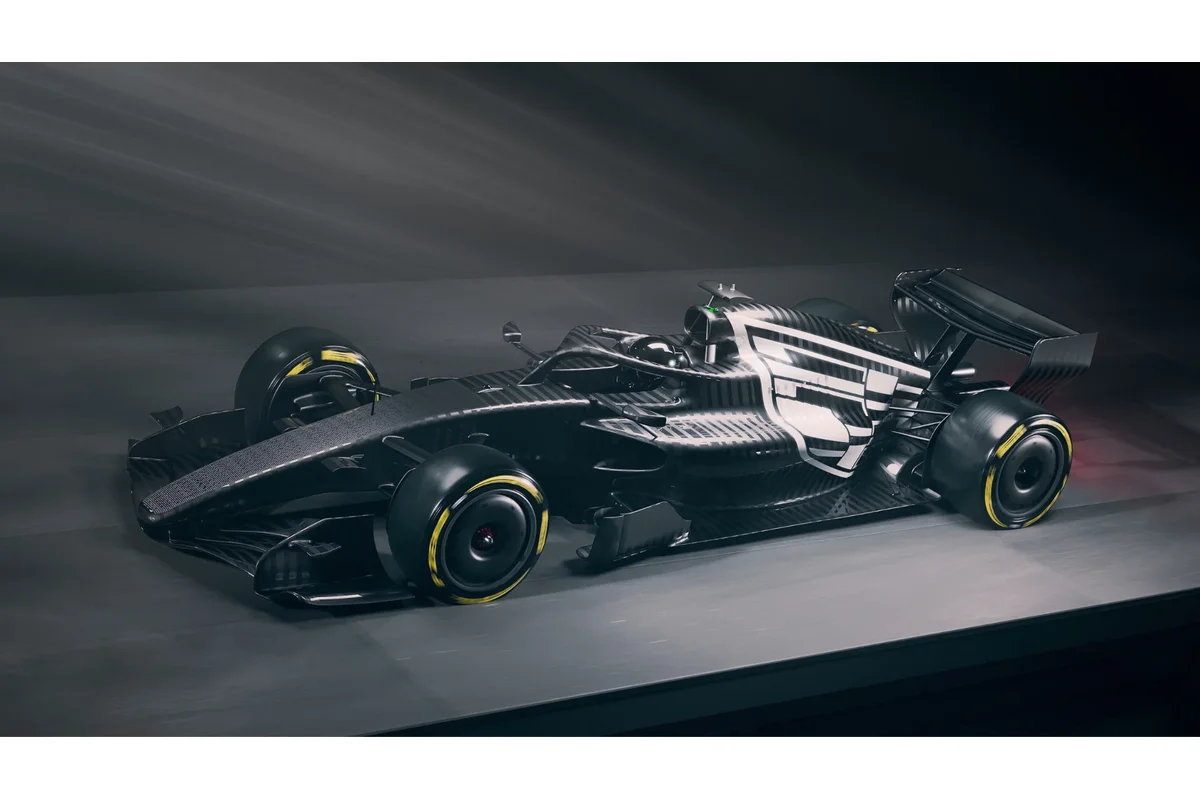
Aero packages have undergone a fundamental revision aimed at decreasing downforce by 15 to 30 percent and drag by up to 40 percent. This includes a flatter flat floor paired with a gentler diffuser angle, simplified rear wing endplates, and elimination of the lower beam wing. New elements called wake control boards, resembling the bargeboards of old, will help channel airflow efficiently, allowing cars to follow each other more closely. Also removed are the wheel arch eyebrows that previously affected airflow.
The most notable innovation is the introduction of active aero technology. The rear wing becomes movable, functioning similarly to the former Drag Reduction System (DRS), and is coupled with a newly movable front wing to help balance the car dynamically. This system reduces drag on straights, boosting top speeds, then closes on corners to maintain downforce. The operating modes have been renamed for clarity: the open aerodynamic setting is now “straight mode,” while the closed setting is “corner mode.”
Safety enhancements are also key, with front impact structures redesigning secondary impact absorption, stricter side intrusion tests around both the cockpit and fuel cell, and increased roll hoop load requirements, jumping from 16G to 20G, alongside higher test loads moving from 141 kN to 167 kN.
Power unit regulations see a shift in energy distribution. The internal combustion V6 engine’s output will drop from approximately 736-751 hp to 536 hp. In contrast, electrical power almost triples from 161 hp up to 469 hp, pushing the balance to nearly an even split between ICE and electric power. Brake energy recovery doubles to 8.5 MJ per lap, but the MGU-H unit is removed outright. Fuel standards also evolve, mandating sustainable fuels closer to conventional pump fuel than previous specialized blends.
Drivers receive new tactical options, including a “boost mode” for extra electrical energy deployment anywhere on the lap to enhance attack or defense strategies. The traditional DRS is replaced with a push-to-pass system labeled “overtake mode,” permitting activation only in designated zones once the pursuing car is within one second of the target.
Complexities and Obstacles for Teams in 2026
The merger of fresh power unit technology, redesigned chassis, and altered aerodynamic regulations poses significant technical and logistical challenges. Teams tasked with integrating all these new components must develop solutions completely from the ground up.
When you have a new regulation, you don’t know where you’re going,
Fred Vasseur, Ferrari Team Principal, explained.
You had the case in the past with the Mercedes engine in 2014, or with Brawn GP in 2009. But it’s also somehow the challenge for the team. We are used to developing a car based on the car of the current year and trying to do a better job than what we have.
Today, we have to start from scratch. The biggest challenge is probably that we are starting from scratch on everything – new tires, new fuel, new engine, new chassis, new sporting regulations, new everything… It’s quite challenging. But somehow, it’s also the DNA of our sport to have this kind of challenge.
Jonathan Wheatley, Team Principal at Audi, acknowledged the steep learning curve for his team’s debut season:
Our first year as the Audi Formula 1 project, we have to introduce the chassis and powertrain together. It’s a big job. It’s not straightforward making all of that stuff yourself— building a team around that, expanding—plus, it’s the biggest change in technical regulations in my time in the sport. It’s a fantastic challenge. It’s one we’re very excited about.
Mercedes faces similar hurdles with the integration of multiple new elements and resource allocation within budget constraints.
I think it has been probably one of the most difficult years in recent times in F1,
Deputy Technical Director Simone Resta stated.
Everything is new on ’26. So it requires a massive amount of effort from the chassis group, from the power unit group, from the fuel supplier and partner… It’s been difficult to manage all the resources within the budget cap, with the aerodynamic constraints about how much we can develop it. So a very complex and challenging problem.
Lessons from 2025 and Their Limited Application
Due to the comprehensiveness of 2026’s changes, technological lessons from 2025 offer minimal direct advantages. Red Bull’s Chief Engineer Paul Monaghan acknowledged that most hardware and regulations are being reset.
I think probably the only carryover part of the chassis will be the steering wheel quick disconnect,
Monaghan said.
So yes, a whole new car, new engine, new set of rules, new effective operation of the car around the track, a few uncertainties over running in the wet. So 2026 is sort of wipe the slate clean and off you go again.
Still, the organizational methods, problem-solving approaches, and development tools refined last season remain valuable assets heading into 2026. Red Bull’s Sporting Director Laurent Mekies emphasized the importance of this institutional knowledge.
There are many things we can take to 2026,
said Mekies.
It is a clean sheet from the point of view of designing a car and obviously designing a PU, but it remains the fact that you will use the same people, you will use the same methodology, the same process, the same tools to go and design that car.
I think we didn’t hide the fact that it was very important for us to try to unlock what we felt was in the car in that project under the current regulations, to leave 2025 understanding that we are comfortable with where our tools’ limitations are, what we understand, what we don’t understand, and therefore design a better 2026 car as a result.
What Lies Ahead for the 2026 Formula 1 Season
The 2026 season is shaping up to challenge every aspect of Formula 1 teams’ capabilities, from engineering breakthroughs to strategic execution. With Ford’s return as a power unit supplier, Audi’s bold entry, and stalwarts like Ferrari, Mercedes, and Red Bull navigating unprecedented transformations, the landscape is both unpredictable and electrifying.
The reduced prep time and complexity of integrating new chassis designs with innovative power units and active aerodynamics place enormous pressure on resources and development. Safety improvements add another layer of rigor, while drivers adapt to entirely new performance management tools like boost and overtake modes.
Fans and insiders alike await how teams will balance these challenges, turn innovations into competitive advantages, and redefine racing dynamics. The 2026 Formula 1 season will not only reset the technical foundations but may also reshape the hierarchy within the championship, setting the stage for a dramatic new era in the sport.
