
Aprilia is making significant strides to contest Ducati’s supremacy in MotoGP aerodynamics by introducing innovative designs that enhance racing performance. This competition unfolds in the 2024 season as both Italian manufacturers focus on refining airflow efficiency to gain an edge on the track.
While Ducati has held the aerodynamic advantage in recent years, Aprilia from Noale is fiercely determined to advance its RS-GP bike’s performance, emphasizing critical moments such as tight corners where downforce plays a vital role. Their efforts reflect a deep technical rivalry aimed at maximizing speed and control.
Technological Exchange Fuels Aerodynamic Rivalry Between Italian Giants
The aerodynamic battle between Aprilia and Ducati has sparked a notable exchange of technology and concepts. Aprilia’s unique bulging lower fairings have been adopted by Ducati, while Aprilia has incorporated Ducati’s Downwash Ducts into their own machines. This mutual influence signals a healthy competition, driving both teams to refine their designs continually.
In pursuit of aerodynamic gains, both teams have targeted the seat area of their motorcycles, a zone currently less regulated. Ducati introduced lateral fins on the seat cowl to boost rear downforce, a design favored by top rider Marc Márquez. In response, Aprilia unveiled a more aggressive approach, combining horizontal and vertical aerodynamic elements angled downwards, as seen on the Trackhouse team’s bikes during the Brno race.
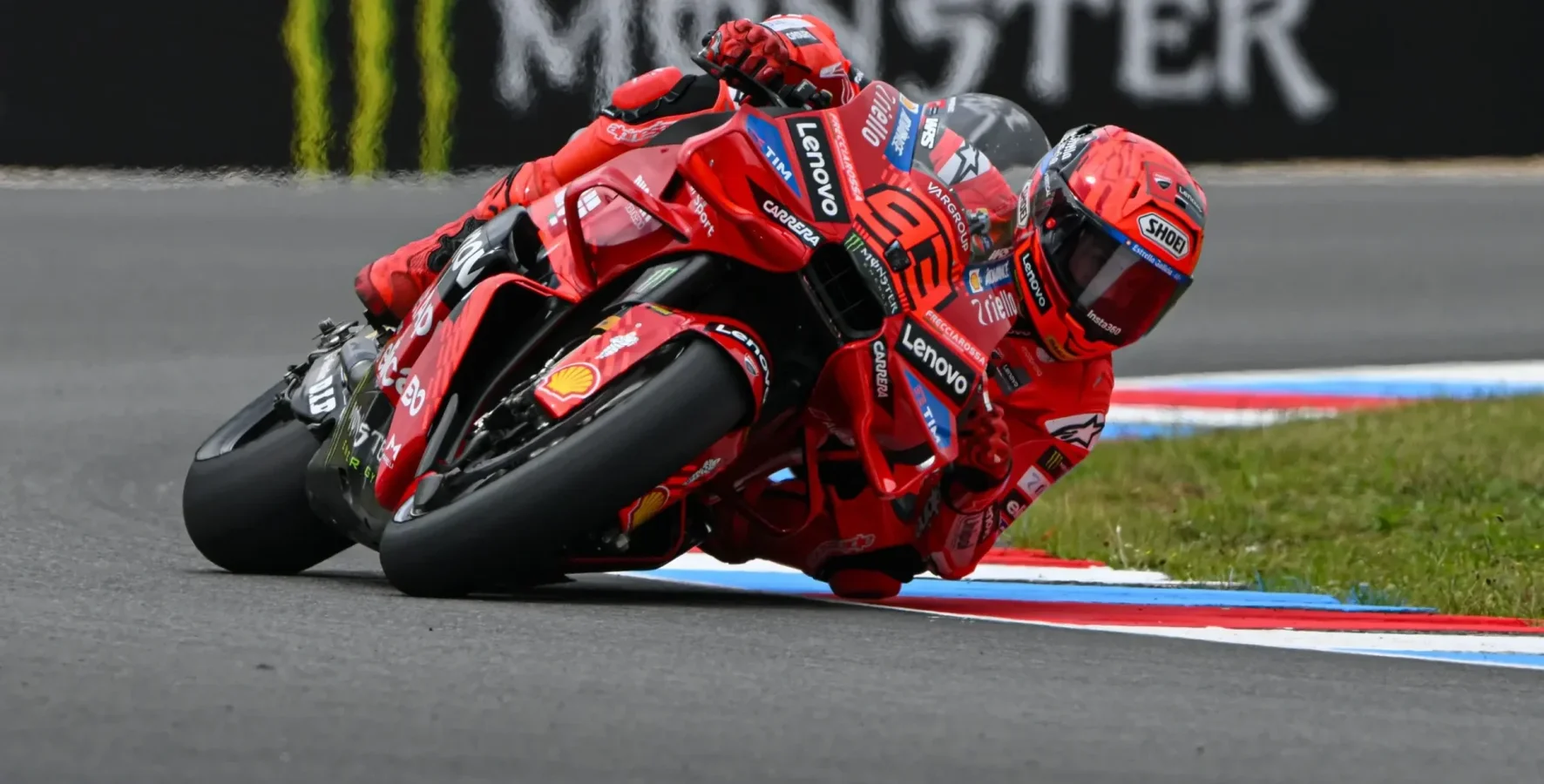
Latest Aerodynamic Innovations Unveiled at Brno Race
During the recent race in Brno, Aprilia displayed two different aerodynamic upgrades on their RS-GP motorcycles. One variant aimed to redirect airflow upward, while the other focused on enhancing rear downforce for better stability. These advancements highlight the work of engineers such as Marco De Luca, whose expertise is central to Aprilia’s aerodynamic breakthroughs.
The ongoing development reflects an intense engineering effort to push aerodynamic boundaries in MotoGP, offering new possibilities for speed and control that complement the skills of riders and the demands of modern racing circuits.
Future Regulations May Limit Further Aerodynamic Developments
Looking ahead, changes in MotoGP regulations expected to take effect in 2027 could restrict certain aerodynamic innovations, especially in less regulated areas like the seat section. Until these rules come into force, teams like Aprilia and Ducati will continue experimenting with aerodynamic features, contributing to a trend that makes MotoGP motorcycles increasingly resemble streamlined aircraft.
This evolution marks a transformative period for the sport, with aerodynamics becoming as critical as engine power and rider skill in determining race outcomes.
The Significance of Aprilia and Ducati’s Aerodynamics Battle for MotoGP
The escalating aerodynamics battle between Aprilia and Ducati is reshaping the future of motorcycle racing. Their rivalry drives rapid advancements that push the limits of technology and performance. As Aprilia challenges Ducati’s previous aerodynamic dominance with bold innovations, the competition enhances excitement and sets new standards in MotoGP engineering.
Fans and teams alike will be watching closely to see how these developments influence upcoming races and how the regulatory landscape will shape the next era of MotoGP technology.
Our Reader’s Queries
Q. Is MotoGP better than F1?
A. Formula 1 cars are faster in terms of speed and lap times. However, MotoGP is thrilling too, with more overtakes, tight races, and increased physical risk.
Q. What is the average salary for MotoGP?
A. For instance, F1 Engineering positions can earn up to $69,900, which is 130.7% higher than the average Motogp salary of $53,499.
Q. Why is MotoGP not so popular?
A. It’s unfortunate that entertainment attracts more attention than sports, and MotoGP is attempting to benefit from this. Unfortunately, MotoGP lacks the personalities needed to make it dramatic and entertaining.
Q. MotoGP’s highest earner, Fabio Quartararo, takes home four times less than Formula 1’s top-paid star, Max Verstappen, who earns a staggering £50m per year. F1 driver salaries: how do much Formula 1 drivers earn?
A. Who earns the most money as a rider in MotoGP?
