
Austin Cindric, a standout driver for Team Penske, recently discussed the notable differences between the Xfinity Series cars and the Cup Series vehicles, focusing on how they handle turbulent air and the reasons behind increased aggression toward the end of races. His insights shed light on factors influencing driver behavior beyond just the design of the Next Gen car.
How Turbulent Air Differs Between Series Cars
Cindric emphasized that every racing series deals with “dirty air,” the disturbed airflow left behind by vehicles that affects trailing cars. However, he highlighted how the cars handle this air differently. Specifically, he noted that Xfinity cars, with their longer rear quarter panels, allow drivers to influence the car ahead more significantly through close proximity, while Cup Series cars behave differently in this regard.
He explained,
I feel like in the Xfinity car with the longer rear quarterpanels, you could definitely affect the car in front of you by your proximity a lot more than you can in our (Cup Series) cars. On the flip side, taking air off each other’s doors in the Truck and Xfinity car also affects the racing.
—Austin Cindric, Team Penske driver
This dynamic contributes to increased side-by-side racing in the Cup Series Next Gen car, although Cindric remained uncertain whether this is inherently positive or negative. Beyond aerodynamics, he pointed out the high level of competitiveness among drivers in the Cup Series, which plays a crucial role in race intensity.
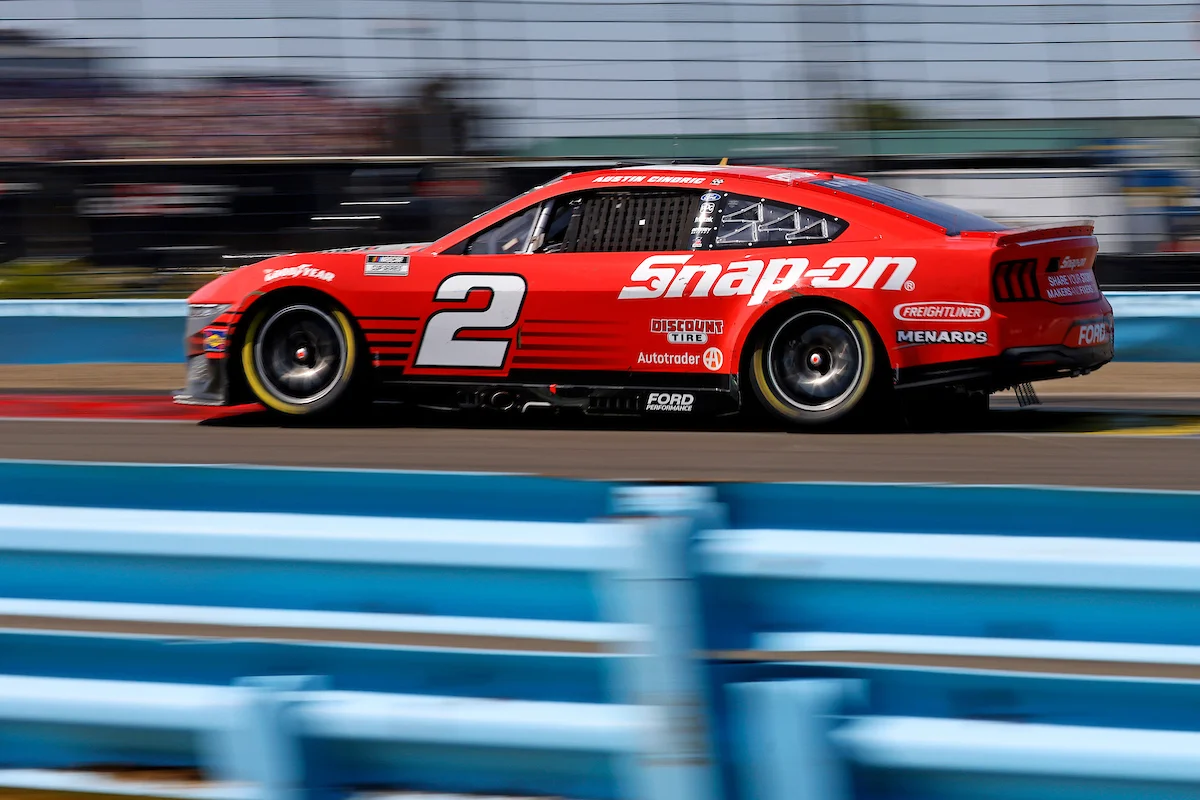
He said,
That’s the nature of having a highly competitive series. If I’m half-a-tenth to a tenth faster than you in any series, am I going to realistically expect to pass you? That’s going to be a hard pass to actually make. I’m going to have to go off the line, have a big enough run, so I think there are a lot of details other than just the air.
—Austin Cindric, Team Penske driver
Understanding the Growth of Late-Race Aggression
Cindric reflected on the increased aggression seen near race conclusions, weighing whether the equality enforced by the Next Gen car encourages these behaviors. He argued that the heightened intensity is not unique to parity within the series, but rather a feature common across racing forms.
He observed,
I think you’re going to get close to the end of the race in any series and you’re going to have an uptick in aggression,
and added,
I mean, you watched Watkins Glen in the Xfinity and the Truck Series. We wrecked a bunch of stuff just because it was the end of the race, so I feel like that is just racing.
—Austin Cindric, Team Penske driver
The driver attributed late-race accidents to the urgency drivers feel when trying to improve their positions in the closing moments. This urgency, he suggested, is a natural component of competitive racing rather than solely a consequence of the Next Gen car’s design.
Why Multi-Lane Tracks Enhance the Racing Experience
According to Cindric, every driver pushes their vehicle through turbulent air differently, and this variability is what enables dynamic racing. He expressed a preference for tracks featuring multiple lanes, as they provide opportunities for more overtaking and side-by-side contests, adding to the excitement and challenge of competition.
Upcoming Races and Continuing Performance
Looking ahead, Cindric is set to compete at Richmond this Saturday. His playoff position is already secured, allowing him to approach the race with a confident mindset. His perspective on racing dynamics and car performance underscores the complex mixture of skill, strategy, and vehicle characteristics that define the intensity of NASCAR events.
