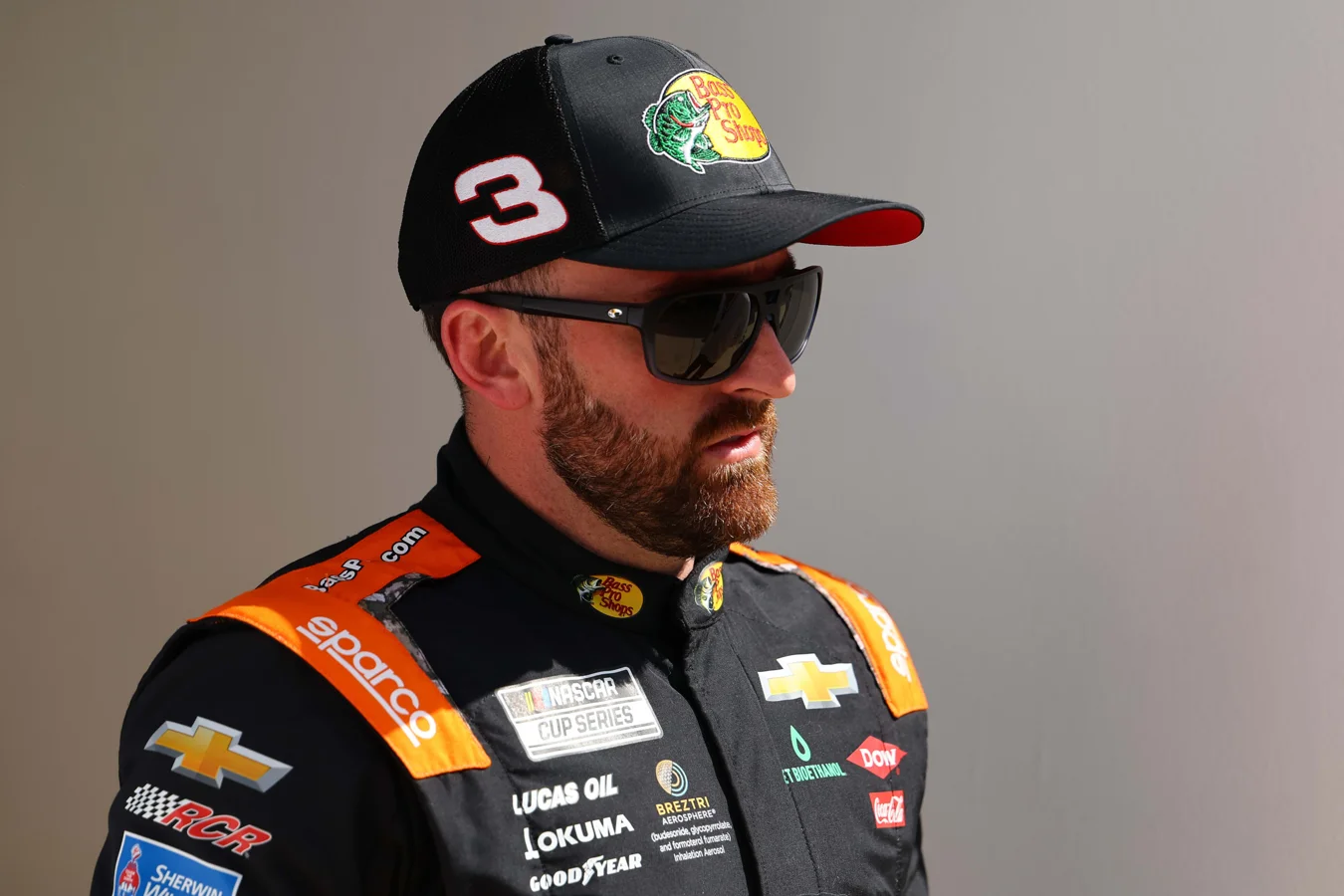
After the recent NASCARrace at Dover, Richard Childress communicated firmly with his team over the radio, criticizing Austin Dillon’s Dover race performance along with Kyle Busch’s. Denny Hamlin, a fellow team owner and driver, has shared his perspective on Childress’ blunt messaging, defending the team owner’s approach despite the late stage of the NASCAR season. Childress expressed the urgent need for improvements, emphasizing the team must “get some racecars” and gain more speed to be competitive.
Race Outcomes Show RCR Struggling to Compete
Kyle Busch finished in 11th place while Austin Dillon ended up 15th at Dover, a track where both were expected to earn top-10 finishes. Instead, the two RCR cars lost pace as the race progressed and ultimately slipped down the field. This disappointing performance highlighted broader challenges facing Richard Childress Racing, sparking Childress’ candid remarks that they need to assemble better cars to give their drivers a shot at winning.
Hamlin Supports Childress’ Accountability for the Team
—Denny Hamlin, NASCAR teamowner. Hamlin suggested that Childress was pushing his team to rethink approaches rather than accepting the status quo.
“I think he’s challenging his employees to come up with some different answers. He knows the parts and pieces are the same, but they’re obviously, what I believe he’s saying is that we’ve got to put them together better.”
Uncertainty Surrounding RCR’s Technical Issues
It remains unclear whether RCR’s problems arise from car setups, crew chief decisions, engine performance, or other factors. Hamlin speculated the solutions could involve various technical aspects, including tire data or simulations, noting that Childress likely wants fresh thinking from every department.
Image of: Austin Dillon
“Well, it could be simulation, it could be tons of things. Maybe they’re getting different answers in the tire department than what others are,”
Hamlin said.
“I don’t know. I’m not close enough to the situation to really know, but I’m here speculating that he’s challenging everyone to, you know, we can’t come back with the same thing. This is not working. We’re not fast enough. We need better cars. We need to give our drivers a better opportunity to win races.”
The Importance of Childress’ Forthrightness as Viewed by Hamlin
As both a driver and teamowner, Hamlin appreciates Childress’ willingness to be direct and hold his team accountable. He believes that such candid communication signals support for the drivers, making it clear that the car’s performance—not the drivers themselves—is the issue. Hamlin emphasized the value of this honesty in the high-pressure environment of NASCAR.
“I can tell you this, as a driver, though, you like that,”
Hamlin remarked.
“I would like that. If I know that I’m going to a gun fight with a knife, it’s like, I want my owner to have my back, saying, it ain’t our drivers.”
Potential Risks and Benefits of Public Criticism Within RCR
Hamlin also acknowledged a downside: such public pressure might cause unease among employees trying to deliver results. However, he argued that this tension is part of a competitive team environment and that Childress’ transparency could help identify which team members are best suited to remain.
“I guess the negative could be is that you know, now you’re going to put spotlights on all those people that are making those decisions, and they could feel pressure from that,”
Hamlin noted.
“You know, if you can’t stand the pressure, get out of the kitchen. I just think the positives outweigh it. I think when you say that, you’re having the drivers’ back. You’re letting them know that you’re not happy with what you’re bringing for them to compete in. And yet maybe there needs to be a discussion publicly. Sometimes that works best.”
What’s Next for Austin Dillon and RCR
The public challenge from Childress highlights increasing urgency for RCR to improve its cars and racing strategies, especially as the NASCAR season continues. With Austin Dillon’s Dover race performance falling short of expectations, the team faces pressure to find better speed and solutions quickly. The coming races will be telling in whether these internal calls for change translate into tangible improvements on track and if RCR can regain its competitiveness in NASCAR’s demanding environment.
Our Reader’s Queries
Q. Did Austin Dillon lose his appeal?
A. Bill Mullis, who served as the appeals officer, decided to reject the appeal made by Dillon and Richard Childress Racing.
Q. Was Austin Dillon punished?
A. Dillon deliberately crashed into Denny Hamlin and Joey Logano after the last turn to win his first race in two years.