
Austin Dillon has taken a prominent role both on and off the track in 2025, stepping into the spotlight as Richard Childress’ NASCAR team, RCR, navigates an uncertain future amid retirement discussions. Dillon, carrying the weight of a family legacy and the challenge of modernizing a historic team, described Childress as “the rock” holding the organization together during this pivotal moment.
A Legacy Built from Humble Beginnings to NASCAR Powerhouse
Richard Childress transformed a modest operation, starting with a $20 1947 Plymouth purchased in 1969, into one of NASCAR’s most enduring family-run dynasties. His hands-on leadership style—being present in the garage late into the night and on trackside, personally handling car setups—helped forge RCR’s identity. Childress famously paired with Dale Earnhardt to win championships and define an era in NASCAR history. This foundational work created a culture and an institutional memory that continues to influence the team’s direction today.
Even as Childress approaches 80 years old, his involvement remains central. In an interview with NBC Sports in July 2024, Childress said,
“I’m more involved than I have been in several years because I want to get the right people to help me make the right decisions. I don’t want to make all these decisions on my own. I’ve got to have the right people helping make those decisions,”
emphasizing the importance of the right support as he carefully manages the team’s future.
Austin Dillon’s Increasing Role and Determination to Uphold Family Legacy
This season, Richard Childress’ grandson Austin Dillon has emerged as both RCR’s lead driver and a key figure in the team’s transition toward sustainability and competitiveness. His victory at Richmond marked a defining moment in his racing career, earning a playoff spot with a tactical late pit stop and a dominant run up front. However, Dillon’s responsibilities extend beyond racing, as he faces the challenge of preparing the organization for life after Childress’ eventual retirement.
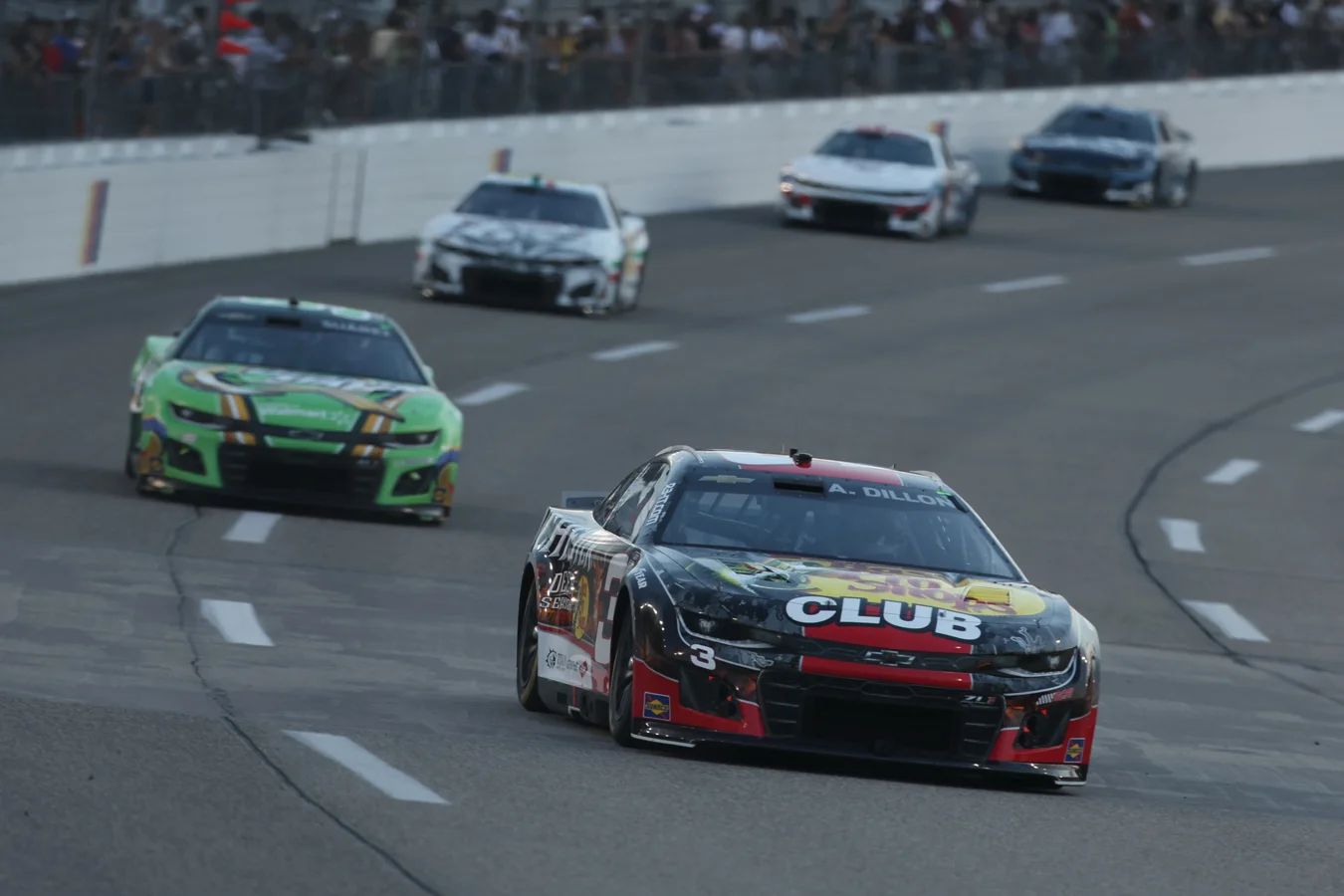
Reflecting on his grandfather’s role, Dillon stated after the Richmond race,
“Well, you look at our organization and there’s one rock in the middle of it, and that’s my grandfather. And he’s always been there. He’s always the guy on top of the truck trailer, giving his all,”
highlighting how Childress embodies the work ethic and leadership that remains central to RCR’s spirit.
Dillon acknowledged the difficulty of filling Childress’ shoes, noting,
“You don’t see that from every owner out there. And so if I can be a rock to help the rest of the organization when the rock is getting older, you know what I mean? He’s getting older, but he’s still a fighter. You just want to fill those shoes as best you can and help when you can.”
In addition to driving, Dillon has taken on broadened duties including crew chief selection, overseeing technical partnerships, and mentoring emerging talent such as Richard Boswell, a recent addition to the leadership team.
On Boswell’s capabilities, Dillon praised,
“Richard Boswell’s a heck of a leader. He’s a really good kid for us in the offseason. He’s a guy that could be a leader for years to come after crew chief and for us. You know, the guys really rally behind him. I love that. And he built an excellent team for us.”
This leadership evolution follows a difficult 2024 for RCR, a year without a single Cup victory and disappointing standings.
New Leadership and Strategy Aim to Restore RCR’s Competitive Edge
Key staff movements have coincided with RCR’s shift toward renewed competitiveness. Richard Boswell arrived from Stewart-Haas bringing fresh momentum, while Keith Rodden was promoted to Vice President of Competition. Boswell introduced a revised approach to car setups and communication strategies that contributed directly to Dillon’s win at Richmond, where he controlled a commanding 107 laps. Dillon’s simultaneous adaptation as a team leader underscores his commitment to balancing racing duties with organizational growth.
Dillon reflected on his evolving role, saying,
“Multiple times I’ve told him this year, if I can’t go faster than the team I’ve got right now, I need to think about doing something else, moving to another role,”
adding,
“So this feels really good. Just keep working on that and see what we can do in the playoffs. But I think I’ve got a great team right now, probably one of the strongest ones we’ve built.”
Along with these leadership changes, RCR brought on Johnny Klausmeier as Technical Director, solidifying their commitment to long-term infrastructure improvements. Dillon emphasized their reputation among staff, stating,
“Guys coming to RCR because they know what they get with my grandfather,”
and added,
“And then me doing what I can to reach out and tell them, ‘hey, we want to make this organization as strong as some of the top teams out there.’ There’s a lot of big, strong teams out there, and we scrap and call and figure out ways to win. And I think that we have fun when we do that.”
Balancing Tradition and Innovation as RCR Faces Crucial Choices
Austin Dillon occupies a complex position, charged with preserving the deep-rooted traditions established by Childress while pushing the team toward innovation in an increasingly competitive NASCAR landscape. This dual responsibility leaves RCR at a crossroads, tasked with honoring the past yet keeping pace with dominant teams like Hendrick Motorsports and Joe Gibbs Racing.
Dillon’s efforts to blend legacy with a modern mindset reflect the challenges of sustaining a family-driven operation amid evolving demands. His leadership and success on the track offer hope that RCR can remain relevant and competitive well into the future.
Richmond Victory Sparks New Confidence After Previous Setbacks
Last year, RCR suffered a major setback when Dillon’s controversial bump-and-run maneuver at Richmond led NASCAR to revoke his playoff spot, resulting in over $3 million in lost earnings, a situation Childress publicly acknowledged on Dale Earnhardt Jr.’s podcast. Returning with determination in 2025, Dillon aimed to secure a clean and definitive victory, successfully clinching his first playoff berth since 2022.
Dillon expressed his elation after the race, saying,
“Man, that feels good… This one feels so sweet. Man, I love Richmond,”
while post-race radio exchanges captured the raw emotion behind the win. Childress’s enthusiastic shout,
“We f—-ng did it! Great job!”
was met with Dillon’s triumphant response,
“Let’s goooo, baby! WHO IS YOUR DADDY??”
Childress then acknowledged Boswell’s contributions, commenting,
“Great call, Richard (Boswell)! You did it the right way this year, buddy! You did it the way you were supposed to do it last year.”
Although these remarks revived memories of past controversies, the win carried added significance for Dillon as he revealed he had been
“racing with a broken rib right now for the last two weeks,”
underscoring his grit and dedication.
Looking forward, Childress set aside previous disappointments and noted,
“I was not happy with the way things went down… but that’s history.”
For Dillon, the victory symbolized more than points—it represented resilience, family pride, and rewriting his own chapter at Richmond on his terms.
Charting the Path Forward for RCR and its Racing Heritage
The dynamic between Austin Dillon and Richard Childress captures the tension between heritage and evolution within NASCAR’s ever-changing framework. As Childress ages, the leadership baton gradually passes to Dillon, who must navigate expectations, honor tradition, and foster innovation. RCR’s efforts to strengthen its technical team, cultivate new leaders, and compete on equal footing with NASCAR’s top teams underscore their commitment to remaining a formidable presence in the sport.
The 2025 season stands as a testing ground for whether Austin Dillon can fulfill the legendary role his grandfather established or if RCR’s era of dominance is poised to fade. Fans and insiders alike watch closely as the team shapes its next chapter amid fierce competition and high stakes.
