
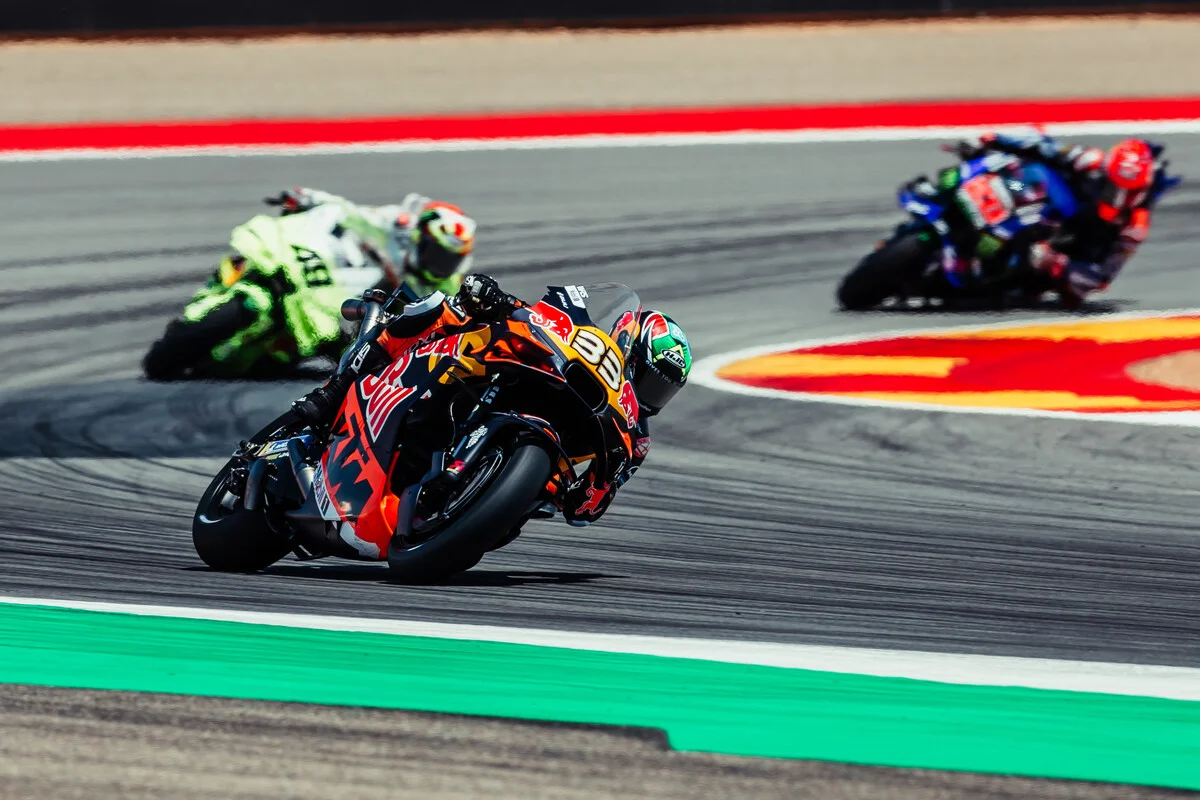
At the recent MotoGP test held at the Aragon circuit, Brad Binder was among a select group of riders testing the sport’s latest in-helmet radio communication. The South African rider expressed strong approval of the new system’s performance, highlighting clear audio reception even during high-speed riding. This test marks a significant step toward the implementation of on-track safety messaging for riders in MotoGP.
Challenges and Innovations Behind the MotoGP Radio System
While Formula 1 has successfully used in-helmet radios for decades, adapting similar technology to MotoGP is notably more complex. The constant wind noise and helmet movement on motorcycles create difficulties for clear communication. To address these challenges, the new system uses bone conduction technology, which transmits sound through pads resting on the jawbone instead of traditional in-ear earpieces. Following several years of development, the technology is expected to be ready for safety communication use by the 2026 season.
Rider Experiences from the Aragon Test
During the test, several riders including Alex Marquez, Lorenzo Savadori, and Johann Zarco reported difficulties hearing pre-recorded messages clearly, particularly on the circuit’s high-speed straights where background noise and helmet shifts interfered with audio reception. In contrast, Binder had no such issues and was impressed with the system’s reliability and clarity.
Honestly they have done a frickin amazing job! I was really impressed,
said Brad Binder.
My helmet didn’t feel any different and I didn’t notice I had anything, and no matter if you are full gas with your head-up or behind the screen or whatever it is, the message comes through super-clear. So, yeah, they did a good job with it.
Binder elaborated on his experience hearing radio messages during full throttle sections:
He compared the bone conduction technology to common headphones that rest near the ears without entering them, explaining that although it feels as if others nearby could hear the messages, only the rider can actually receive the audio.
It is something similar to this: it works super-well.
Hardware Comfort and Future Communication Possibilities
Binder also spoke about the added equipment, mentioning minimal interference with his usual riding setup. The small hardware box was placed in his back hump area, which he barely noticed during the test.
It was the first time I’d ever tried it. I hadn’t used it before and honestly I was quite impressed by the way it worked.
Despite the technical success, Brad Binder expressed some reservation about how much communication riders actually need during races.
Whether we need them or not is another question,
he said.
But if that’s what they want, then I don’t mind.
During the testing day, Binder recorded the 13th fastest time, showing that the system did not negatively impact his performance.
Significance of In-Helmet Radio for MotoGP’s Future
The arrival of a functional in-helmet radio system could transform safety procedures in MotoGP, allowing Race Direction to send real-time alerts directly to riders. Over time, the technology may also enable tactical two-way communications between riders and their teams, sparking debate over its impact on racing dynamics. Successfully integrating this technology marks an important modernization for the sport, balancing rider safety with competitive fairness as the 2026 season approaches.
