
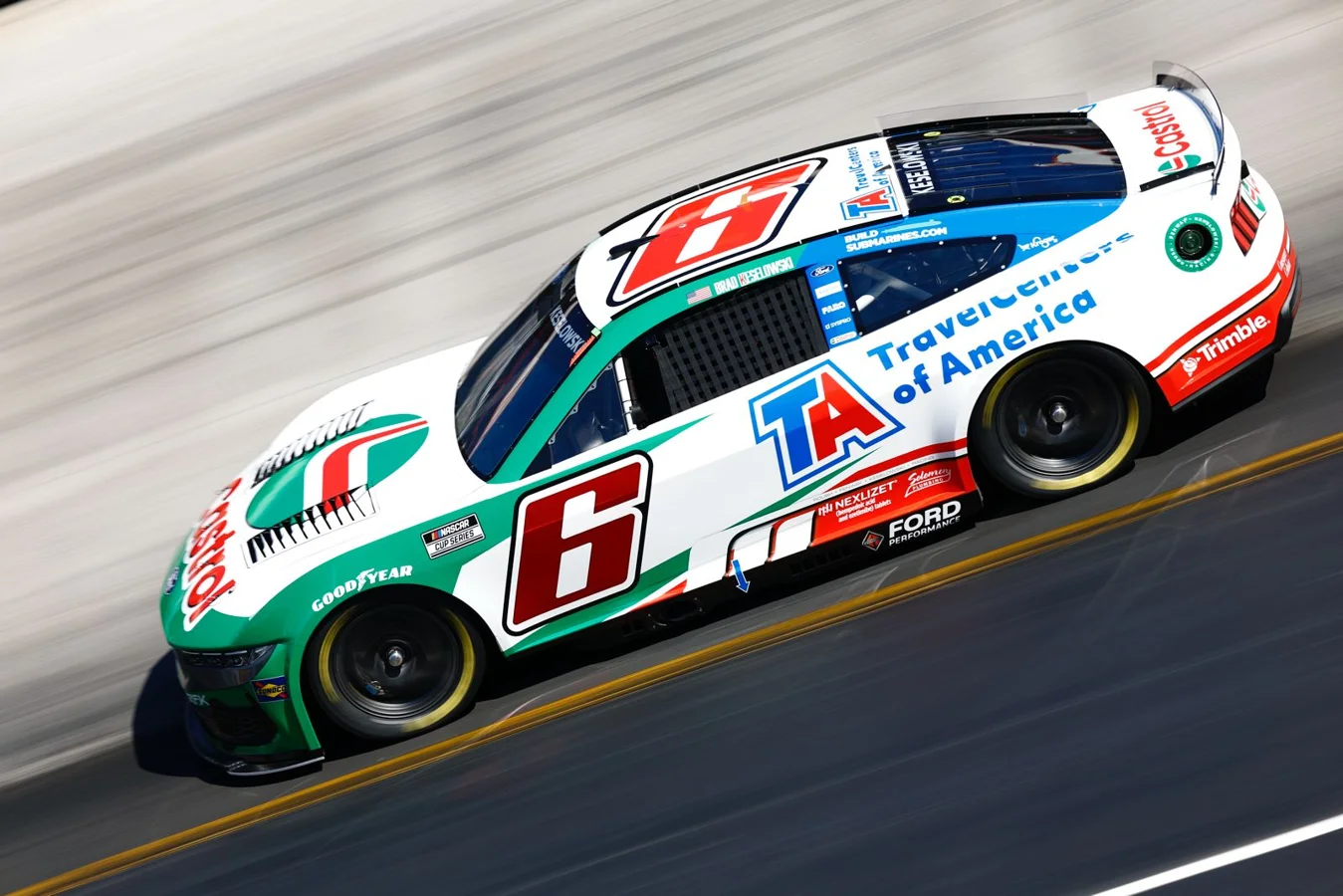
Brad Keselowski, 2012 NASCAR Cup Series champion and current RFK Racing owner-driver, has strongly criticized the NASCAR playoffs format, calling it “very unhealthy” for the sport amid growing concerns in the garage. In a recent interview, Keselowski argued that the playoffs, introduced in 2004, have distorted competition by prioritizing certain races at the expense of others, contributing to challenges in NASCAR’s current Next-Gen era.
Keselowski’s Critique of the Playoff Structure
Keselowski highlighted that the NASCAR playoffs create an unhealthy imbalance by elevating just 10 races above around 20 others on the schedule. He described the system as damaging not only to the integrity of regular-season events but also harmful to the tracks involved, many of which receive less attention and revenue because of the playoff spotlight.
Second, the whole playoff thing has to go away. The nuance of having 10 races that are more important than 20-some others is very unhealthy for the sport.
Brad Keselowski said via Jeff Gluck of The Athletic.
Expanding on this point, Keselowski argued that the playoff races directly compete against other major sports events, which complicates NASCAR’s ability to capture and retain fan interest. He emphasized that this competition reduces the effectiveness of the season’s climax and that the current format is ultimately failing the sport.
It’s demeaning to the other tracks and races. And unfortunately, those 10 races that are supposed to mean more are in direct competition with other sports. It muddies the water. It’s not working for the sport. Those two would be 1A and 1B.
Brad Keselowski added.
Recommendations for Track Evolution to Support the Sport’s Future
Keselowski also addressed broader challenges confronting NASCAR venues, urging track operators to diversify and strengthen their revenue models to sustain long-term growth. He cited a concerning lack of activity at many tracks outside of race weekends, where only a handful of staff are present during off periods, indicating a fragile business model heavily dependent on NASCAR alone.
The first one is the tracks, in general, need to find more ways to generate revenue outside of NASCAR. A lot of these tracks you go to, if you come to them on a Tuesday, three weeks before or after the race, there’s like three people that work there. There’s nobody around. …
Brad Keselowski said.
Because NASCAR tracks primarily rely on a portion of the sport’s substantial media contract—valued at $1.1 billion—they have limited capacity to invest in facility improvements or enhance the fan experience. This financial limitation prevents tracks from competing effectively with venues in other sporting industries.
The tracks aren’t able to raise enough capital to invest in the fan experience, or they’re significantly subsidized out of the media rights (TV deal) to make their business sustainable. That creates a series of dominoes downstream, whether it be the fan experience that doesn’t rival other sports or draining cash flow that potentially could be coming to the teams and enabling things like testing. …
Brad Keselowski added.
Implications of Keselowski’s Criticism for NASCAR’s Future
The comments from the experienced driver and team owner highlight serious concerns about NASCAR’s current trajectory during a pivotal era. With intense competition in the Next-Gen car period, Keselowski’s call to remove the playoffs and revamp track operations underscores the need for systemic change from both sanctioning authorities and teams.
By addressing the uneven importance given to playoff races and pushing for tracks to find additional revenue streams, Keselowski envisions a healthier, more sustainable future for NASCAR. If unresolved, these destabilizing dynamics could further erode fan engagement and financial growth, hindering NASCAR’s ability to remain competitive with other major sports.
