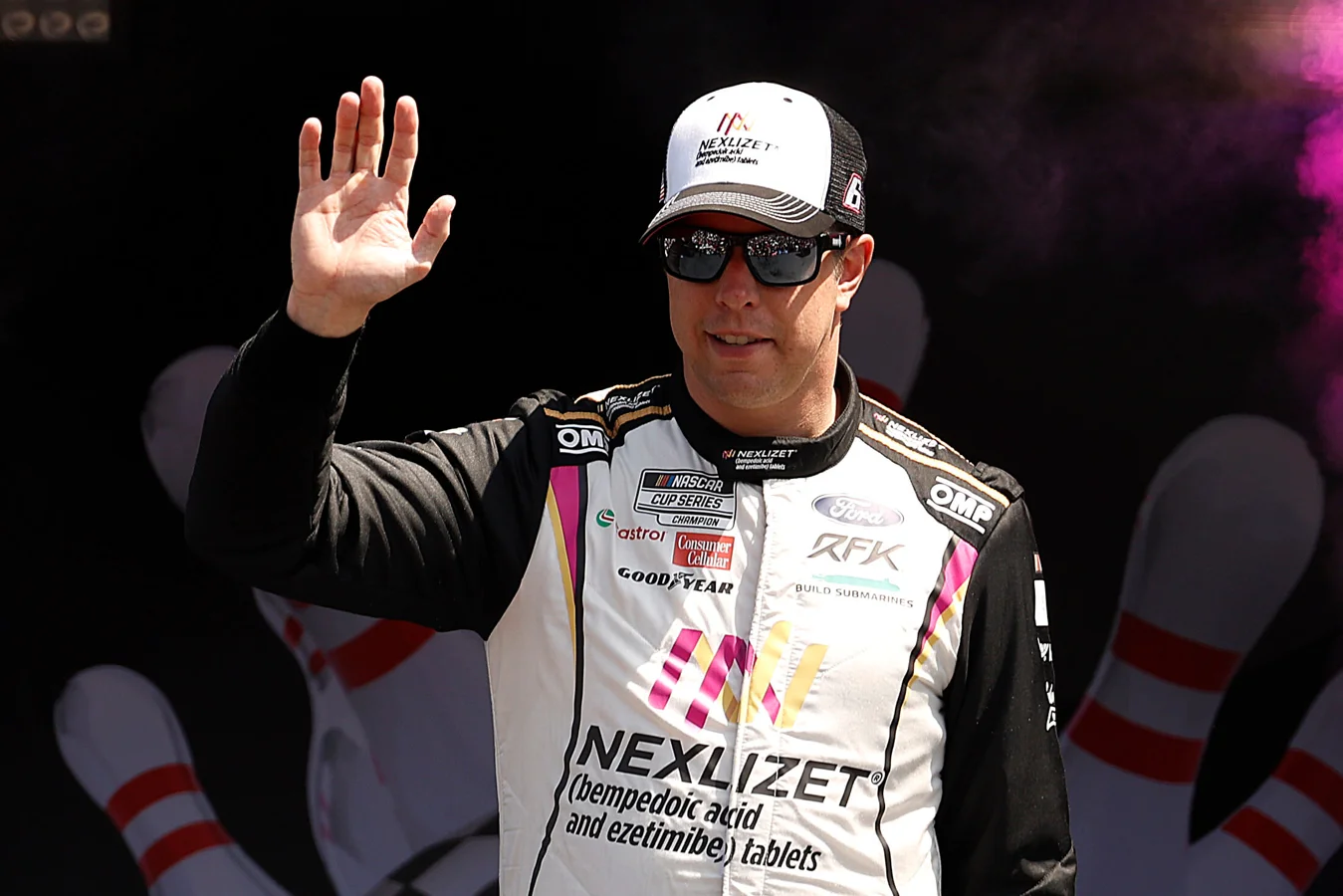
Brad Keselowski has called for immediate and significant reforms in NASCAR, stressing that the sport must evolve to survive and thrive. In a recent conversation with Jeff Gluck of The New York Times, Keselowski detailed three critical areas needing urgent attention, aiming to enhance both competition and fan engagement.
Addressing the Financial Challenges Facing NASCAR Tracks
Keselowski pinpointed the financial difficulties of NASCAR’s racing venues as a central issue undermining the sport’s growth. He explained that many tracks remain largely inactive outside of race events, which severely limits their ability to generate revenue. Keselowski highlighted this reality, stating,
“The first one is the tracks, in general, need to find more ways to generate revenue outside of NASCAR. A lot of these tracks you go to, if you come to them on a Tuesday, three weeks before or after the race, there’s like three people that work there. There’s nobody around.”
Brad Keselowski, NASCAR Driver
This inactivity contributes to a shortage of funds available for investing in better fan amenities and infrastructure upgrades. Keselowski explained the consequences further:
“The tracks aren’t able to raise enough capital to invest in the fan experience, or they’re significantly subsidized out of the media rights (TV deal) to make their business sustainable.”
Brad Keselowski, NASCAR Driver
Such financial constraints cause a chain reaction, adversely affecting the overall fan experience and limiting revenue streams for teams. Keselowski elaborated,
“It creates a series of dominoes downstream, whether it be the fan experience that doesn’t rival other sports or draining cash flow that potentially could be coming to the teams and enabling things like testing.”
Brad Keselowski, NASCAR Driver
Why Keselowski Believes NASCAR Must Abandon Its Playoff System
The current playoff format in NASCAR is another area Keselowski vehemently criticizes. He argued that the playoff system undermines the value of the majority of races and races tracks by making only a handful seem meaningful. He stated plainly,
“The whole playoff thing has to go away.”
Brad Keselowski, NASCAR Driver
According to Keselowski, elevating about ten races above the rest creates an unhealthy imbalance that reduces the significance of the regular season. He argued,
Image of: Brad Keselowski
“The nuance of having 10 races that are more important than 20-some others is very unhealthy for the sport.”
Brad Keselowski, NASCAR Driver
The current structure diminishes the prestige of many tracks and events while forcing the marquee races into direct competition with other sports broadcasts, diluting NASCAR’s overall profile. Keselowski emphasized this by saying,
“It’s demeaning to the other tracks and races. And unfortunately, those 10 races that are supposed to mean more are in direct competition with other sports. It muddies the water. It’s not working for the sport. Those two would be 1A and 1B.”
Brad Keselowski, NASCAR Driver
This critique challenges NASCAR’s long-standing championship model and calls for a return to a format that values the entire season’s competition rather than focusing on playoffs.
The Importance of Attracting New Manufacturers to NASCAR
Keselowski also underscored the vital role new manufacturers could play in reinvigorating NASCAR’s future. He described the involvement of additional Original Equipment Manufacturers (OEMs) as a key to broadening investment in the sport.
He pointed out,
“I’d look at new OEMs as very important, a high tide that raises all ships. They’ll invest in the teams while concurrently investing in the tracks.”
Brad Keselowski, NASCAR Driver
Introducing more manufacturers would increase funding, competition, and technological innovation across the sport, helping teams improve both their performance and financial stability. For NASCAR, experiencing a boost in OEM participation could mark the beginning of a much-needed transformation in how the sport operates and grows.
Brad Keselowski’s urgent recommendations highlight deep-rooted issues within NASCAR, from track economics and playoff design to the critical need for manufacturer involvement. His call for change reflects broader concerns about the sport’s ability to adapt and capture new audiences in an increasingly competitive sports landscape. How NASCAR responds to these challenges may well determine its future trajectory in the years ahead.