
Brad Keselowski and RFK Racing continue navigating the intricate challenges presented by NASCAR’s revolutionary Gen 7 car, a vehicle fundamentally reshaping the competition since its debut in 2022. As teams wrestle with fine margins, Keselowski’s struggle highlights how success now depends on countless precise modifications rather than any single major breakthrough.
Behind the scenes at RFK Racing, where Keselowski drives, the quest for speed unfolds as a meticulous engineering contest rather than one defined by dramatic upgrades. The Gen 7 car’s sweeping design changes have shifted the sport’s dynamics, creating a situation where every tiny adjustment becomes critical to performance.
The Design Overhaul Driving NASCAR’s Evolution
NASCAR’s Gen 7 car, also called the next GEN car, represents one of the most significant changes in the sport’s history. Its tubular steel frame replaces older chassis designs, supplemented by advanced aerodynamic features such as enhanced rear diffusers, hood vents, and stepped splitters crafted to improve airflow and stability. Additionally, updates to wheel hub components, including center lock nuts and refined fittings, support quicker and more precise alignments.
This new generation includes updated versions of popular manufacturer models like the Chevrolet ZL1, Ford Mustang, and Toyota Camry, aiming to modernize NASCAR racing while controlling costs and solidifying manufacturer involvement. Since its introduction, the Gen 7 car has forced teams to confront fresh technical demands to remain competitive.
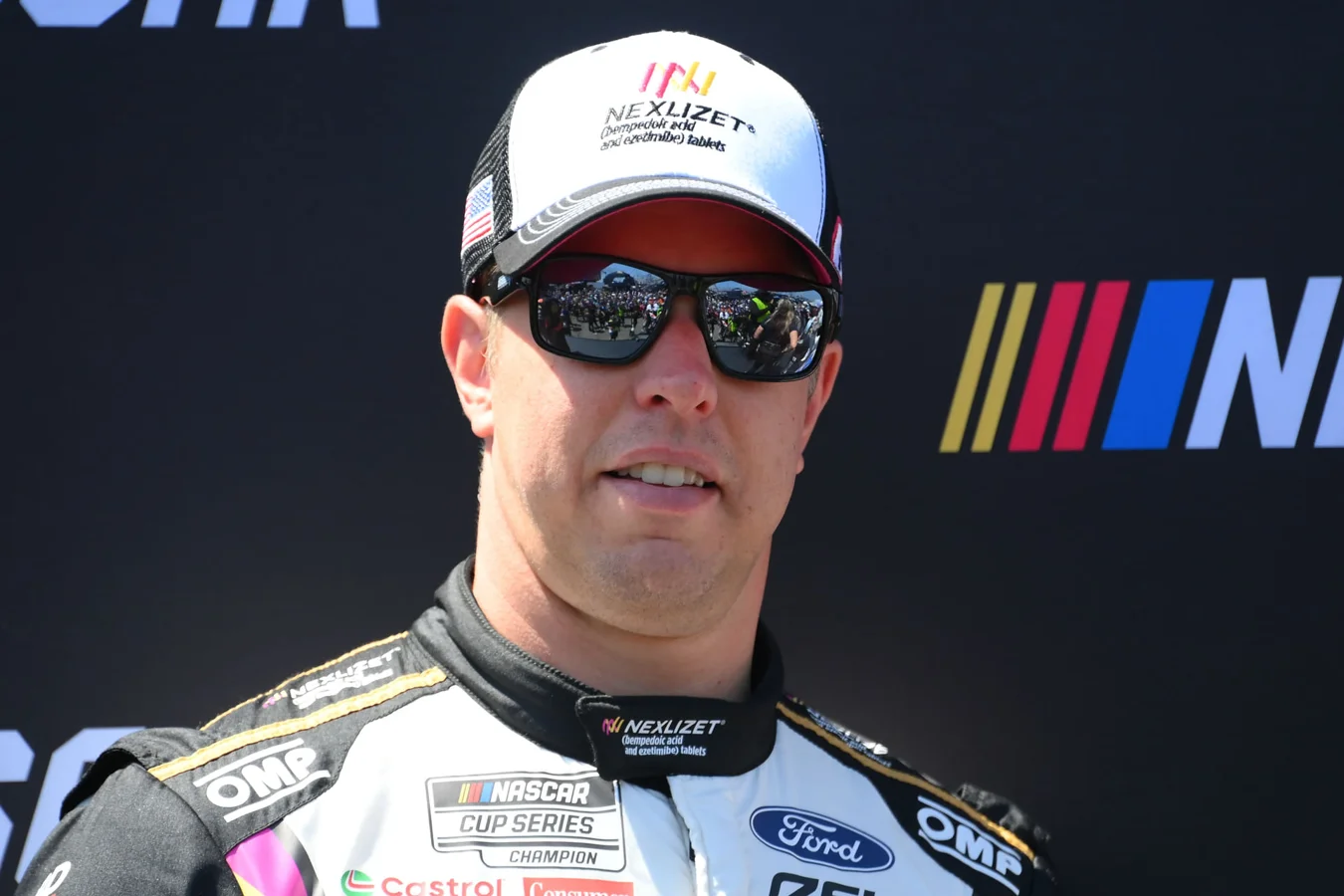
RFK Racing’s crew chief, Derrick Finley, a veteran engineer with over two decades of experience and a degree from the University of New Mexico, leads efforts to optimize Keselowski’s car. With a background spanning roles at DEI, Front Row Motorsports, and Michael Waltrip Racing, Finley brings a deep understanding of NASCAR’s evolving technical landscape.
Tiny Adjustments Define the Search for Competitive Edge
Finley explains that in the current Gen 7 era, finding big performance gains is nearly impossible. Instead, teams must accumulate improvements in micro increments, comparing the challenge to collecting pennies to amount to a meaningful total. Finley says,
“What’s made it harder is that we’re not looking for big chunks. We’re looking for tiny chunks. And sometimes distinguishing whether that was a good chunk or a bad chunk when they’re really, really small is difficult. And not only that, we don’t find like one big chunk and all of a sudden get competitive. We find a thousand, you know, pennies to try to make $10. You know, I mean, and that in itself is hard.”
—Derrick Finley, RFK Racing Crew Chief
Fine-tuning areas like aerodynamic balance requires teams to perfect components such as rear diffusers and splitters, where even the slightest misalignment can compromise handling, especially in corners. This has made the engineering process more about precision than chasing single innovations.
At certain tracks like Fontana, NASCAR permits small tuning windows, allowing incremental adjustments to wheel components such as pin and pilot boards, which teams exploit to squeeze extra performance within the tight regulatory framework.
Finley compares this painstaking process to detailed accounting:
“But what’s even harder is keeping track of those thousand pennies. You almost need a penny accountant that just sits there because we add this to the bill, we add this to the bill. It’s really easy to have a few drums and a few pennies fall on the floor if you try to find more pennies. And keeping them all in the stack and keeping them all in the car bill is what makes this car really, really difficult. It’s more of a – it’s more tedious. It’s more accounting is how I look at it.”
—Derrick Finley, RFK Racing Crew Chief
Engineering Adaptations and Race-Day Repairs Matter More Than Ever
The Gen 7 car’s modular design facilitates rapid replacement of parts, a feature that has proven crucial at tracks like Auto Club Speedway. When incidents such as lift-off oversteer lead to damage, teams can unbolt and swap out entire rear bumper assemblies, preventing race-ending calamities and maintaining competitive pace.
These modular fixes, combined with precise structural tweaks and aerodynamic part replacements, illustrate how success increasingly hinges on managing numerous small details. Finley emphasizes,
“You’re not mining for anything. You’re not going to find that big gold mine. You’re going to find a few little pennies and, boy, you better keep them because if you don’t, now you’re at your own disadvantage. That’s the difference. It’s easier in some respects and more difficult in others.”
—Derrick Finley, RFK Racing Crew Chief
Despite remaining winless alongside new teammate Ryan Preece in 2025, Keselowski is intensifying his efforts to secure a playoff berth, embodying RFK’s commitment to mastering the Gen 7 challenge through persistent refinement.
Debate Intensifies Over Gen 7 Car’s Effect on Racing Quality
The introduction of the Gen 7 car has sparked debate within the NASCAR community regarding its impact on racing quality, with prominent voices split on its merits. Kyle Petty, a former NASCAR driver with a career spanning from 1979 to 2008, defends the new generation vehicle and counters critics like Dale Earnhardt Jr., who doubts the car’s capacity to produce exciting, competitive racing, especially on road courses and short tracks.
During a Performance Racing Network broadcast, Petty argued that NASCAR has evolved far beyond traditional stock cars and that resistance to changes is a recurring theme in its history. He remarked,
“We had one of our prominent members of the NASCAR community, Dale Jr., criticize the Next Gen car the other day. I don’t think that criticism is deserved in a lot of ways. We have not raced stock cars since about 1958. We don’t race stock cars, we race NASCARs. This is the NASCAR car that we have today. People complained in the 70s when they went to tubular chassis. They complained when we went to radial tires. They’ve complained all along as the progression of the cars.”
—Kyle Petty, Former NASCAR Driver
In contrast, Earnhardt Jr. respectfully rejects Petty’s position by emphasizing the shortcomings he perceives in the Gen 7 car’s racing dynamics. He expressed,
“I really, really respect Kyle, I think the world of him, and I appreciate his opinion. But I would just disagree that the car doesn’t produce what I expect. Again, going back 75 years, I know Kyle’s been around a long time, the car doesn’t produce the kind of racing that I know we are capable of at road courses and short tracks. The car does not produce the type of racing that I think should be our standard, and I know what we’re capable of at road courses and short tracks; and I would not stop at trying to achieve f—— amazing great racing at those style tracks.”
—Dale Earnhardt Jr., Former NASCAR Driver
This ongoing disagreement between two respected figures represents the broader tension within the sport as NASCAR weighs how to evolve its technical regulations and whether potential horsepower increases will alter Gen 7’s competitive landscape.
Future Prospects for NASCAR’s Gen 7 Era
As teams like RFK Racing continue their painstaking search for performance improvements across numerous small details, the Gen 7 car is reshaping the competition with a new focus on fine margins and engineering precision. Brad Keselowski’s dedication to adapting to this environment demonstrates the evolving nature of top-level NASCAR racing, where success depends on constant incremental innovation rather than single historic leaps.
Simultaneously, the clash of opinions between veterans Kyle Petty and Dale Earnhardt Jr. suggests that the debate over the Gen 7 car’s impact will persist, potentially influencing NASCAR’s future technical directions and the quality of racing fans experience.
With NASCAR possibly exploring increases in horsepower and further refinements ahead, the coming seasons will test whether teams can continue mastering the penny-by-penny adjustments needed to thrive and whether the Gen 7 car will fulfill its promise of modernizing the sport without sacrificing excitement.
