
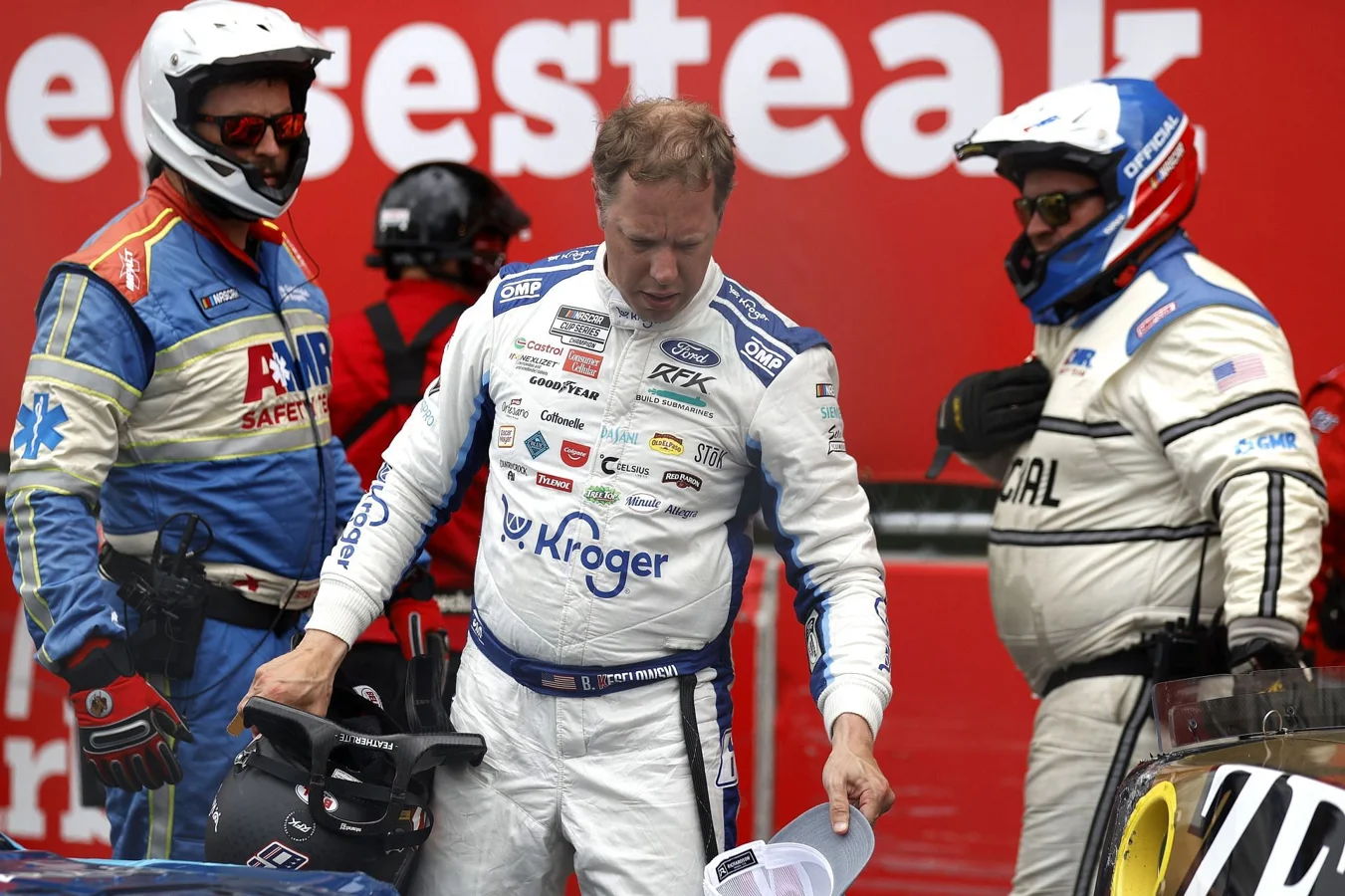
Brad Keselowski has openly criticized the increasing number of road course races in the NASCAR Cup Series, arguing that the schedule has strayed too far from its oval racing roots. This year alone, six road course events are featured, which amounts to nearly a sixth of the full schedule. Keselowski’s remarks have ignited discussion about the future direction of <a href="https://www.big14news.com/nascar/”>NASCAR’s race calendar.
In the 2025 season, NASCAR will hold races at venues such as Circuit of the Americas (COTA), Mexico City, the Chicago Street Course, Sonoma, Watkins Glen, and the Charlotte Roval. Keselowski believes this expansion of road courses undermines the traditional oval-centric format that NASCAR was built upon.
Road Course Expansion Draws Mixed Reactions Within the Sport
From having just two road course races a few years ago, NASCAR has rapidly increased to six, with rumors suggesting the possibility of a seventh next season. Keselowski emphasized this shift as problematic, stating,
“We went from 2 to 6 road course races, possibly 7 next year. NASCAR was successfully built as a primarily oval racing series. IMSA was built as the primary road course series in North America. IMSA will always do road racing better than NASCAR and that’s ok. Yes, TOO many road courses in NASCAR.”
Despite Keselowski’s critique, the increased presence of road and street courses is seen by some as a valuable boost to the sport’s appeal, offering a different style of racing that attracts varied audiences and sponsors.
Balancing NASCAR’s Historic Oval Focus with Growing Road Race Popularity
Although NASCAR’s core remains oval racing, with 30 of 36 events on oval tracks this year, the rise in road courses reflects attempts to diversify the schedule and expand market reach. Tracks in Mexico City and Chicago, along with COTA, also serve promotional purposes by bringing NASCAR to international and urban venues.
Historically, NASCAR has included road races throughout its existence, but the current volume marks a significant increase compared to previous decades. This change highlights an ongoing tension between preserving NASCAR’s heritage and adapting to evolving fan demands and commercial opportunities.
The Impact of Road Courses on Drivers and Competition
Keselowski himself is not renowned as a road course specialist, often making the best of such races without dominating them. Meanwhile, drivers like Chris Buescher have excelled on road courses, posting the best average finishes in the Next Gen car era until Shane van Gisbergen recently entered the picture.
Interestingly, there is an organizational advantage for Keselowski as a team owner, as his team’s success on road courses suggests he benefits from their presence despite his vocal opposition. Younger drivers are also gaining vital road racing experience through series like Trans-Am, which functions as a proving ground for talents such as Connor Zilisch, Brent Crews, and Tristan McKee.
Fan Perspectives and the Future of NASCAR’s Schedule
Fan sentiment has fluctuated over NASCAR’s schedule composition, with periods where more intermediate ovals were preferred, only for those races to be criticized as less exciting, leading fans to favor road courses. However, the novelty of road races can also wear thin, making schedule adjustments an ongoing challenge for NASCAR officials.
Despite Keselowski’s objections, the trend toward incorporating more road courses is unlikely to reverse. Instead, it could grow further as the sport seeks to maintain relevance and attract a broader fan base. Competing with other top-level road racing series, such as IMSA, NASCAR appears to be carving out its own niche by blending traditional oval contests with these increasingly prominent road events.
Marketability and Development Benefits Inside Road Course Racing
Road and street course races serve not only competitive but also strategic marketing purposes, enhancing NASCAR’s visibility in major cities and international markets. By sharing circuits with Formula 1 in locations like Mexico City and COTA, NASCAR amplifies its reach and can engage fans who enjoy diverse motorsport disciplines.
The growing emphasis on road racing within NASCAR also nurtures a new generation of drivers adept at multiple racing styles, ensuring future competitiveness across varied track types. As a result, proficiency on road courses may become a fundamental skill for upcoming NASCAR stars, reinforcing the permanence of this schedule feature.
Our Reader’s Queries
Q. Is Brad Keselowski Polish?
A. Here’s a shout-out on Facebook to Brad Keselowski, an experienced NASCAR driver with Polish roots. He’s competing in the NASCAR Chicago races this weekend. Brad races full-time in the NASCAR Cup Series, driving the No. 6 Ford Mustang Dark Horse.
