
Carlos Sainz is facing significant adaptation challenges at Williams during the 2025 Formula 1 season, following his move from Ferrari after five years. Since joining the British team, he has been adjusting to a new car, a fresh team environment, and a different driving style, all while striving to regain competitive form.
After being replaced at Ferrari by seven-time world champion Lewis Hamilton, Sainz entered a new chapter with Williams alongside teammate Alex Albon. This transition marks a stark change for the 30-year-old Spaniard, moving from a top-tier team regularly fighting for pole positions and podium finishes to one struggling to score points amidst a long period of performance challenges.
Early Season Struggles and Performance Comparisons
Sainz and Albon, forming what many consider Williams’ strongest driver pairing in years, have seen contrasting results early in the season. Albon currently leads in points with 42, compared to Sainz’s 12, and the race results favor Albon seven to one. The qualifying battles, however, are much closer, tied at four apiece during grand prix sessions, with Albon holding a slight edge in sprint races, leading two to zero.
From an outsider’s view, Sainz’s start at Williams appears solid and even promising, but behind the scenes, his adaptation has been far from straightforward. He has described the first three races as an especially difficult period due to the complexities of adjusting to his new team’s dynamics and operational methods.
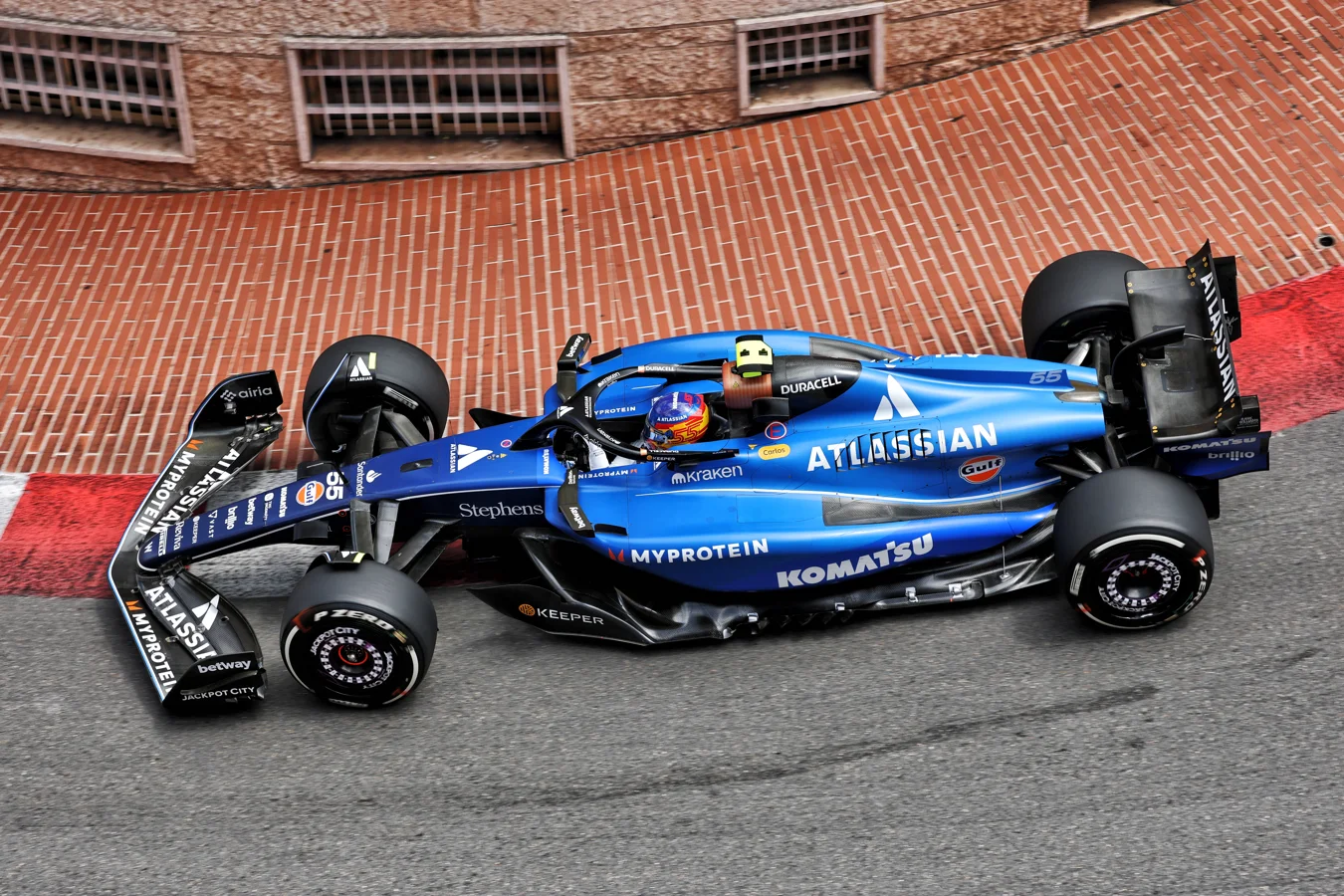
Don’t underestimate how hard it was for me, the first three races. The adaptation process with a new team, how hard it’s been,
Sainz explained during an exclusive interview at the Monaco Grand Prix.
Even now that I’m at a pretty good level with the performance of the car and the speed, even though I still think I have more to come, don’t underestimate how tough it has been also understanding with my engineer, with the strategy team, to bond and to start working really, really well.
Despite these hurdles, Sainz believes the speed he currently possesses is encouraging, and with better communication and teamwork, performance improvements will follow.
So as long as the speed is there, I’m happy.
Adjusting Driving Style to the FW47: A Complex Process
One of Sainz’s biggest challenges this season has been adapting his driving style to suit the unique traits of Williams’ FW47 chassis. Unlike Ferrari’s car, the FW47 demanded relearning certain aspects of his driving technique, which has at times hindered his pace.
The transition to a Mercedes power unit for 2025, a first in Sainz’s career, presented additional difficulties. Shifting from Ferrari’s powertrain to Mercedes has required time to understand and optimize performance, complicating the adaptation further.
Reflecting on specific issues encountered during early races, Sainz shared insights on the surprising aspects of the FW47’s behavior that caught him off guard in both China and Australia.
There’s things in the car that I felt in China and Australia that caught me by surprise,
he detailed.
He recalled performing strongly during the Abu Dhabi and Bahrain tests but encountering unforeseen challenges during China’s qualifying session on the sprint weekend. This led to a reassessment, as he worked closely with his engineers to develop new driving strategies and car setups to mitigate those difficulties.
After doing that, the last few races have been to the level that I think honestly, is better than expected.
Even at this stage, Sainz acknowledges that some weekends may still reveal new obstacles, but he expects these challenges to diminish as he continues to learn.
I’m pretty sure there’s still things to discover that will hold me back some weekends, but hopefully it’s isolated weekends where I discover one thing and I haven’t adapted to one thing.
Improving Race Execution and Enhancing Team Communication
Sainz has identified race execution and the quality of his communication with the team as critical areas for development. While he believes his race reading ability remains strong, he sees room to improve how he conveys feedback to engineers and strategists, which affects decision-making during events.
I think that’s where we need to raise the level a bit and I think that’s never been my problem,
Sainz said.
I think I always tend to read races well, it’s just the way I communicate to the team, the way the team understands what I’m communicating and what I get back from the team, so we do the right decision making and the right process.
I think that hasn’t been going exactly the best way recently, but I’m confident that we can get it to work well.
Building a New Home at Williams Beyond the Track
A significant part of Sainz’s adaptation extends beyond driving, involving his integration into Williams’ team culture and environment. Since visiting the Grove factory in January, he has steadily worked to familiarize himself with colleagues and internal operations.
Four months into his tenure, Sainz feels comfortable and “completely at home,” though he recognizes that deeper connections with some team members will require more time and effort.
There’s still members of the team and people I would like to spend a bit more time with to understand better things inside the team, and this I will need for sure years to keep bonding and to keep understanding people better,
Sainz noted.
And what they are trying to do and what we are trying to achieve in different areas. But I think I can be quite happy with where I am right now.
Although his father, a two-time World Rally Champion, encouraged him to consider Audi’s offer, Sainz chose Williams because of the team’s long-term vision, particularly ahead of the significant regulation changes planned for 2026.
Certainly I signed with Williams because I saw the potential to be back at the level that I was at with Ferrari, or any of the top teams. If not, I would have never have signed with Williams,
he affirmed.
I saw that potential, that vision, that project and I certainly believed that team could do it. If not, I would not have signed.
Sainz highlighted that Williams’ recent acceleration in performance was sooner and sharper than anticipated, especially over the last few races, even if the race results have not always matched the strong pace shown.
I’m not going to lie, the rise in performance has come earlier and more quick than expected. With the last couple of races especially, I think we were performing at a very high level.
Unfortunately, the results haven’t come very nicely on our side of the garage, even though we’ve been extremely quick on Saturdays and Sundays, the results haven’t been backing that nice feeling.
That’s something we are working on and it will come. We are making mistakes and it’s a year to do mistakes.
The Road Ahead for Carlos Sainz and Williams
As this transitional season unfolds, Carlos Sainz’s persistence in overcoming technical and interpersonal adaptation challenges will be crucial to his success with Williams. His acknowledgment of ongoing difficulties paired with optimism about the team‘s direction reflects both urgency and hope.
The Williams project, driven by a renewed vision and rising competitiveness, appears positioned to close the gap back to the front of the grid, especially with upcoming regulation changes. Sainz’s role in navigating this period will likely determine how quickly the team can transform its promising pace into consistent race results.
