
Carlos Sainz has shared the guidance he is providing to the organisers of Madrid’s new Formula 1 race, which is set to become part of the world championship calendar in 2026. Madrid will host the Spanish Grand Prix under a 10-year agreement, featuring a new semi-permanent circuit developed around the IFEMA exhibition centre.
Key Features of the Madrid Track and Sainz’s Involvement
The new Madrid layout will include La Monumental at Turn 12, a distinctive 24-degree banked corner that stretches for 550 metres, forming a central highlight of the course. As an ambassador for the event earlier this year, Sainz has taken an active role not only in promoting the race but also in working behind the scenes with the organising team to ensure the track fosters overtaking opportunities.
Obviously, the circuit itself is going to have a very characteristic corner with a 24% banking and a very long combined section,
Sainz said during the Canadian Grand Prix weekend.
That’s going to be the main character.
He noted that the circuit will not be located in an open area, which limits how the track can be designed, describing it instead as fitting more into a street circuit style.
But for me, where I’m trying to help is the two main overtaking zones to make sure that the braking zone, the approach of the cars and the way the corner opens up is big enough for overtaking. I have to see if we can change or adapt a couple of things that I’ve given advice on.
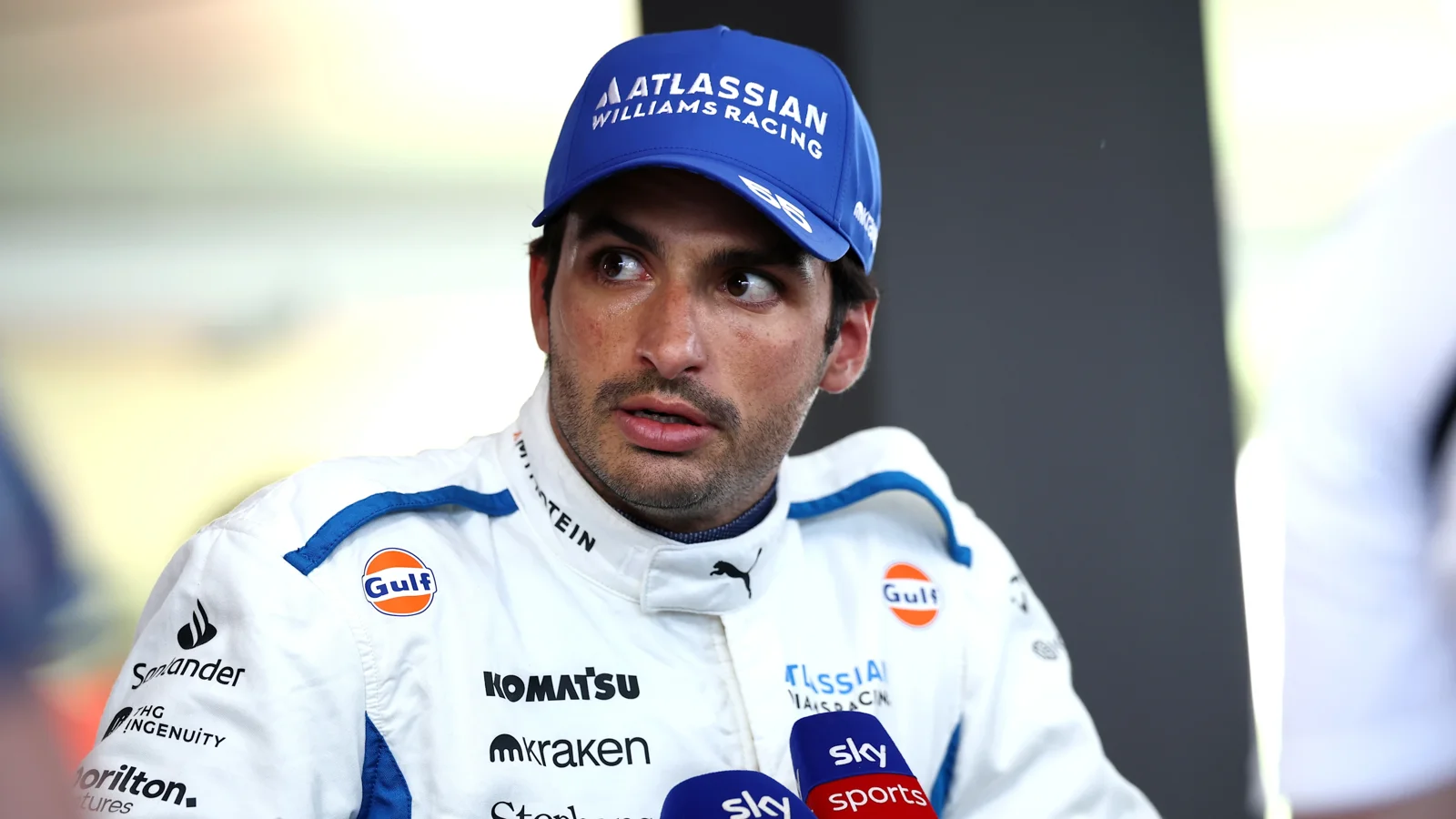
Optimism for Overtaking in Urban Settings Inspired by Other Circuits
Sainz expressed confidence that a modern city-centre circuit like Madrid’s can still enable exciting overtaking, pointing to Baku as an example where urban track design has produced compelling racing despite its challenging corners.
I try to make sure that whatever the track, there is overtaking,
he commented.
Look at Baku. There really isn’t a corner in Baku that is nice from a driver’s point of view. But if it has a very long straight and creates a good spectacle. Everybody loves Baku. That’s what we’re looking for.
Obviously, just because it’s in Madrid, it’s going to have a bit more character, but there’s got to be overtaking.
Balancing Tradition and Expansion Amid F1 Calendar Changes
Formula 1 has faced criticism for a perceived rise in ‘stale’ street circuits, especially as the sport expands beyond its European roots. This shift has contributed to changes in the calendar, including the removal of Imola after 2023 and confirmation that Zandvoort will host its final race in 2026. The future of the Barcelona Grand Prix also remains uncertain, as its contract ends the same year Madrid begins hosting.
Despite these shifts, Sainz acknowledges that introducing new races is part of F1’s commercial development. He underscores the importance of circuits having distinctive character and personality to maintain the sport’s appeal.
I have nothing against having new circuits and new venues, as long as the circuits have character and have personality.
He further explained the need for adaptation and modernization of events, recognizing the balance between Europe’s traditional circuits and the commercial growth opportunities from newer venues like Mexico and Miami.
As far as Europe is concerned, this is a business. You either adapt and create events up to modern standards, which I’m not saying F1 circuits in Europe can’t create, but I also understand Stefano [Domenicali]’s point of view about wanting to keep growing the business and make sure you create races that are up to the most modern F1 standards, like Mexico, the Miami, etc.
Looking Ahead to Madrid’s F1 Future
With the debut of the Madrid circuit scheduled for 2026, the collaboration between Carlos Sainz and the local organisers aims to deliver a race track that combines the city‘s unique character with an exciting, overtaking-friendly layout. This approach seeks to blend tradition with innovation, ensuring the Spanish Grand Prix maintains its importance within the evolving Formula 1 calendar while providing fans with thrilling races.
