
Carlos Sainz, now driving for Williams in Formula 1, is determined to build a top-performing team if he cannot join one of the established front-runners. After four years racing with Ferrari, Sainz embraced a long-term project with Williams, motivated by the challenge to elevate the team to new heights following a career path similar to his role in McLaren’s resurgence.
Since officially joining Williams, Sainz has displayed a resolute mindset, aware of the challenges ahead but driven by the potential he sees in the team’s future. His ambition to participate actively in shaping the team’s progress forms the core of his new mission.
Reflecting on the Transition from Ferrari to Williams
Leaving Ferrari after a significant stint brought Sainz a mixture of feelings, but mainly a renewed sense of stability. The uncertainty of the previous year, knowing he would be leaving Ferrari, contrasted with the clarity and motivation he now has at Williams.
“On a personal level, a lot better. I’m now in a team with a long-term project that really motivates me. I feel part of a family – and that’s not to say I didn’t feel good at Ferrari, I want to make that clear – but last year a different situation developed, as I raced the entire season knowing I would be leaving,”
Sainz explained.
He admits that the decision to commit to Williams took time and was carefully evaluated against opportunities with top teams, which he ultimately was not offered last year. This led him to the conviction that if he could not join a top team, he would build one himself.
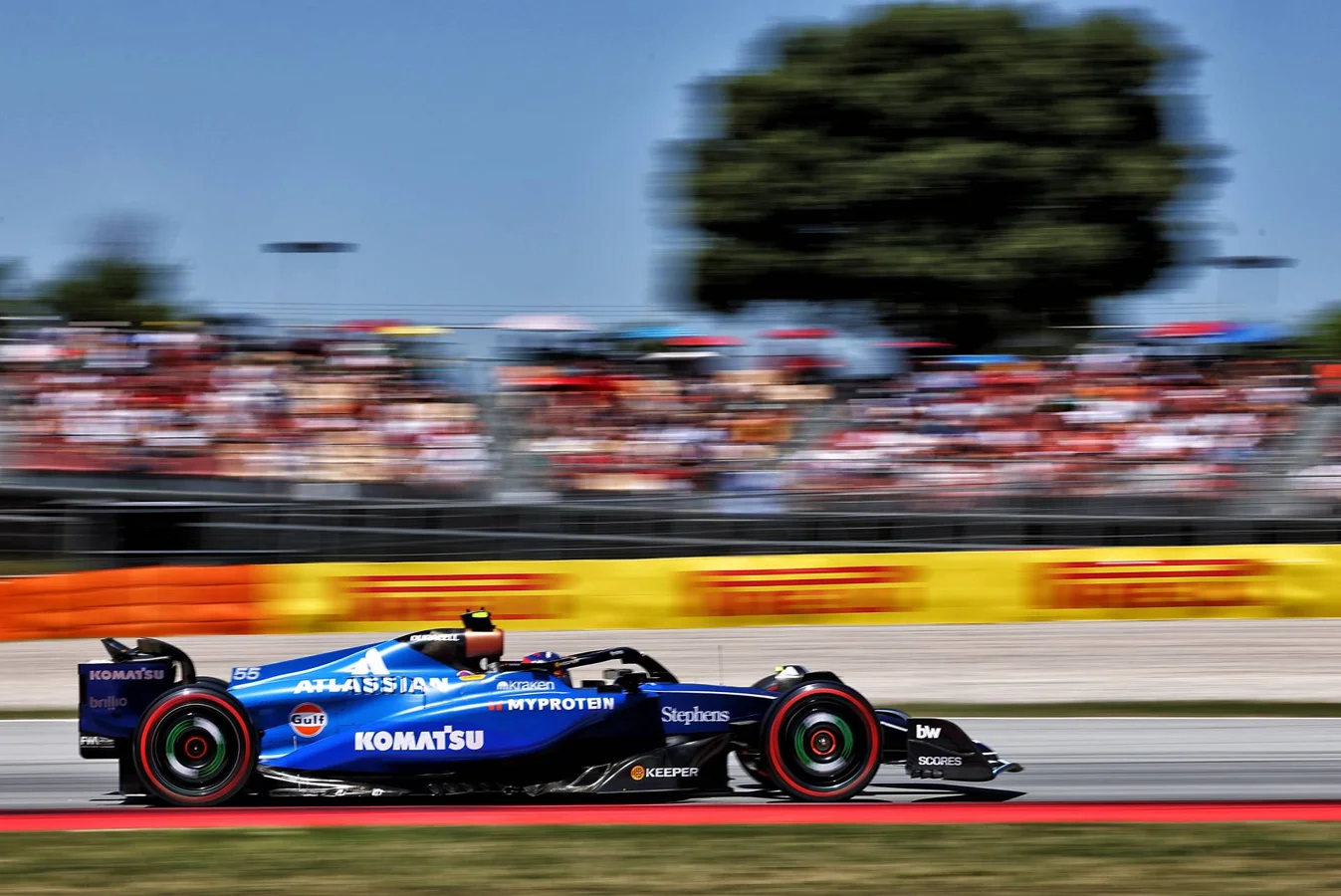
“I believe the people in F1 know perfectly well why certain choices are made – I don’t need to explain it in front of a microphone. So I told myself: if I can’t join a top team, I’ll help build one. At Williams, I saw the potential to start a great story. I spoke at length with James [Vowles] about the project he had in mind, and I decided to bet on Williams because it seemed like the best opportunity to build a top team. Six months into this journey, I can say I’m even more convinced than when I signed. We’re all working 100% to achieve this goal.”
The Challenges and Realities of Switching Teams in Formula 1
Joining a new F1 team involves much more than just changing cars; adapting to the new environment and technical specifications is a major hurdle. Sainz has experienced five different team environments across his career, which gives him a deep understanding of the difficulties involved in transitions, especially with limited pre-season testing.
He points out that drivers face countless subtle differences in equipment and procedures, from power unit characteristics like engine braking and torque curves, to brake feel, tyre management, and qualifying strategies. All these variables require time to master and can only be learned gradually through weekends of racing and data analysis.
“I think this topic is getting so much attention because a great driver is currently facing the difficulties of changing teams. Now people are noticing something I’ve long been familiar with – I’ve switched teams five times. I remember my year at Renault, two years at McLaren, and back then when I said I was still adapting, I don’t think people understood what that meant. ‘You’re an F1 driver, you’re supposed to adapt quickly’ – but I don’t think people truly grasp what that involves,”
Sainz said.
He also emphasizes how crucial familiarity becomes for a driver’s performance:
“A driver who’s spent three or four years in the same team obviously has a deep familiarity with all those things and can maximise performance. In my case, I look at Alex [Albon] – and also Charles [Leclerc] at Ferrari, Verstappen at Red Bull or Russell at Mercedes – to get to that level of feeling takes time, because they simply have that familiarity with things someone new to the team doesn’t know.”
Williams’ Progress and Sainz’s Contribution to Team Development
Williams’ improvement in early races of the current season has surpassed even Sainz’s expectations, validating his decision to join the team. He credits both the team’s rapid technical strides and the ability of drivers and engineers to optimize performance collaboratively.
“I chose Williams because I saw the potential – for exactly what we’re seeing now. That said, the step forward came sooner than I expected – and perhaps the team itself was also surprised by how much progress it made from last year. In the first races, we took a good step forward, but what gives me the most confidence is that once I was able to start tweaking the setup with the engineers, we made another step. I enjoy being able to contribute to the path we’re taking, and I think together with Alex we’re doing a good job in finding the right direction,”
Sainz explained.
Before the Japanese Grand Prix weekend in Suzuka, Williams replaced Sainz’s chassis earlier than planned. Although Sainz acknowledged this change, he attributes performance gains primarily to improved car setup rather than the chassis replacement alone.
Long-Term Vision: Returning Williams to Frontline Competition
Sainz is realistic about the timeline to return Williams to the top echelon of Formula 1. While eager to see continuous progress, he recognizes that matching the front-running teams will take more than immediate gains in car performance; the entire organization must evolve.
“I don’t think we’ll be ready next year. It would be fantastic to take another step forward, because that would mean being with the top teams – but my experience at Ferrari also taught me that it’s one thing to be in the group, another to actually beat the front-runners. This year we’re getting a first taste – in some qualifying sessions, we’ve been able to fight on par with Mercedes and Ferrari, and that wasn’t a given. Then we made mistakes that cost us a lot of points, which proves that a team’s growth isn’t just about the car – the whole organisation has to grow, and I think James is the right person for that. I believe we’ll get there, so in a way it’s better to accept a few mistakes this season – since we don’t yet have a car that allows us to fight for the biggest goals,”
he said.
How Changes in Teams Affect Drivers on and off the Track
Switching teams also impacts a driver’s life beyond racing. Sainz reflects on his emotional connection to Ferrari after four years and expresses gratitude toward fans for their ongoing support, while emphasizing his full commitment to his new role at Williams.
“When you change teams – and I’ve done it many times – other aspects of life change too. It’s natural. From the age of 26 to 30, I was part of an incredible team – it was a great period. When I arrived at Imola this year, the fans welcomed me warmly – I felt loved, and I really want to thank them for that recognition. Those were four beautiful years in which we gave everything for Ferrari. I wouldn’t say I miss it, because I’ve turned the page. I’m now fully immersed in the Williams environment – I’ve got this opportunity and I have to make the most of it – but I’ll always carry some amazing memories,”
Sainz shared.
Plans and Aspirations for the Next Five Years
Sainz’s long-term ambition is clear: to win a world championship driving with Williams. He envisions building a competitive team where enthusiasm and motivation drive a collective vision.
“I’d like to win a world championship – to be fighting with Williams for that ultimate goal. That’s my life project: to have enthusiasm, motivation, and put all of that into a shared vision,”
he said.
Drawing Parallels Between Williams and Past Team Experiences
When signing for Williams, Sainz noticed similarities with his time at McLaren, where he was involved in a foundational phase leading to future success. He emphasized the importance of trusting capable leaders throughout the organization to foster growth.
“It’s about trusting the right people. Teams today are really big, and it becomes crucial to have good leaders in every department. At Williams, I found very capable people across the board. I remember when I joined McLaren, Andrea Stella and Peter Prodromou were there – maybe not yet in the roles they have today – but their profiles and ability were already very clear. When Ferrari came calling, I didn’t hesitate – it’s Ferrari – but I knew McLaren was going to grow. I still bump into Andrea in the paddock and I always tell him: it’s great to see what you guys have achieved. Even though I left just when they were starting to move forward, I have great memories,”
Sainz remarked.
Highlights and Challenges from the 2024 Season
The 2024 season presented Sainz with both personal challenges and notable successes. He regards his McLaren years as some of his best, but recognizes he delivered considerable performances at Ferrari despite the uncertainty surrounding his future.
“It wasn’t the best year of my career – probably my McLaren seasons are still the ones I consider my best. At Ferrari, I had some highlights that led to wins, but clearly the toughest season was the last one. I didn’t know where I’d be racing the following year – and it’s not ideal to compete under such circumstances. To perform at 100%, you need to be calm and in an environment like Max or Charles have – where you know everything, and everything revolves around you. Last year, I tried to make the most of the opportunities that came up – and even though it wasn’t an easy season, I’m proud to have given everything for Ferrari,”
said Sainz.
Memorable Victory and Personal Reflection at Mexico Grand Prix
One of the standout moments of Sainz’s 2024 campaign was his triumphant win in Mexico City, where he approached the race with a profound awareness of his uncertain future. That weekend, he pushed himself to achieve peak performance without knowing if such an opportunity would arise again.
“I arrived in Mexico saying to myself: ‘Carlos, this could be the last time you win a race in Formula 1 – you don’t know what the future holds.’ In a way, I put pressure on myself – but it was a real thought. I knew the car was going to be competitive that weekend, and at the same time I was aware that by going to Williams, I couldn’t be sure I’d drive a winning car again. Of course, my goal is to bring Williams to the top – I believe in my talent – but you can’t predict the future. Looking back on that Mexico City weekend, I don’t know how consciously, but I really pushed myself – and in the end, it worked. I’d say very well. I did the two laps of my life in Q3, made a good move on Verstappen, and won the race. After crossing the finish line, I told myself: ‘This is what I’m capable of,’”
Sainz reflected.
