
During the recent Dutch Grand Prix, Williams driver Alex Albon witnessed a collision involving his teammate Carlos Sainz and competitor Liam Lawson. The incident, which led to a penalty for Sainz, was viewed by Albon from a prime vantage point, giving him a clear perspective on what transpired.
Sainz appeared visibly upset after receiving a penalty that many considered unfair. Albon shared his belief that Lawson was primarily at fault for the collision, standing firmly behind his teammate after the stewards imposed a 10-second time penalty on Sainz.
Detailed Breakdown of the On-Track Incident at Turns 1 and 2
At the start of the race, Lawson positioned himself on the inside line approaching Turn 1, while Sainz attempted to maintain the outside path, which would have switched to the inside for Turn 2. As they progressed through Turn 1, Lawson’s Racing Bulls car effectively closed the door on Sainz’s Williams.
The contact happened as Sainz’s front-right wheel touched the rear-left of Lawson’s vehicle. This clash allowed Albon to capitalize, overtaking both drivers to ultimately finish fifth. Despite this advantage for Albon, the race officials judged the incident to be Sainz’s fault and penalized him accordingly, also adding two penalty points to his superlicence.
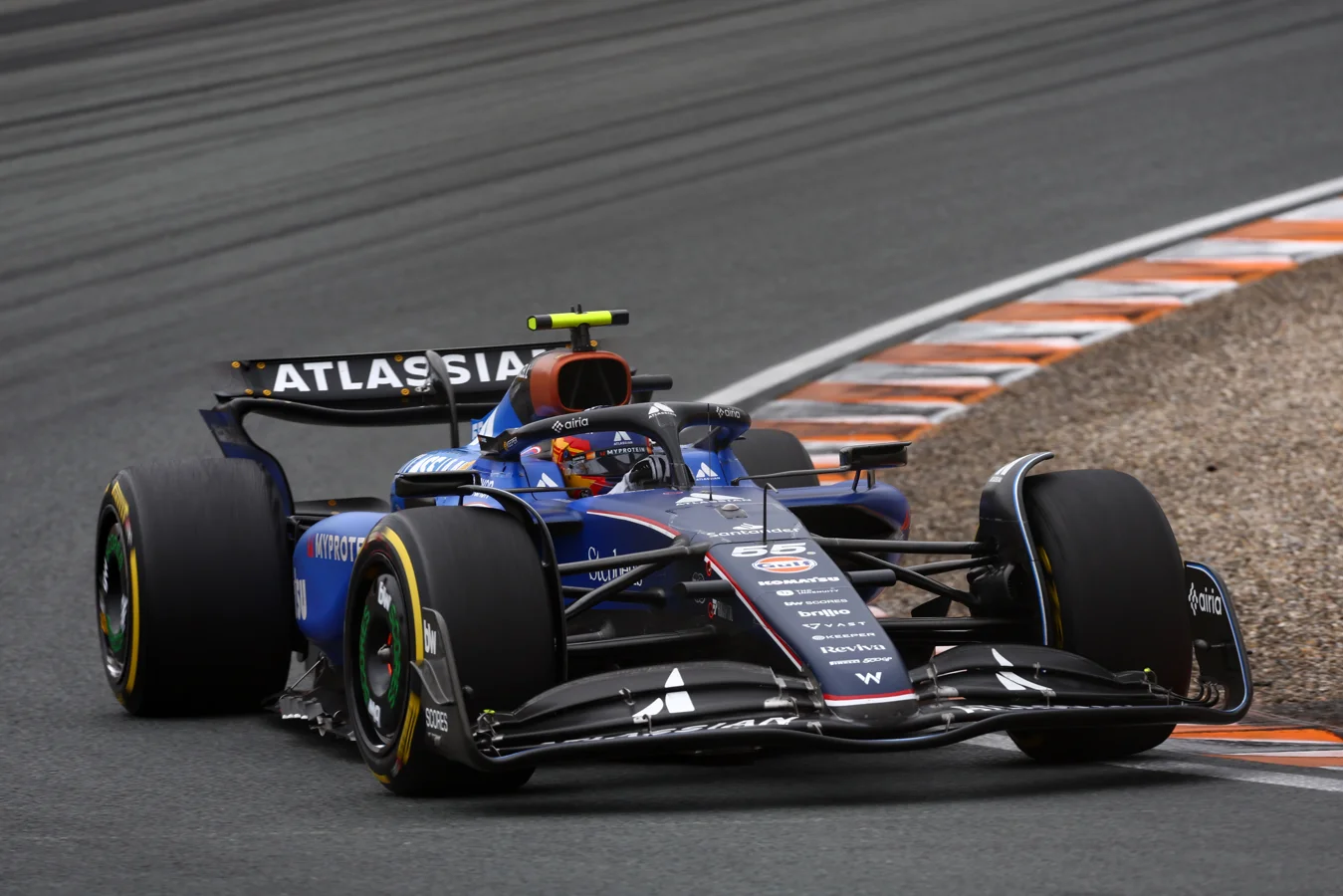
Albon voiced his disagreement with the stewards‘ call, stating his view to several media outlets, including PlanetF1.com.
“To me, it’s quite clearly Liam’s fault,”
—Alex Albon, Williams Driver
He elaborated,
“So, I don’t know why Carlos got the penalty.”
—Alex Albon, Williams Driver
Albon explained that during the middle of the corner, Lawson appeared to widen his steering, leaving Sainz no viable escape path.
“I think I had the best view out of everyone. It looked to me like in the middle of the corner, Liam opened the wheel. Kind of just drove Carlos out to dry. I don’t know where Carlos could have gone.”
—Alex Albon, Williams Driver
He also expressed that if officials were uncertain about the ruling, this type of decision should be finalized post-race rather than immediately on track.
“So I think especially a decision like that, if they’re unsure, should be left to the stewards after the race. But I think it was a wrong decision anyway.”
—Alex Albon, Williams Driver
Contrasting Viewpoints from Liam Lawson and the Race Stewards
Liam Lawson, the other driver involved, accepted the stewards’ ruling despite his own disappointment. When informed that Sainz was unhappy with the penalty, Lawson replied candidly.
He acknowledged the risk involved in the early moments of the race, describing the conditions on lap one as slippery with cold tires, increasing the chance of contact. Lawson also reflected on how he himself had previously been penalized for similar incidents during overtaking attempts.
“So it’s something that we learn from. We all know this. It’s lap one, on a restart, it’s super slippery, cold tyres, and, you know, it’s fine to go for the move, but it’s just risky, and we made contact, which was not ideal, but that’s why he got a penalty.”
—Liam Lawson, Racing Bulls Driver
Despite the disagreement, Lawson accepted the rules as they stand and conceded that the collision, while unfortunate, warranted a penalty under current regulations.
Implications of the Penalty and Reactions from the Teams
The penalty against Carlos Sainz at the Dutch Grand Prix has stirred debate within the Formula 1 community, with some viewing it as a harsh ruling while others see it as consistent with existing protocols. Albon’s support highlights tensions between drivers and race officials over adjudicating racing incidents under challenging conditions.
For Sainz, the penalty not only cost him valuable time during the race but also came with the added burden of penalty points on his licence, which could influence his approach in future events. Albon’s call for clearer and more timely decisions may pressure the stewards to refine their procedures to reduce ambiguity in similar cases.
