
Carlos Sainz has acknowledged difficulties adapting to the Williams car in the 2025 Formula 1 season, revealing it requires a highly distinct driving approach unlike his preferences. His experience echoes Lewis Hamilton’s earlier remarks about needing to adopt an “alien driving style” after taking over Sainz’s seat at Ferrari.
The Spaniard’s comments illustrate the ongoing challenges both drivers face as they adjust to machinery demanding unconventional techniques to compete effectively on track.
Performance Overview: Sainz’s Struggles Amid Strong Teammate Form
After being told before the 2024 season that Hamilton would replace him at Ferrari for 2025, Sainz responded with a career-best year, capturing two wins in Australia and Mexico. However, his move to Williams this season has been fraught with inconsistency.
Currently, Sainz trails teammate Alex Albon by 54 points with eight races to go, as Albon continues to deliver strong results in his fourth full season with Williams. Notably, Sainz has now gone six consecutive races without scoring, including a points-less finish at the recent Italian Grand Prix where Albon secured seventh place. His last points came at the Canadian Grand Prix in June, finishing tenth.
Comparing Sainz and Albon: Race and Qualifying Dynamics This Season
Though specific qualifying and race statistics underline Albon’s edge over Sainz, the Spaniard insists he has felt “relatively good” behind the wheel despite the car’s demanding nature. The Williams requires a “very particular thing” in driving style, not one Sainz naturally prefers, which has affected his ability to consistently produce strong results.
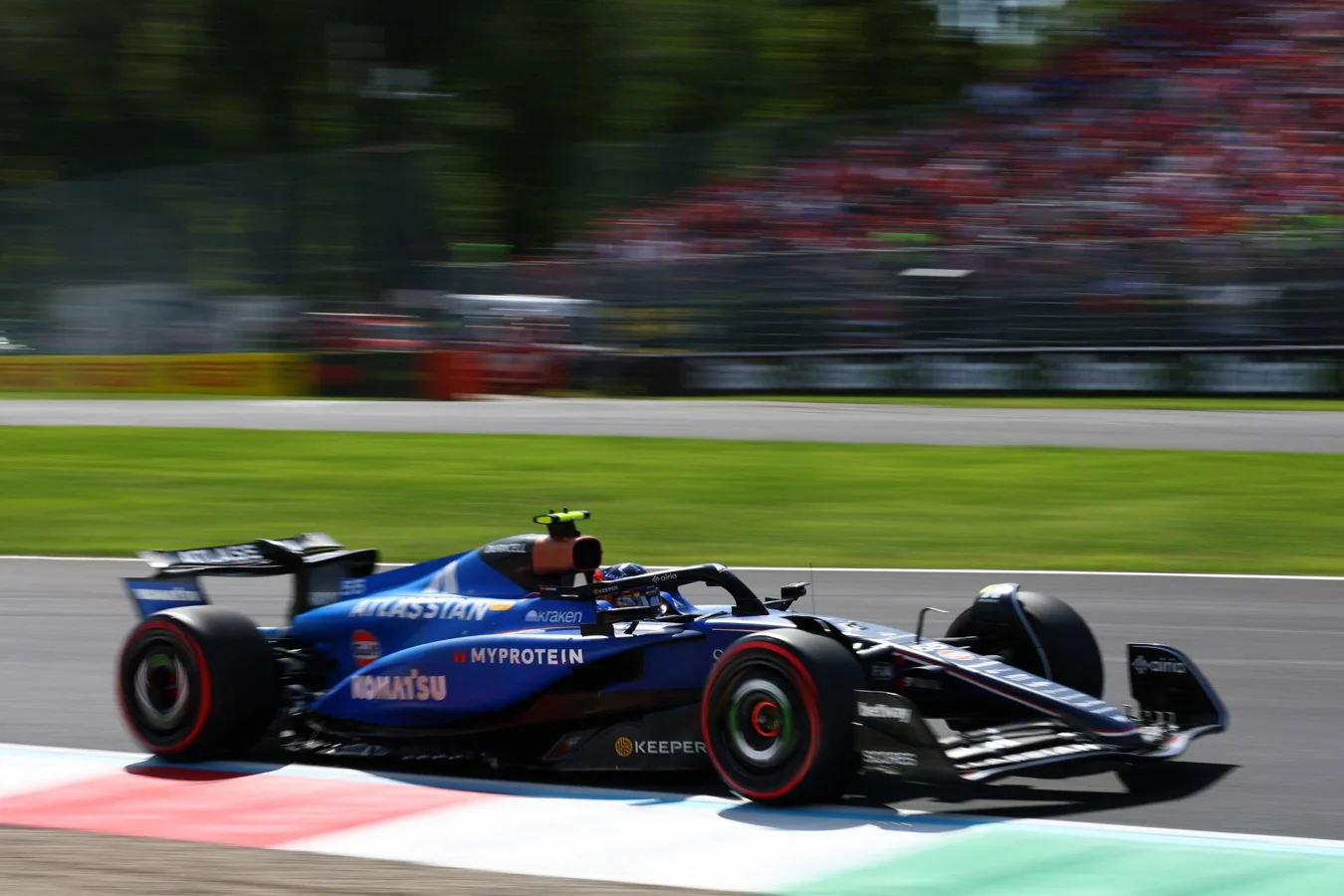
Speaking with PlanetF1.com at Monza, Sainz reflected:
“I think I’ve been feeling good with the car all year. Relatively good. It’s not a car I love to drive. It’s not my driving style that I love to do. It’s a very particular thing that you need to do with the driving [with this car].”
He added that while his qualifying and race pace remains respectable, converting that into solid finishes remains a team-wide challenge.
Technical issues have compounded difficulties this season, including persistent battery problems during the Italian Grand Prix. Sainz explained,
“Depending on how close I was to the car in front, on temperatures I was losing a lot of deployment,”
highlighting how these setbacks have limited his race performance.
Hamilton’s Transition to Ferrari Mirrors Sainz’s Adaptation Woes
Hamilton’s situation at Ferrari has mirrored Sainz’s adaptation struggles. Despite a strong sixth-place finish at Monza, his best result since the British Grand Prix, the seven-time world champion admitted he remains uncomfortable with the SF-25 chassis.
Much of Hamilton’s challenge arises from Ferrari’s engine braking system, which differs significantly from what he experienced at Mercedes. Combined with the characteristics of Brembo brakes used by Ferrari, these factors contributed to a notable spin during the Belgian Grand Prix this year. At Monza, Hamilton said,
“Ultimately, [I’m] driving [with] an alien driving style, with a car that I’m not 100 per cent comfortable with.”
He described how this unfamiliarity demands ongoing adjustments:
“This year, I’m arriving at the track and having to apply this new driving style that’s still alien to me. It doesn’t feel natural.”
Despite this, Hamilton feels his confidence is growing throughout each race weekend, stating,
“To a car, that’s how it likes to work, so through the race I’m just getting better and better and faster and faster – and unlocking with that a gain of confidence.”
Looking ahead, he expressed hope for a return to a driving style more suited to his preferences:
“Hopefully next year it’s not a driving style that’s here, so hopefully I can go back a little bit towards what I would choose to do.”
The Wider Implications for Drivers and Teams
The reflections from both Sainz and Hamilton underline how significant car characteristics profoundly affect driver performance and comfort on track. In the 2025 season, adapting to demanding and unconventional car behaviors remains a critical component for success, often influencing race outcomes and championship trajectories.
For Sainz, overcoming the nuances of Williams’ setup will be essential if he aims to close the gap on his teammate and garner consistent points finishes. Meanwhile, Hamilton’s battle to get fully comfortable with Ferrari’s systems reflects the complexities of switching teams and vehicle philosophies at the highest level.
As the season progresses, these adaptations could shape not only individual results but also the strategic development directions for Williams and Ferrari moving forward, highlighting the delicate balance between engineering and driver compatibility in Formula 1.
