
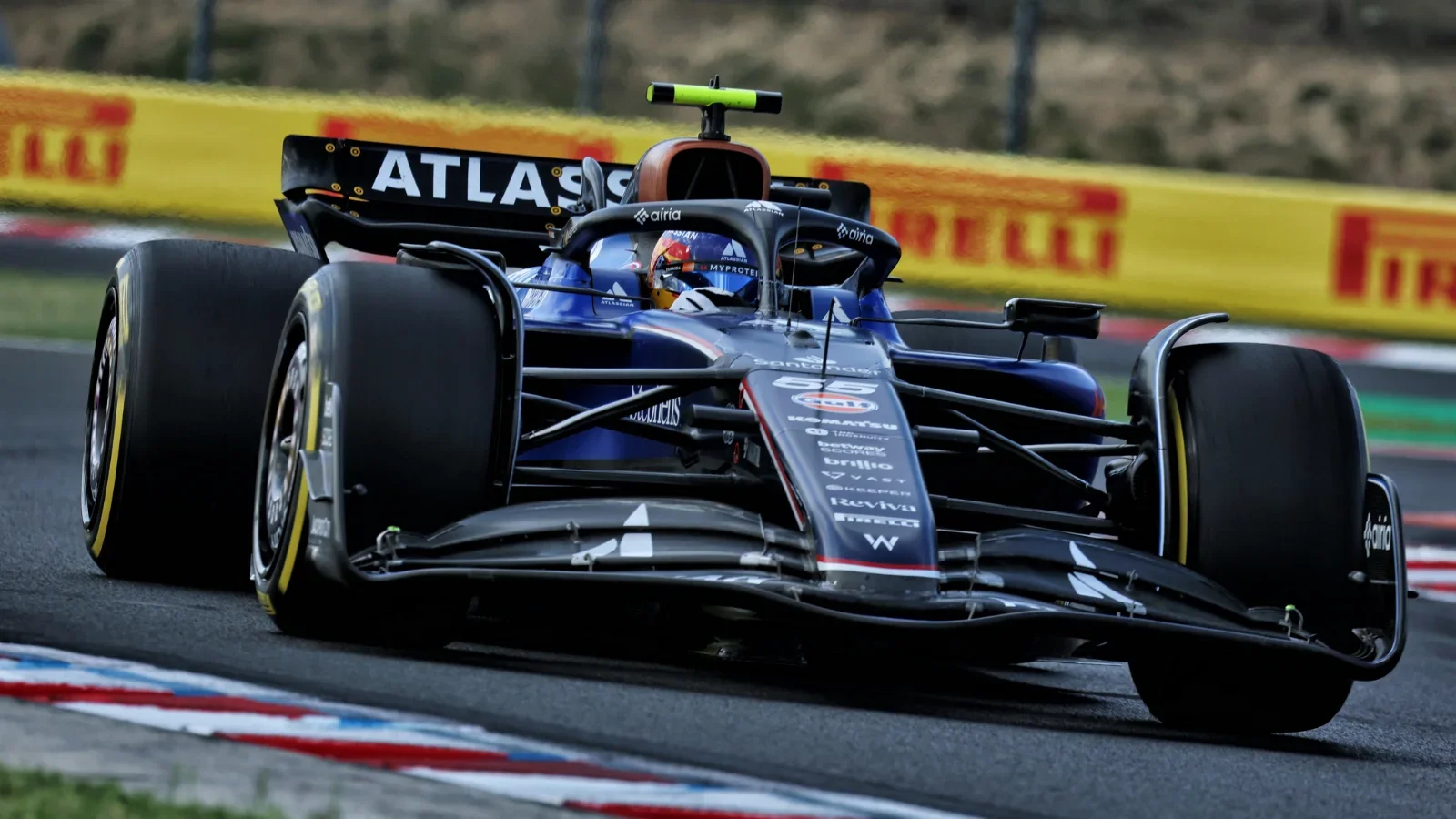
Carlos Sainz has emphasized the importance of significant changes in Williams Racing’s car design to secure future Formula 1 success. Speaking after the Hungarian Grand Prix in Budapest, the Spanish driver highlighted how the race served as a crucial learning opportunity for the team’s ongoing development of future vehicles.
Starting the race in 13th position, Sainz struggled to keep pace with the points scorers and ultimately finished 14th. When asked about the FW47’s challenges on the Hungaroring track, Sainz pointed out the car’s difficulty adapting to circuits dominated by long, flowing corners.
He said,
“It’s [Hungaroring] always been a difficult track for the team. We had quite a long debrief after qualifying because obviously, I’m coming from the team that was on pole, going back to a team that was P13 with me.” —Carlos Sainz, Driver
Despite the car’s shortcomings in Budapest, Sainz viewed the experience as an essential part of Williams’ path forward. He explained that the feedback gathered during such races would heavily influence the design of next-generation cars. Regarding this, he added,
“I could give them very strong feedback on why this car is lagging around a track like this. Obviously, for this year we cannot do anything, but for the future, hopefully it’s a very big learning curve for the team to know how we need to develop the Formula 1 car to be successful and competitive also in tracks like Budapest or Barcelona.” —Carlos Sainz, Driver
Need for a Fundamental Redesign to Tackle Long-Corner Challenges
Sainz also called for a radical shift in Williams’ design philosophy to overcome enduring aerodynamic issues. He noted that the team’s difficulties with maintaining downforce through extended corners have persisted across multiple seasons, limiting their overall competitiveness.
The ex-Scuderia Ferrari driver elaborated on the problem during his media interaction, stating,
“We have relatively poor aero characteristics in long corners where you need to hold the downforce from entry to mid-corne…It needs a very big design philosophy change for the future. We’re trying to understand where and what to change to make sure that next year’s car is a bit more of an all-rounder and gives us a better platform to work in multiple tracks.” —Carlos Sainz, Driver
This emphasis on versatility reflects Williams’ intention to build cars that perform consistently across different circuit types, including venues like Budapest and Barcelona, which challenge their current setup.
Williams Leadership Supports Focus on Maximizing Car Potential
The call for a design overhaul aligns with comments from Williams’ team principal James Vowles. Since joining from Mercedes, Vowles has consistently acknowledged the team’s difficulties at tracks demanding strong aerodynamic grip through slower corners. He advocates for maximizing the car’s performance where its characteristics are best suited.
Looking ahead to Formula 1 regulations coming into effect in 2026, Williams aims to leverage these changes to create a more balanced and competitive car. The team hopes that a comprehensive reevaluation of design priorities will enhance their overall race performance across the diverse F1 calendar.
Carlos Sainz Williams future development remains centered on learning from current challenges and pushing for substantial advances, with a vision of returning Williams Racing to a competitive position in Formula 1.
