
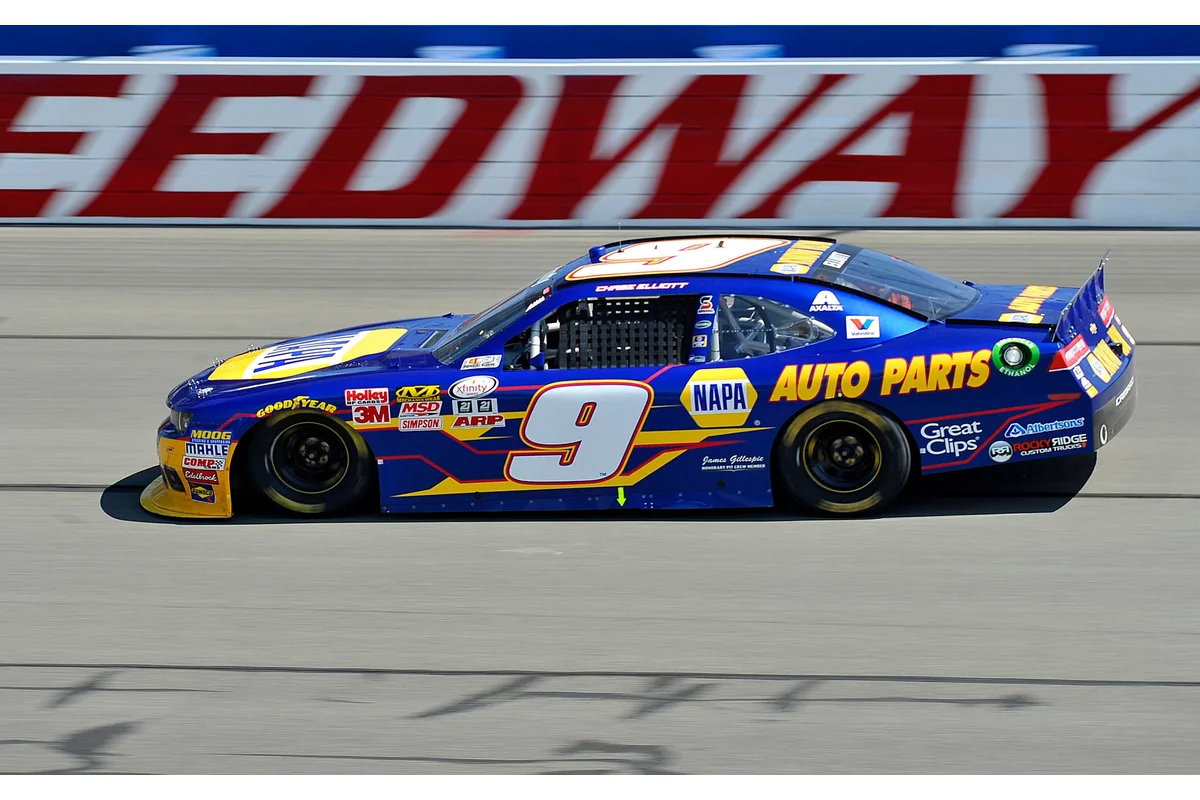
Chase Elliott has offered candid feedback on the newly announced NASCAR championship format, which will become standard across all three national series starting in 2026. Elliott, a prominent figure in the sport, addressed concerns about the changes during discussions at the NASCAR Productions Facility, noting how the revised structure shifts away from the previous postseason format and what it could mean for the competition.
Elliott Expresses Mixed Views on Playoff Expansion
The new format requires 16 drivers to qualify for the postseason based on regular-season points, eliminating the previous “win-and-you’re-in” rule. For Elliott, this change poses notable challenges, yet he acknowledges the compromise reached by NASCAR. In response to the shift, Elliott shared his perspective:
“I think it is a great compromise if I had one complaint of it…I think 16 is just too many. I thought that the 10-driver piece was really hard to get into. I still think 16 will be a challenge, but to me, I think, it’s a perfect compromise. You’re never gonna get everything you want.”
This new qualifying threshold ups the ante for all drivers throughout the season, making consistent performance vital for securing a playoff berth. Under the forthcoming structure, the Cup Series playoffs will span 10 races, the O’Reilly Auto Parts Series—formerly Xfinity—will consist of nine, and the NASCAR Craftsman Truck Series will feature seven playoff events. The champion in each division will be the driver who accumulates the highest point total by season’s end.
NASCAR Leadership Explains the Format’s Rationale
NASCAR President Steve O’Donnell described the reasoning behind revisiting a version of the Chase format previously used from 2004 to 2013. He emphasized simplicity and fan engagement, stating:
“It’s something we believe the fans will embrace,” said O’Donnell. “It’s 10 races, with every race mattering and still being very simple to explain to the fans. One set of points, easy to explain, and the best driver at the end of 36 races is ultimately going to win the championship if they can perform for those final 10 races.”
This approach is intended to enhance the season’s competitive narrative, ensuring that the title is awarded to the most consistent and successful driver over the long haul. NASCAR aims for an easily understandable system that still rewards excellence during the critical closing stretch.
Upcoming Daytona 500 and Elliott’s Championship Record
The anticipation now turns to the Daytona 500, scheduled for February 15, which marks Chase Elliott’s eleventh attempt at the high-profile race. Last year, Elliott placed fifteenth at the famed event. Meanwhile, fellow Hendrick Motorsports driver William Byron claimed victory in the 2023 Daytona 500, making him the only current Hendrick driver with two wins in the race’s storied history. As the season opener, the Daytona 500 remains pivotal, setting the competitive tone for the new championship system.
Elliott Reflects on NASCAR’s Broader Direction
In his comments to reporters at the Concord, North Carolina facility, Elliott discussed not just the postseason changes but also what he considers a broader misstep by the industry. Speaking from Dawsonville, the 2020 NASCAR Cup Series champion and defending winner of the NMPA Most Popular Driver Award highlighted the sport’s uniqueness, saying:
“One mistake that we have made as an industry, and not just in this regard, and in other areas too, is trying to be like every other sport, you know, mainstream sports it’s out there. I think it’s super important to remember that we are not.”
“We’re not, and that’s okay because what we have can be really entertaining and really fun to watch,” Chase Elliott continued. “I still am a huge fan of motorsports, like, regardless of what I do for a living, I still love it.”
Elliott’s views underscore NASCAR’s enduring appeal as a distinctive form of entertainment. With his family legacy—his father Bill Elliott won the NMPA Most Popular Driver Award 16 times—Chase continues to be a leading voice within the sport’s evolving narrative.
Looking Ahead to 2026 and Beyond
The shift to this updated championship format signals a key transition in NASCAR’s approach, aiming to blend competitive integrity with fan-friendly simplicity. As teams and drivers adjust their strategies in pursuit of playoff qualification and consistent point accumulation, the effects of these changes will shape the contours of the sport for years to come. The ongoing dialogue among star drivers like Elliott, industry leaders such as Steve O’Donnell, and the loyal fanbase ensures that every modification to the Chase Elliott NASCAR championship format will remain closely watched and hotly debated on and off the track.
Chase Elliott likes the fact that NASCAR isn't trying to be like other sports as much with going back to the Chase format. He thinks 16 drivers is too many but he's god with the new system. @NASCARONFOX pic.twitter.com/rgE8853mav
— Bob Pockrass (@bobpockrass) January 12, 2026
