
Christopher Bell, a standout driver for Joe Gibbs Racing, recently shared important reflections on the complexities of using simulators in NASCAR, discussing both their benefits and potential pitfalls. As Bell positions himself to lead Toyota following Denny Hamlin’s future retirement, his Christopher Bell NASCAR simulator insights offer a rare look behind the scenes at how top competitors prepare—and the inherent risks involved with virtual practice.
The Double-Edged Sword of Simulator Technology
Christopher Bell is well regarded for his consistent growth and performance improvements each racing season. Much of his preparation occurs away from the track, with a considerable portion of his training taking place in high-tech simulators. According to Bell, while simulators remove the dangers associated with on-track incidents, this safety net can sometimes lead to reckless or unrealistic driving that doesn’t translate well to real-world racing conditions.
Bell explained that without the threat of causing damage to vehicles or the risk of injury, drivers can feel overly confident. As a result, they frequently post faster lap times in the simulator than they could achieve on the track, since they know a mistake only requires a quick reset.
So, one thing that the drivers love to talk about is the fear factor. So, you come in here, and oftentimes you can run faster laps in the simulator than you can in real life just because you’re not going to wreck the car.
Christopher Bell said via JGR YouTube channel.
This environment, Bell noted, can lead drivers to repeatedly cross the limits in virtual sessions, especially in areas like tight road courses where risks are typically higher. The absence of physical consequences lets competitors test audacious moves they might never attempt in a real car.
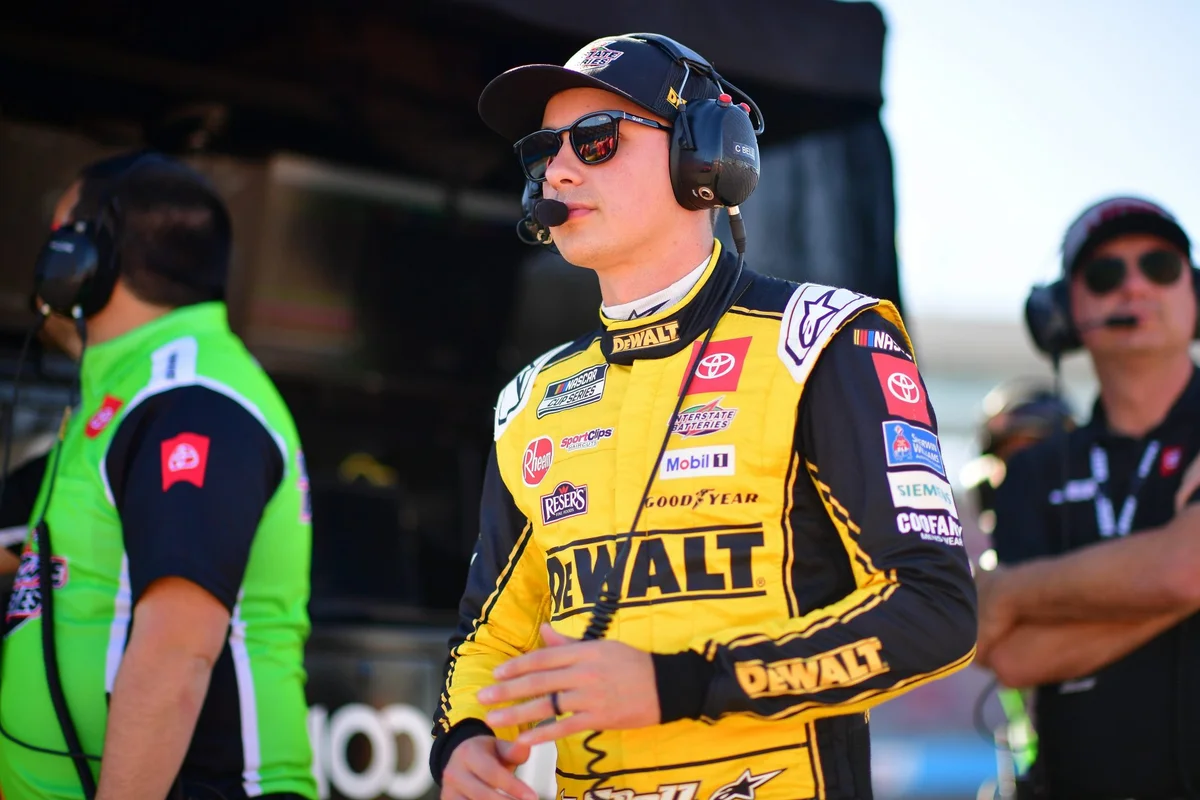
If you do wreck, you tell him he’s going to hit the reset button, and so you’re willing to push it a little bit harder than you would in real life…Specifically, like the road courses, [the] Chicago Street Course is the one that comes to mind. It’s a super super tight track with walls on both sides. There’s no room for error.
Christopher Bell added.
Bell elaborated that courses such as the Chicago Street Course, known for their unforgiving layout, become a proving ground in simulators where the margin for error practically vanishes. However, in real life, the same opportunities for risk do not exist due to the financial, safety, and competitive consequences of a crash.
Importance of Realism in Virtual Practice
Despite the advantages simulators provide, Bell warned that constantly embracing a riskier virtual style may develop habits that are counterproductive on race day. When faced with similar high-risk situations during actual competitions, drivers often pull back because of the fear and real-world implications of a crash—something the simulator cannot fully replicate. Bell emphasized the need for racers to maintain realism during simulator practice, ensuring their virtual driving mirrors what’s possible and safe on the actual track.
And you go in the simulator, and you’re just like, ‘Oh, I’m gonna hammer out a lap, and if I hit the wall, no big deal.’ And then you go to real life, and you have to like back it up a little bit. So, yeah, you have to make sure that you, as the driver, drive it realistically.
Christopher Bell asserted.
This statement serves as a caution to up-and-coming racers and seasoned professionals alike. Bell’s advice underscores that, while the simulator is an indispensable tool for preparation, approaching it with the same discipline and restraint as real-life racing is essential for translating practice into actual results. His insights reflect a complex blend of intensity and prudence that characterizes the approach of the current generation of NASCAR drivers.
Comparing Prestigious Races: Daytona 500 Versus Chili Bowl
In addition to sharing his Christopher Bell NASCAR simulator insights, the driver also discussed a debate long present in the racing community: the stature of the Daytona 500 versus the Chili Bowl Nationals. Bell, celebrated for his three consecutive Chili Bowl victories, has direct experience in both environments. He recognizes the Daytona 500 as the premier event on the NASCAR calendar, yet values the diversity and competitiveness of the Chili Bowl, which attracts participants from across multiple racing backgrounds and disciplines.
The Daytona 500 is the biggest race of the NASCAR schedule. But it’s only the NASCAR guys. Whereas anybody can enter the Chili Bowl. So, it’s kind of a barometer for drivers where everybody is there. You get a lot of top drivers from different disciplines and people who don’t compete against each other all the time. It’s a great show.
Christopher Bell said.
Bell’s comments highlight the unique appeal of each event. While the legacy and prestige of the Daytona 500 are unparalleled in the world of NASCAR, the open nature of the Chili Bowl Nationals allows for broader participation and fosters unexpected competition. The diversity in driver backgrounds at the Chili Bowl provides a rare opportunity for racers to measure themselves against new rivals, strengthening the overall racing community. As conversations about the relative values of these events persist, Bell’s perspective is both balanced and informed by direct accomplishment.
Outlook for NASCAR’s Next Generation of Drivers
Bell’s layered commentary offers invaluable lessons for NASCAR’s emerging talents and veterans alike. As the sport increasingly relies on advanced technologies like race simulators for preparation, Bell’s warning about the gap between virtual and real-world experience becomes more critical. His call for realism and strategic discipline during simulator sessions is likely to resonate with teams and drivers looking to maximize every advantage without cultivating unsafe habits.
As Bell prepares to step into a leadership role at Joe Gibbs Racing with greater responsibility expected after Denny Hamlin retires, his focus on both performance and process will help shape the next wave of top-level drivers. His insights into simulator risk, race preparation, and event comparison underline the continually evolving landscape of elite motorsports, where technological tools and tradition must coexist for continued progress and safety in NASCAR.
