
Christopher Bell revisited an important milestone during load-in weekend at Keith Kunz Motorsports, where his career trajectory toward the Cup Series began. Sharing a moment in his hauler with co-owner Pete Willoughby, Bell reflected on the pivotal early support that shaped his path in racing, highlighting how deeply the facility influenced his rise.
Bell recalled,
“We just sat down and talked about how this building basically launched my career,”
emphasizing the transformative opportunity when Pete Willoughby first hired him to run a car at the 2013 Chili Bowl. What started as a single race turned into a full-time commitment after a conversation just before his preliminary event, one that changed the course of his future.
He added,
“Like, this was before I even hot lapped, so Pete and I were just reminiscing how this conversation in 2013, in this building, forever changed the forecast of what my career was going to be.”
Early Successes and Progression Through Racing Tiers
During that breakthrough season, Bell secured six wins en route to clinching the USAC National Midget Series championship, then followed up the next year with seven more victories, finishing second to teammate Rico Abreu. His performance caught the attention of Toyota Racing Development, leading to increased pavement racing and three consecutive Chili Bowl triumphs from 2017 to 2019. By 2020, Bell had ascended to the Cup Series, cementing his place among NASCAR’s elite.
A New Chapter: Racing with His Own Team of Friends
Despite his history with Keith Kunz and the veteran driver Chad Boat, Bell announced a significant shift this year. Rather than continuing with established teams, he chose to lead a team built around personal friendships, including teammate Kaidon Brown. This new venture was marked by a recent victory at the Invitational Race of Champions, reflecting the importance of this milestone as his inaugural win as an owner-driver.
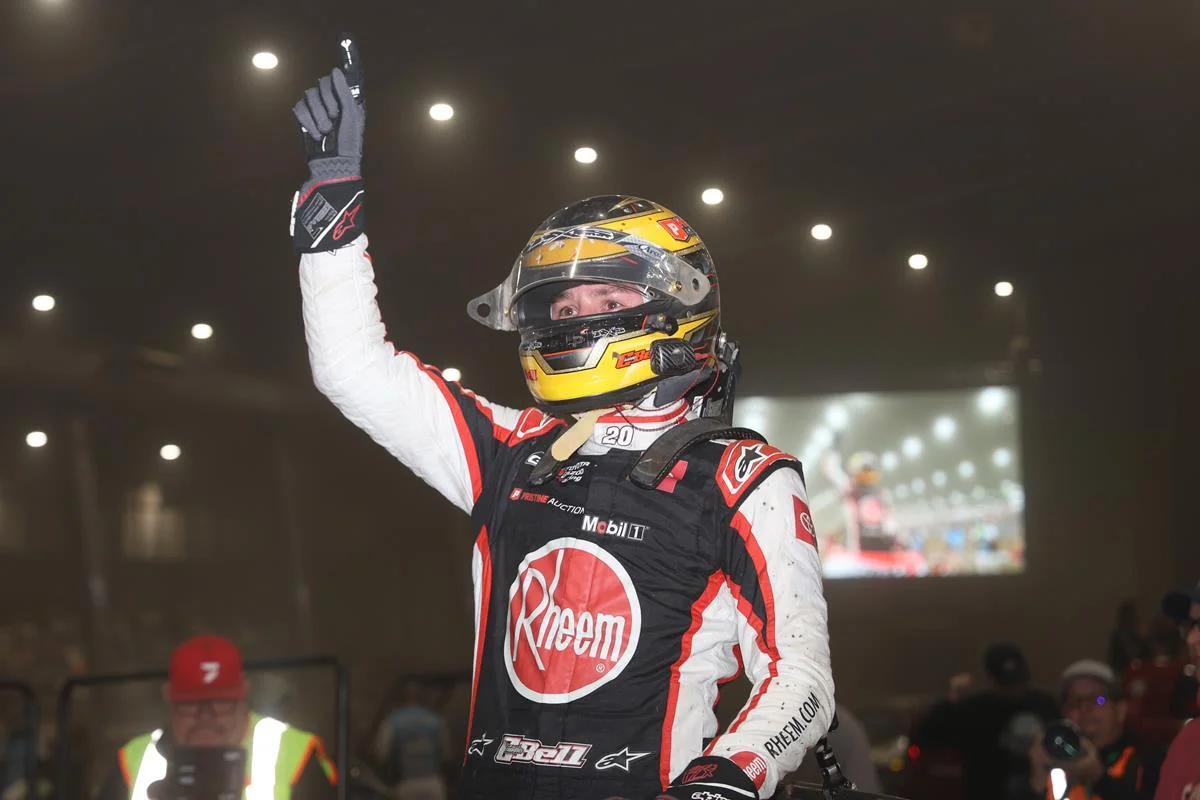
Bell explained the reasoning behind this change:
“Well, whenever you show up as a driver here, at first, it’s about proving you belong and there’s no better way to do that than with a team like Keith and Chad,”
acknowledging their strong track record, extensive experience, and capacity to experiment to improve performance.
“But I already accomplished that. I have won races for the best teams and with the best crew chiefs and I wanted a challenge. I wanted to race with my friends and have my own space in the pit area.”
The Emotional Significance of Ownership and Friendship
Initially, Bell had not intended to drive the second car for his team but stepped into the No. 21 seat after other leaders on his list confirmed their 2026 plans elsewhere. Explaining the difference in emotional impact, he said,
“But overall, winning as a driver here doesn’t give me the same high because I had been there and done that and the highs are not as high,”
adding,
“So to win Race of Champions, with my own stuff, that was a high I hadn’t had before.”
He further emphasized,
“If we can win with Kaidon, that would mean way more to me than even winning Race of Champions. I just enjoy being here with my friends more than the racing at this stage.”
Balancing Personal Ambitions with Team Goals
While Bell continues to race and aims to achieve a total of four wins, his motivation now centers more on the collective achievements of his team than on individual accolades. He observed,
“It would mean a lot but it’s so much more about the team aspect than the driving aspect,”
reflecting on a less intense desire in previous years when racing for established teams.
Bell described a transformation in his mindset:
“It’s just different now. Hopefully we get the opportunity on Saturday and I think it’s going to be a different feeling than the one I felt last year because there’s a different level of investment in building the cars and doing it all on my own if that makes sense.”
Implications for Bell’s Career and Racing Future
Christopher Bell’s transition to running a team formed with close friends marks a notable development in his career, offering fresh motivation and a new approach to competition. This evolution may influence how other drivers consider ownership and team dynamics, especially those seeking personal challenges beyond traditional paths. As Bell continues to balance driving and management responsibilities, his progress will be closely watched by fans and industry insiders, signaling potential shifts in the culture around racing teams and driver leadership.
