
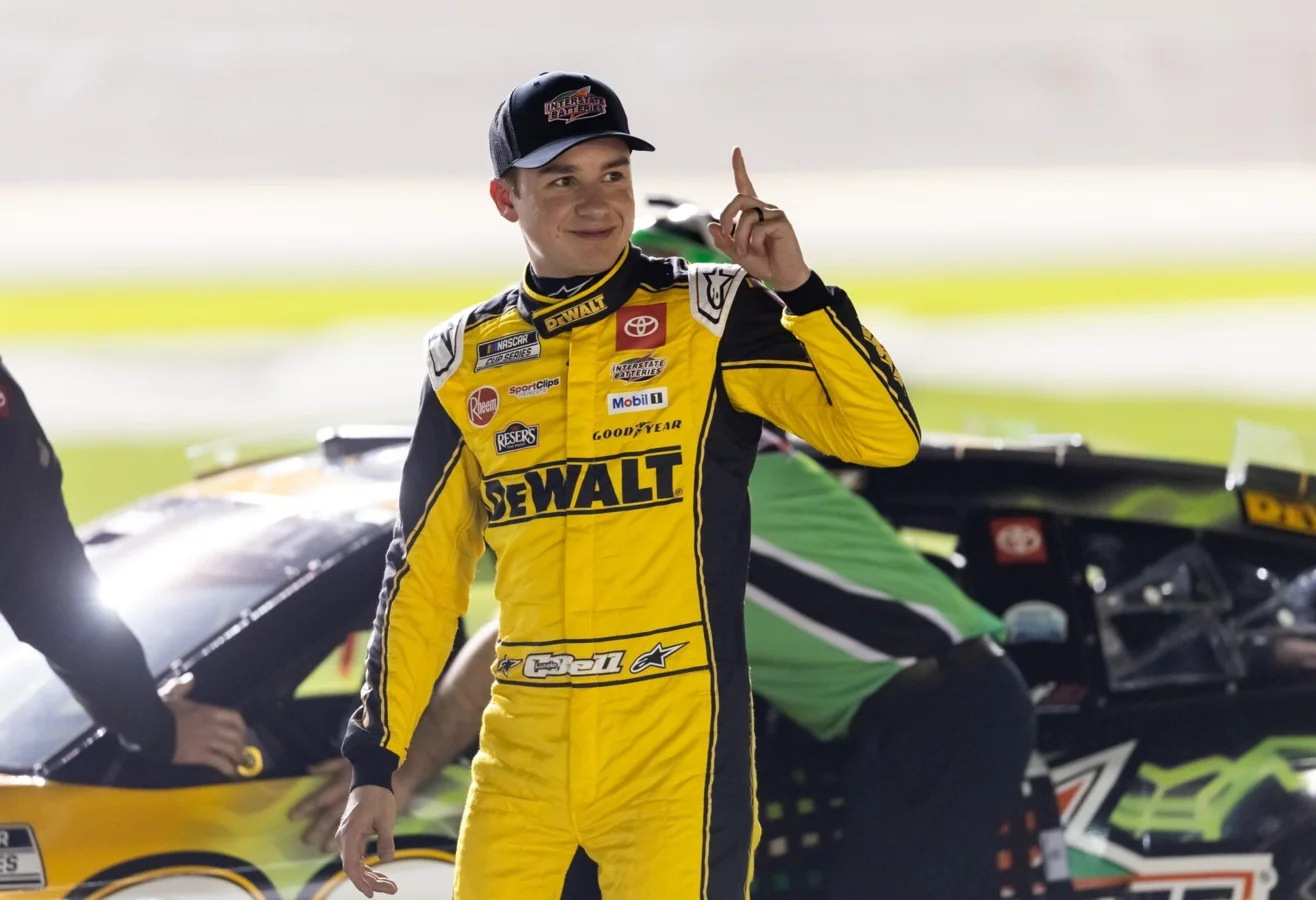
Christopher Bell has emphasized the growing importance of sim racing in maintaining driver readiness when track time is limited. With NASCAR significantly reducing its practice sessions over recent years, Bell joins many in motorsports who rely on simulators to stay competitive and prepared each race weekend.
The series cut back from three 50-minute practice sessions to just two starting in 2020. The COVID-19 pandemic then led to the elimination of nearly all practice and qualifying during 2020 and 2021. By 2022, NASCAR introduced a single 20-minute practice window per race weekend, forcing drivers and teams to depend heavily on virtual racing to gather experience and data.
Bell’s Perspective on Sim Racing Versus Traditional Track Practice
On the SpeedFreaks podcast, Bell explained that simulator work has become the foundation of race preparation. With less physical track time available, drivers turn to sim racing nearly constantly. Unlike some drivers like Rajah Caruth and William Byron who rose through sim racing alone, Bell combined virtual training with real weekends in go-karts and dirt cars, giving him a diverse driving background.
“I was racing on the weekends, and then during the week, it was just more reps,”
Bell said.
“And as a race car driver, like we don’t have the luxury of just going to a track and making laps. Like it’s super expensive, whether it is just a go-kart, or I mean, probably go-karts are the most cheapest form of practice, but it still takes a lot more money compared to football, where you can go outside and toss it around, or go shoot hoops, playing basketball.”
—Christopher Bell, NASCAR driver
Bell further described the challenges of practice in motorsports, highlighting the time, expense, and difficulty involved.
“Like practice is just hard, it’s time-consuming, and it’s expensive in our industry. So, for me, and I’m sure that every sim racer, it’s a cheap alternative that keeps you in the seat and you’re not getting that feel that you have in the race car, but you’re still getting the visuals. And you’re still getting that racing IQ, uh, even if you’re racing online,”
he shared, reflecting the value that sim racing provides.
Operational Changes and Cost Savings Behind NASCAR’s Practice Reductions
NASCAR’s shift to shorter practice sessions was motivated by an effort to streamline weekend schedules. The shorter 20-minute sessions allow officials to complete car inspections before drivers hit the track and impose limits on car adjustments between sessions. These restrictions simplify the workload for teams and reduce the need to carry larger crews, leading to savings on travel and staffing expenses.
Additionally, after qualifying, cars are impounded, preventing further changes and eliminating another round of inspections. These procedural adjustments have helped NASCAR cut costs for participants while maintaining regulatory standards.
The Expanding Role of Simulators in NASCAR’s Future Driver Development
While some drivers continue to call for more track practice time, others argue that experienced Cup Series competitors should be able to adapt with limited on-track laps. Regardless of the debate, the reliance on sim racing is opening new opportunities for aspiring racers who excel in virtual environments to enter the sport.
Christopher Bell’s comments underscore how sim racing not only helps drivers stay sharp and reduce expenses but also serves as a valuable training platform that complements real-world racing skills, reshaping the future of NASCAR driver development.
