
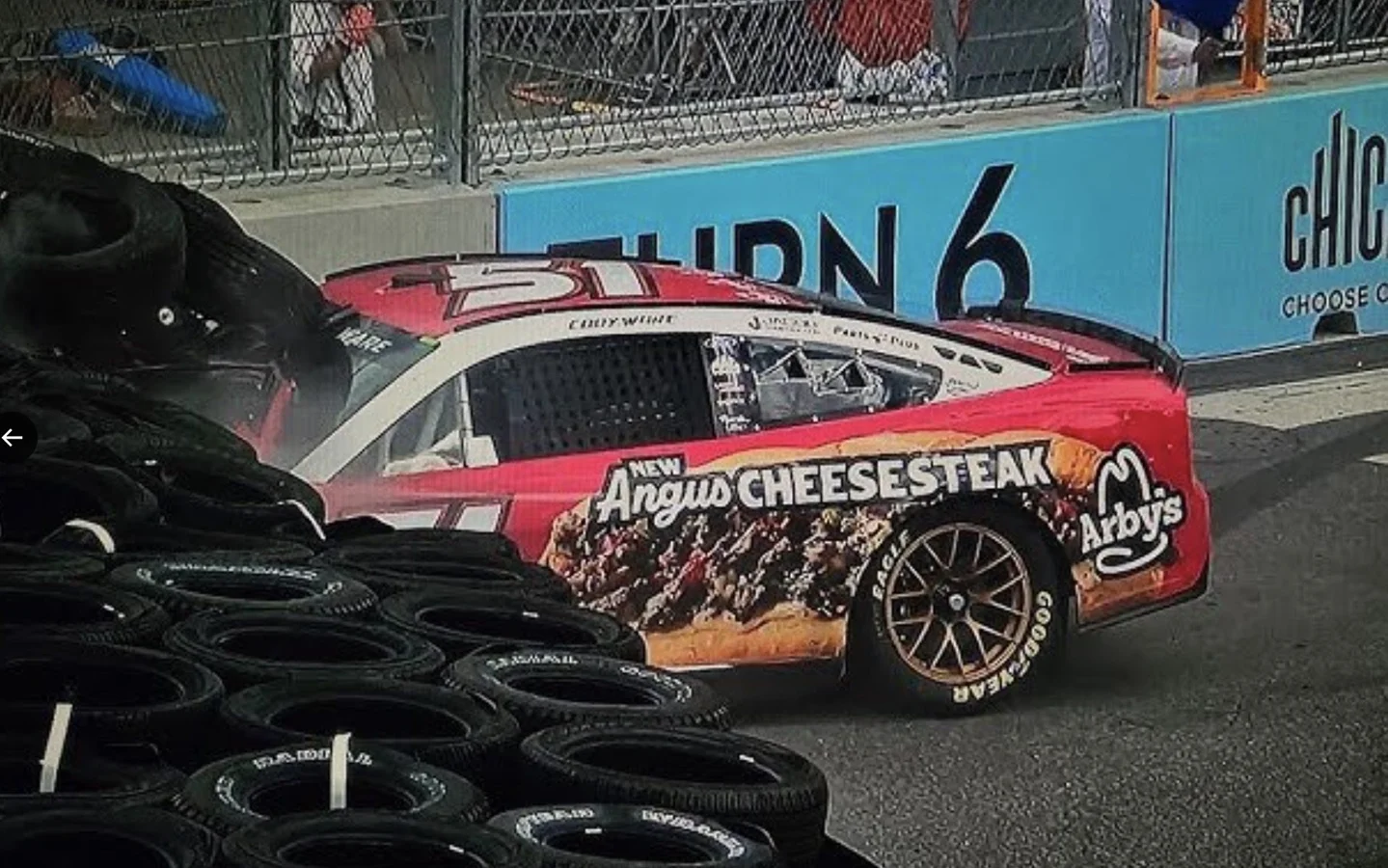
Cody Ware detailed the severe damage sustained by both his car and safety equipment during the high-speed crash at the Chicago Street Race. The incident occurred when his brake rotor failed, causing him to hit the tire barrier at approximately 93 mph, resulting in significant destruction to his helmet, Hans device, and steering wheel. Despite the impact, Ware escaped without major injuries, highlighting the effectiveness of modern racing safety gear.
Details on the Damage Sustained in the Crash
During the crash, every component inside Ware’s vehicle was compromised. His helmet suffered a cracked EPS foam liner, critical for impact absorption, while his Hans device—designed to protect the neck—was also cracked. Additionally, the steering wheel experienced considerable bending. Ware recognized the durability and importance of these safety devices, crediting the equipment manufacturers and his racing team for the protection they provided during such a violent collision.
Ware commented on SiriusXM NASCAR Radio:
“Pretty much everything from the interior of the car as well as my gear was killed in that impact. So, thankfully getting a new, a new helmet, a new Hans, there was a crack in the EPS foam inside the helmet, Hans device was cracked, steering wheel got bent up pretty good as well. So, I think it’s just a testimony to all the safety people that are selling us helmets and Hanses as well as the steering wheels from Max Pappas. And then my interior guys, and all the guys that are that are building these race cars and keeping them safe.”
Crash Circumstances and Safety Concerns Raised
The crash happened after Ware experienced a failure in the brake rotor, which led to the car striking the tire barrier at high speed. While Ware avoided serious injury thanks to the robust safety features both in his gear and vehicle, the crash became a subject of controversy due to NASCAR’s delayed response in calling a caution flag. Officials took nearly 35 seconds to react after the collision, a delay that sparked questions about race control’s vigilance and emergency protocols during the event.
Industry Reactions to NASCAR’s Response Time
Former NASCAR driver Ken Schrader offered insight and sympathy toward race officials dealing with such high-pressure situations. Speaking on the Dirty Mo Media podcast, Schrader explained the challenge race directors face when managing events remotely from high towers, making timely and accurate crash assessments difficult. His comments acknowledged the difficult nature of the race director’s role even when decisions are scrutinized by fans and participants alike.
“Did the right thing,” Schrader said. “Unless there’s a guy (Cody Ware) sitting there, in a wrecked car, that needs help. It’s a really tough business. Being up in that tower, oh my gosh. There are a lot of jobs that I think are pretty cool. A lot of fun in this sport. There’s nothing fun about being up in that tower.”
In addition, Trackhouse Racing driver Shane van Gisbergen weighed in on the delayed caution, suggesting race control may have underestimated the crash’s seriousness or assumed Ware would recover and continue racing without incident.
Background on Cody Ware and His Racing Career
Cody Shane Ware, born November 7, 1995, is an American stock car driver based in Greensboro, North Carolina. He currently drives the No. 51 Ford Mustang Dark Horse full-time for Rick Ware Racing in the NASCAR Cup Series and also competes in IMSA sports car racing. As a third-generation racer and the son of Rick Ware, a NASCAR team owner, he has a diverse background competing across stock cars, sports cars, and open-wheel racing categories.
Ware began his racing career as a teenager, quickly accumulating over 50 race wins in legends cars during his first year. He debuted in the NASCAR Cup Series in 2017 and has since exceeded 100 starts, gaining experience and presence in the sport over nearly a decade.
Implications of the Crash and Future Safety Considerations
The extensive damage Cody Ware endured in his crash underscores the importance of continual improvements in racing safety technology and car construction. The event also sparked renewed discussion about race officials‘ response times and protocols to ensure driver safety during street races and other formats. Moving forward, NASCAR may review these processes to enhance monitoring and reduce delays in emergency flagging, prioritizing the protection of drivers like Ware.
