
With just two laps remaining in the NASCAR Chicago Street Race, Cody Ware experienced a severe crash when a brake rotor failure caused him to collide with the Turn 6 tire barrier at 93 miles per hour. The incident occurred just before the race’s conclusion, forcing a delayed caution flag that was only deployed after leader Shane van Gisbergen crossed the white flag. The crash drew intense scrutiny, particularly regarding NASCAR’s decision to not immediately halt the race for caution.
NASCAR officials defended their hesitation by stating uncertainty over the crash’s severity, despite multiple cautions being called throughout the race to allow damaged cars a chance to recover. Many, however, believe an earlier caution should have been issued due to the seriousness of Ware’s wreck.
Ware’s own account sheds light on the impact’s magnitude. He described how the interior of his race car and safety gear were severely compromised during the collision. Speaking on SiriusXM NASCAR Radio, he said,
“Pretty much everything from the interior of the car, as well as my gear, was killed on that impact,”
and elaborated,
“So, thankfully, getting a new helmet, a new HANS, you know, there was a crack in the EPS foam inside the helmet, the HANS device was cracked, steering wheel, you know, got bent up pretty good as well. So, I think it’s just a testimony to all the safety people that are selling us helmets and HANS, as well as steering wheels from Max Papis. And then my interior guys and all the guys at RWR who are building these race cars and keeping them safe.”
Examining NASCAR’s Response and the Safety Measures Involved
The delay in calling the caution flag in Ware’s crash raised questions about race control procedures and driver safety priorities. NASCAR officials emphasized their efforts to balance race continuity with safety, but the incident revealed cracks in their approach, particularly given the evident damage to Ware’s equipment. The robust protection provided by his gear and the car’s structure likely prevented serious injuries despite the high-speed impact.
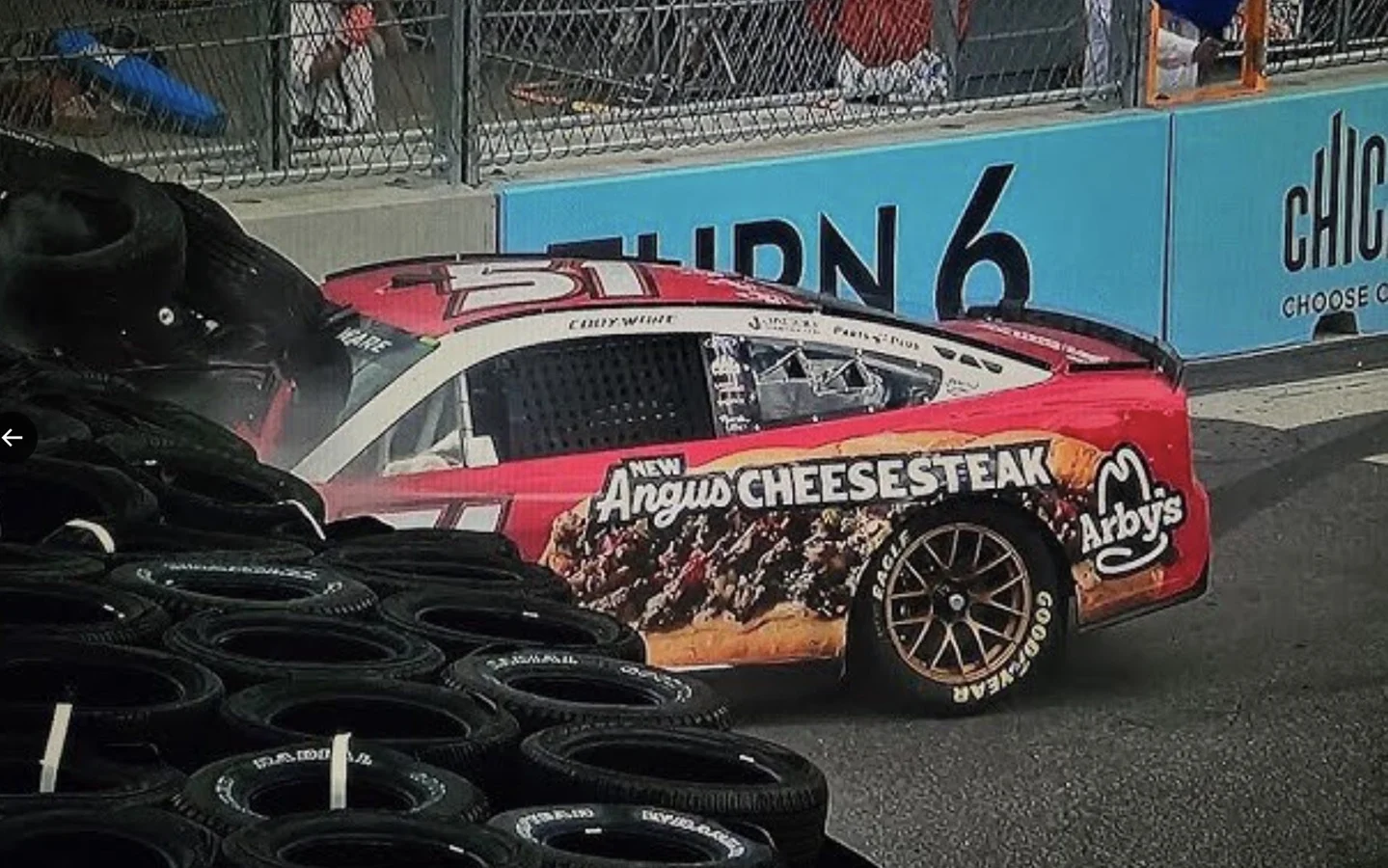
Ware’s team at RWR (Rick Ware Racing) was praised for constructing a car capable of withstanding such a significant blow, highlighting ongoing improvements in safety technology. The use of advanced helmets, Head and Neck Support (HANS) devices, and reinforced steering wheels, all contributed to saving Ware from potentially grave harm.
Contrasting This Incident with Ware’s 2022 Texas Crash
Ware has faced other serious accidents in the Next Gen car, which debuted with a stiffer chassis known for its unforgiving nature during crashes. During the 2022 season, injuries were widespread among drivers, with some, including Kurt Busch, suffering career-ending trauma, notably Busch’s qualifying crash at Pocono. Alex Bowman was also injured that year.
Ware himself fractured a foot in 2022 after a frontal collision at Texas, causing him to miss the Roval race. Comparing that crash to his recent Chicago wreck, Ware provided insight into safety improvements made between these two events.
He stated,
“You know, unfortunately, this isn’t my first time getting into a gnarly wreck in the Next Gen car,”
and reflected,
“I look back at 2022, and that’s all I had in my mind for those five seconds, it felt like the longest five seconds of my life. You know, when I took that frontal impact in the Next Gen car back in 2022 at Texas, that was before a lot of updates in the front clip had been made to make sure that the crush zones were more significant and the chassis would definitely deform a lot more on those impacts.”
He continued,
“So, I just think that’s a testimony to the work that was done between then and now. Because I was pretty worried that whole way to the wall that it was going to be another injury-inducing incident like I had where I broke my foot at Texas. So, I think the progress with the safety of the Next Gen cars has definitely come a long way. Obviously, I don’t want to be the test dummy for that, but thankful to see a dramatic difference in what I felt with the frontal impact at Texas versus what I felt on Sunday in Chicago.”
Looking Ahead: Ware’s Outlook Following the Chicago Incident
Fortunately, despite the severity of the crash and extensive equipment damage, Cody Ware emerged without injury from the Chicago wreck. His remarks indicate both relief and concern, underscoring the constant balance drivers face between risk and safety progress. NASCAR and Ware’s team will continue to prioritize safety upgrades as the sport evolves.
Next on the NASCAR calendar is the race at Sonoma, where Ware is expected to compete after recovering physically from this harrowing episode. This incident also serves as a reminder of the dangers inherent in motorsports and the importance of ongoing safety innovations. The scrutiny of NASCAR’s caution protocols in Chicago may prompt discussions and potential adjustments to protect drivers better in future races.
