
The NASCAR Cup Series is set to race at Iowa Speedway in Newton this Sunday for the Iowa Corn 350, marking only the second time the Cup Series has competed on the .875-mile oval. The track has a strong <a href="https://www.big14news.com/nascar/”>NASCAR heritage, having hosted the Xfinity and Craftsman Truck Series for over a decade before a recent return to Cup and Xfinity racing.
Situated about 40 miles east of Des Moines, Iowa Speedway has been part of NASCAR’s landscape since it opened in 2006. Despite this, Cody Ware, driver of the No. 51 Costa Oil 10-Minute Oil Change Ford Mustang Dark Horse for Rick Ware Racing, is preparing for his first ever race on this track, relying heavily on his utilization of advanced race simulation technology.
The Legacy and Design of Iowa Speedway
Iowa Speedway was designed in 2003 by NASCAR Hall of Famer Rusty Wallace, who based its design on Richmond Raceway in Virginia, a track he favored. The D-shaped oval features variable banking with turns ranging from 12 to 14 degrees, a frontstretch banked at 10 degrees, and a backstretch banked at 4 degrees, offering unique racing dynamics. Since its opening, the track has hosted a variety of motorsport events, including the ARCA Menards Series and IndyCar, establishing it as a versatile racing venue.
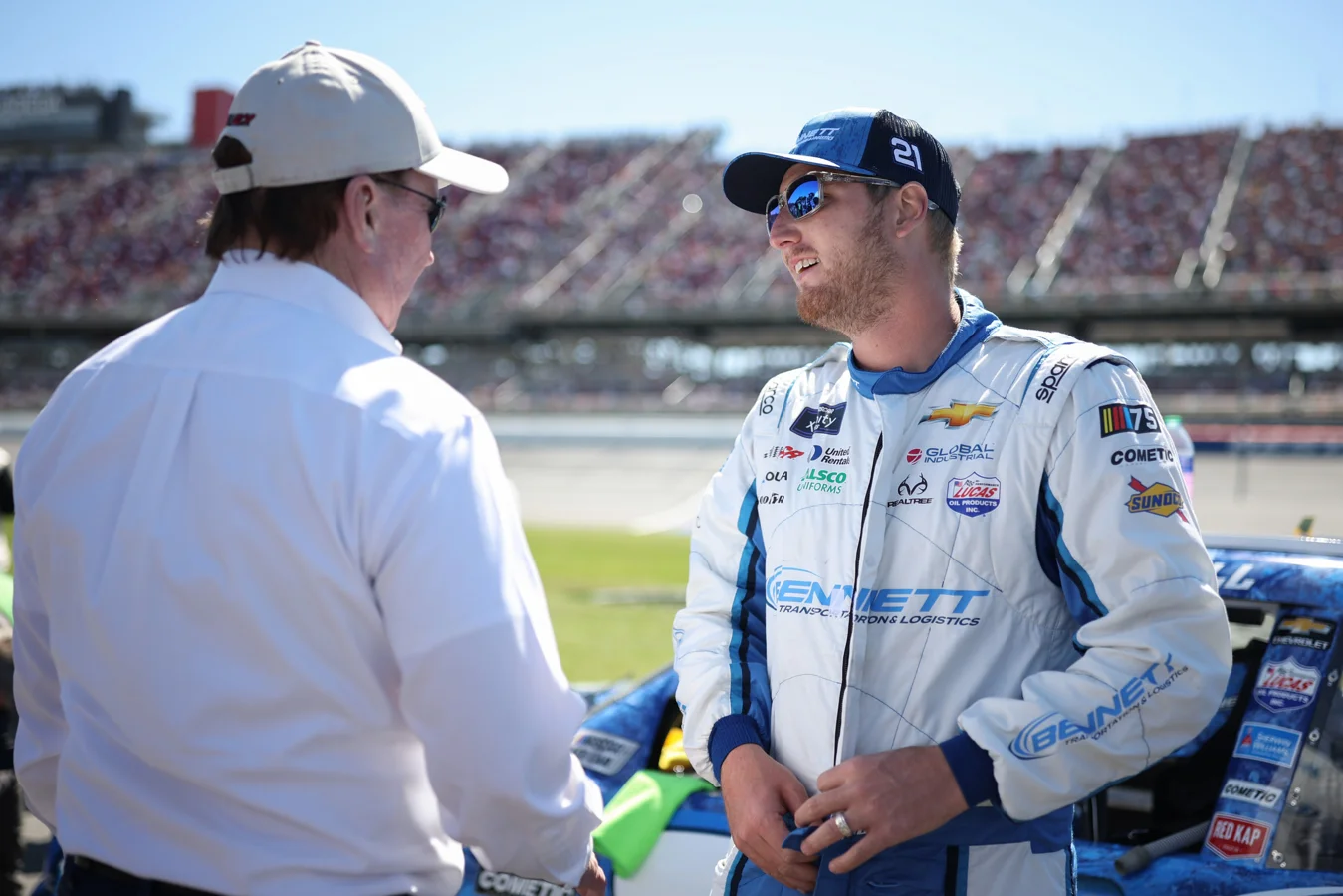
Even with its rich history—33 NASCAR national series races were held here between 2009 and 2019 before a brief hiatus—Cody Ware’s experience does not include racing at Iowa yet, making this weekend’s race a significant milestone in his career across NASCAR’s top three series and IndyCar.
Cody Ware’s Approach to Tackling Iowa Speedway
With 166 total starts in the Cup, Xfinity, Truck, and IndyCar Series, Ware is no stranger to new tracks, but the unfamiliarity of Iowa Speedway challenges him to adapt quickly. He admitted,
“It’s really intimidating anytime you go to a place that you’ve never been before. You’re kind of on your back foot.”
To get up to speed, Ware studies in-car footage and past races extensively.
“You’ve just got to take all the information you can, from in-car cameras, watching past races on YouTube, whatever it may be, to get your bearing, not just on what a quick lap looks like, but how the race ran, how tire management played out, what the strategies were, what lines came in, what lines didn’t. It can be a little daunting, but it’s nothing I haven’t had to go through before,”
he explained.
Leveraging Advanced Simulation for Race Preparation
Central to Ware’s preparation is the use of the race simulator at the Ford Performance Technical Center in Concord, North Carolina. This full-motion simulator features a massive wrap-around, high-definition screen that replicates the track visually from the driver’s perspective, allowing Ware and his engineers to practice laps and refine car setups remotely.
Ware stressed the importance of this tool, stating,
“For weekends like Iowa, the sim is a crucial part of me being able to do the best job that I can as a Cup Series driver to give the team a chance to get the car dialed in, get us right for qualifying and, hopefully, get us a decent starting position.”
He added,
“Without the sim, it would take me all of practice and qualifying to even have a semblance of what I needed in the car.”
The simulator’s realism extends beyond visuals; it replicates tire grip levels and track conditions, which is vital because practice sessions are limited. Ware described,
“The simulator doesn’t just simulate race runs, it simulates the grip of the track and, specifically, how much tire grip you’re going to have in qualifying. You’re able to work with your engineers in the sim to kind of hone in on where we think the grip is going to be when we’re in qualifying trim, and that just gives me the confidence to fire off on lap one, because with only 25 minutes, you don’t have the time to work up to anything.”
Building Muscle Memory and Visual Familiarity
Beyond just technical setup, Ware emphasizes the simulator’s role in building critical muscle memory and helping drivers anticipate track markers.
“You can make it as realistic as you want. Most guys wear their driving shoes and gloves to replicate the feel inside their racecar, but the main thing is just the repetition and learning,”
he said.
He elaborated on the value of visual cues:
“The sim does a really good job of replicating not just the racetrack, but the surrounding areas – what the infield looks like, what the markers on the fence are – all that stuff helps a lot. And especially for weekends like this where you just don’t have the experience of being on the track, it becomes an invaluable asset.”
Maximizing Limited Track Time on Race Weekend
Iowa Speedway holding only 25 minutes of practice before qualifying adds pressure on drivers to quickly adapt and secure a good starting position. Ware explained that the simulator allows him to enter qualifying with confidence, even when on-track preparation time is scarce.
“Plus, we’re only going to have time for one or two legitimate adjustments prior to qualifying, so you need to be ready to go right out of the gate,”
he noted.
The race weekend begins on Saturday afternoon with practice at 12:30 p.m. CDT, followed by a one-lap qualifying session at 1:40 p.m. CDT. The Iowa Corn 350 will then run on Sunday starting at 2:30 p.m. CDT with live broadcast coverage on USA Network and SiriusXM NASCAR Radio.
The Road Ahead for Cody Ware at Iowa Speedway
Cody Ware’s extensive use of the Iowa race simulator demonstrates how technology plays a critical role in modern NASCAR racing, especially when drivers face unfamiliar tracks. His determination to combine past race data, simulator practice, and collaborative engineering efforts offers him the best chance to make a strong debut at Iowa Speedway.
With limited on-site practice time and a demanding race ahead, Ware’s preparation underscores the increasing importance of simulation in competitive motorsports, potentially setting a precedent for how other drivers approach their first races at new venues in the NASCAR Cup Series.
