
IndyCar driver Conor Daly recently voiced strong criticism of the Formula 1 fan community on X (formerly Twitter), describing it as a toxic and “dangerous” environment. Speaking on the Business of Speed podcast, Daly remarked that interacting with F1 fans online felt more daunting than being in a war zone, reflecting his deep frustration with their aggressive behavior. Daly, who is the son of former F1 racer Derek Daly, shared these thoughts amid a growing popularity of Formula 1 driven by global marketing and Netflix’s Drive to Survive series.
Daly’s remarks highlight the challenges faced by motorsport communities online, where a recent influx of newer fans sometimes lack full context to appreciate racing history or on-track events, sparking heated debates and misunderstandings. The American driver’s experience underlines a broader issue with how fandom dynamics have evolved alongside F1’s global expansion and digital engagement.
Background: Conor Daly’s Close Ties to Formula 1
Conor Daly has a strong personal link to Formula 1 through his father, Derek Daly, who raced in the sport from 1978 to 1982, including a season with Williams. Inspired by his father’s career, Conor pursued an aspiration to compete in F1 and came close in 2012 when he was a test driver for Sahara Force India, now known as Aston Martin. Despite this breakthrough, Daly eventually shifted his focus back to the United States, pursuing IndyCar racing full-time starting in 2016.
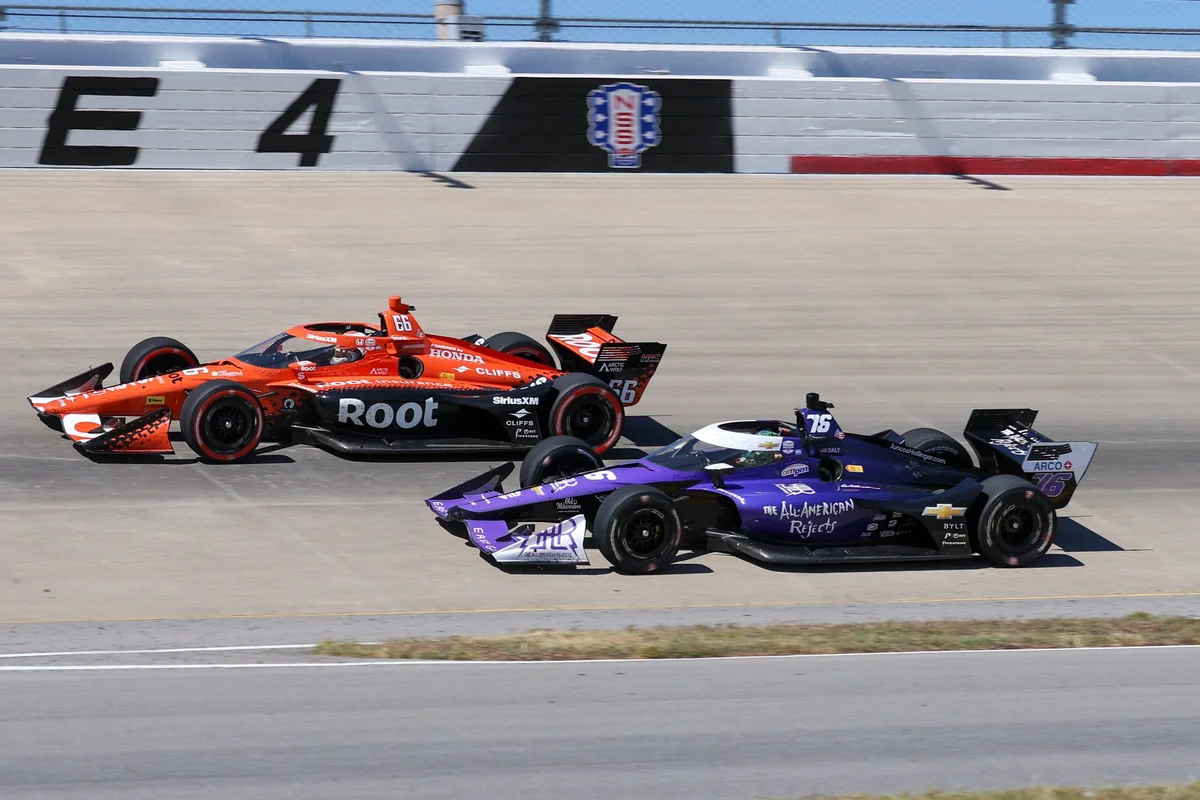
Although he has not secured a permanent IndyCar seat for the 2026 season, Daly remains active, aiming for an Indy 500 ride as several entries remain available. His career trajectory, balancing aspirations in both F1 and IndyCar, positions him as a unique figure able to comment insightfully on the F1 fanbase and its impact on motorsport culture.
Criticism of F1 Fans’ Reaction to IndyCar Drivers’ Prospects in F1
Conor Daly has also expressed amusement and disbelief at how some F1 fans react negatively towards IndyCar drivers rumored to be joining the F1 grid. Last year, when Alex Palou and Colton Herta were mentioned as potential candidates for the 2026 F1 lineup with the new American Cadillac F1 team, many European F1 Twitter users reacted with hostility and skepticism.
Addressing this backlash on his Speed Street podcast, Daly said:
“It’s funny to see how angry European F1 Twitter gets when they put up graphics of Colton [Herta] or Alex [Palou] being in there, because people just have literally no respect or any care for anything other than Formula 1. They’re like that’s not even possible. They get so angry, it’s awesome to see. I love it. It’s my favorite thing to see because they truly have no idea, they truly don’t know enough about motorsport in general to be making opinions like that.”
Following that, Palou went on to dominate the 2025 IndyCar championship and clarified he has no intention of switching to Formula 1. Meanwhile, Herta secured a role as a test driver with Cadillac F1 for 2026, competing in Formula 2 to maintain his eligibility for a potential 2027 F1 race seat under General Motors’ backing.
The Broader Context of Growing F1 Popularity and Online Culture
Formula 1’s fanbase has expanded rapidly over the last five years thanks to the success of Netflix’s documentary series Drive to Survive and aggressive global marketing campaigns. This surge introduced many new fans to the sport, but it also created a divide between long-time enthusiasts and newer followers who sometimes lack understanding of the sport’s history or the complexity behind racing decisions and driver developments.
Conor Daly’s comments reflect the polarized nature of F1’s digital fan interactions, where debates can quickly turn hostile due to misinformation or ignorance. His perspective warns of the detrimental effects such toxicity may have on motorsport as a whole, especially as F1 aims to cultivate a welcoming and informed community worldwide.
Implications for Motorsports and F1’s Future Engagement
Daly’s outspoken criticism of the F1 fanbase underscores an ongoing challenge for the sport’s governing bodies and teams: managing fan engagement to encourage respect and knowledge rather than division and hostility. As F1 continues to grow its global appeal and integrate drivers from diverse racing backgrounds, bridging gaps among fans will be vital to fostering a more positive environment online.
Simultaneously, the progression of drivers like Colton Herta from IndyCar to F1-related roles signals a potential shift in motorsport talent pipelines, which could further intensify fan debates. How the community adapts to this evolution could influence the sport’s image and its ability to attract and retain fans with varying levels of experience and fandom.
"F1 Twitter is the worst. You might as well be in a war zone."
– @ConorDaly22 on the @bizofspeed podcast pic.twitter.com/pjdTKNnyef
— Vincenzo Landino (@vincenzolandino) January 14, 2026
