At Bristol Motor Speedway, the night ignites a unique atmosphere that many describe as electrifying and unforgiving, making it one of NASCAR’s most intense venues. Known for its steep concrete banks and packed grandstands, Bristol’s 500-lap races consistently produce thrilling moments that resonate far beyond the event itself. This magnetic aura has stirred fresh debate as the 2025 Cup Playoffs unfold, especially with NASCAR Cup Seriesdriver Corey LaJoie boldly asserting that the Bristol Night Race deserves the title of a “Crown Jewel.”
Traditionally, NASCAR’s Crown Jewels are understood as a select group of historic and marquee events, including the Daytona 500, the Coca-Cola 600, the Southern 500, and the Indianapolis race. This established classification, tracing back to the Winston Million era, influences everything from sponsorship deals to legacy rankings. However, LaJoie challenged this convention on the podcastSkipping Pennies, clearing the air with a pointed question:
“Is the Bristol Night Race a Crown Jewel?”
He delivered a confident response:
“Crown Jewel? Absolutely.”
LaJoie’s remarks sparked a candid discourse about what truly defines a Crown Jewel race, questioning whether tradition or cultural impact should weigh heavier in the ranking. Co-host Skip Flores pushed back with a tiered approach, categorizing Bristol as a D1 AA race compared to the higher tier D1 AAA races like Daytona and Coca-Cola 600. Yet LaJoie dismissed this hierarchy, arguing,
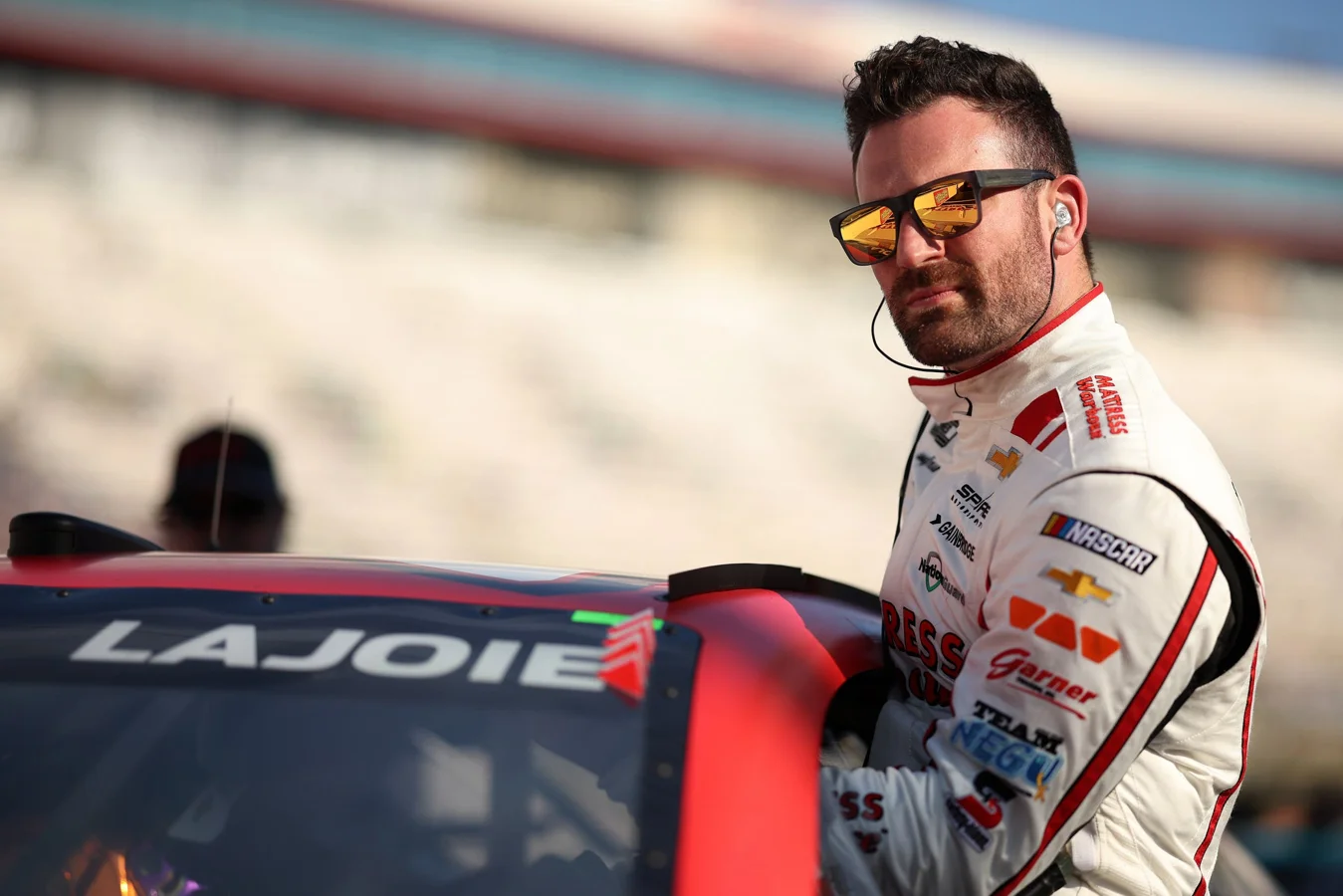
Image of: Corey Lajoie
“I don’t agree with that… if you win the Bristol Night Race, that is the one that you tell your grandkids about. No different than the Coke 600. So is that the industry’s fault for not elevating it to the level of the Coke 600? Like, what makes a Crown Jewel a Crown Jewel?”
His perspective echoes what many fans argue: Bristol’s intense short-trackcombat, boisterous sold-out stadium vibe, and unforgettable on-track battles establish it as a race that belongs in the top echelon despite not always being formally recognized.
The Cultural Weight Behind Bristol’s Reputation
From iconic moments like Dale Earnhardt Jr.’s famous exclamation, “It’s Bristol, baby!” during the 2004 Sharpie 500, to numerous clutch finishes and hard-fought rivalries, Bristol’s history is steeped in passion and drama. This emotional legacy powers its claim to Crown Jewel status, supported by the atmosphere that only a packed colosseum-like venue can provide. LaJoie reinforced this point, stating,
“It’s the legacy, it’s the history, it’s the hype. Which we can all argue, the Bristol Night Race has the hype.”
Unlike the Coca-Cola 600’s grueling day-to-night endurance challenge or the Daytona 500’s massive scale and the perils of “the big one,” Bristol measures up through visceral fan experience and high tension racing. The concrete oval’s half-mile length combined with steep banks creates a gladiatorial setting where every lap tests both skill and nerve. This dynamic gives drivers and fans alike adrenaline-filled memories that last far beyond a standard race weekend.
Bristol’s structural design lends itself to gripping competition, defined by walls that seem unnervingly close and speeds that push its short distance to the limit. One reason it earns the nickname “The Last Great Colosseum” is this quality of intense, crowd-immersed racing. LaJoie explained his personal connection to this feeling by comparing Bristol to the iconic Roman amphitheater:
“It’s the best place… I have been to the original, the first great Colosseum, in Rome on our honeymoon. The feeling that you get walking into there is the same feeling you get walking into Bristol… Makes a pair on the back of your neck stand up. I love it.”
Comparisons With Other Short Tracks and the Impact of New Variables
The discussion between LaJoie and Flores naturally extended to comparisons with other revered short tracks like Martinsville Speedway. Though Martinsville boasts an extensive history and famous features like the grandfather clock trophy, the style of racing it fosters contrasts with Bristol’s aggressive nightly melee. Flores described both Bristol and Martinsville as D1 AA level tracks, with LaJoie highlighting the playoff excitement of Martinsville’s second race of the season, rating it near the top tier:
“I think, either the first or second Martinsville race, the second one in the playoffs is pretty cool. That’s D-1-AAA.”
Both tracks are iconic but offer different flavors of prestige within NASCAR’s ecosystem. Bristol’s steep banking of 24 to 28 degrees helps sustain its fierce racing, which Flores and LaJoie discussed in detail, emphasizing how the physical demands and crowd energy elevate the event to a gladiator’s battlefield. LaJoie’s passion for the track makes clear why the Bristol night event is widely regarded by participants as a career-defining challenge.
Adding to Bristol’s unpredictability this year is a new technical element introduced by Goodyear: a softer right-side tire compound as an alternative for the Night Race. This adjustment introduces new strategic considerations regarding durability and tire management, amplifying the potential for dramatic on-track incidents and evolving race narratives. Skip Flores noted,
“And there’s a lot of unknowns going on this weekend, because there is a new right side tire softer option.”
This fresh variable feeds into the race’s legacy of chaos and excitement, fueling further argument that Bristol should be mentioned alongside NASCAR’s traditional premier events due to its blend of atmosphere, playoff implications, and technical complexity.
Playoff Tensions Surface as Christopher Bell Expresses Frustration
Off the track, the intensity of the playoffs is exemplified by the simmering tension within the Joe Gibbs Racingcamp, particularly between driver Christopher Bell and crew chiefAdam Stevens. After finishing seventh at Gateway Speedway, Bell’s visible frustration contrasted sharply with Stevens’ more optimistic assessment. Stevens remarked,
“That’s what we needed today. Takes the pressure off next week. Good job, guys.”
Bell’s response over the radio was blunt and raw:
“We just f—— ran seventh with the best car on the track! Every f—— week, it’s the same s—. We’re the last car to pit road. I’m over it!”
This outburst reflects the high stakes and emotional strain experienced during the playoff cutdown, especially as Bell sits just 32 points above the elimination threshold. The pressure to maintain a competitive edge grows tighter, amplified by the smallest strategic mistakes and the weight of internal team dynamics. Skip Flores addressed this:
“Pressure’s on. He’s actually not that high above the cutline.”
LaJoie highlighted how fragile the relationship and communication between a driver and crew chief can be in moments like these, where conflicting perspectives on race strategy and car performance collide. Flores predicted difficult conversations ahead, warning,
“There’s gonna be hard conversations this week.”
Addressing these issues effectively could prove critical as Bell’s team prepares for the demanding challenge of Bristol, where split-second decisions and trust play an outsized role in career-defining results.
What LaJoie’s Perspective Means for NASCAR’s Crown Jewel Dialogue
Corey LaJoie’s advocacy for Bristol’s Crown Jewel status reignites an ongoing debate about what qualifies a race as an elite event in NASCAR’s landscape. His arguments emphasize that a race’s cultural significance, emotional legacy, and fan intensity count as much as historic pedigree or traditional marketing categories. The Bristol Night Race, with its punishing layout, electrifying atmosphere, and history of memorable finishes, embodies the elements that many drivers and fans feel deserve official recognition alongside NASCAR’s established majors.
As this discussion unfolds during a crucial playoff season and with evolving technical challenges like Goodyear’s tire innovation, Bristol’s stature may undergo further scrutiny and potential reclassification. With drivers like LaJoie and prominent figures placing the track alongside the sport’s biggest events, the conversation is poised to influence NASCAR’s promotional strategies and how the sport honors its richest traditions in the years ahead.