
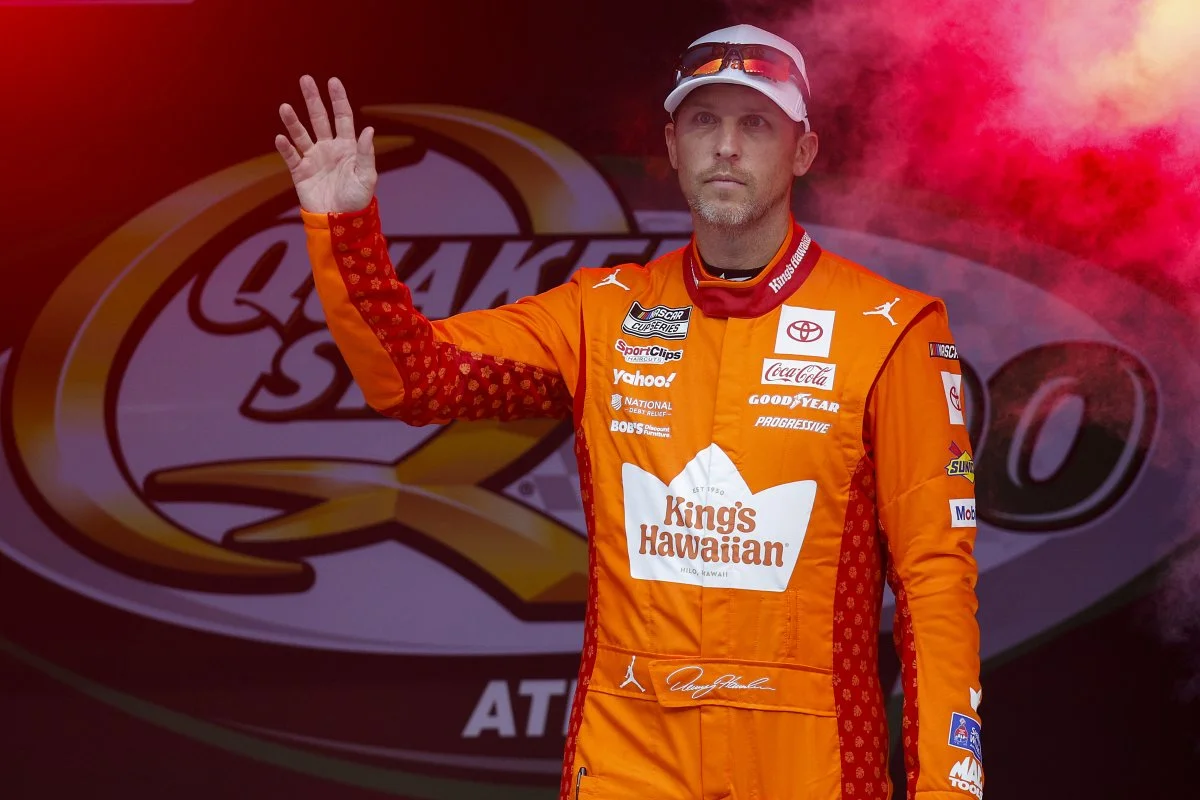
As the NASCAR Cup Series prepares for its upcoming event at the Chicago Street Race, uncertainty remains about whether the series will return to Chicago for a fourth year in 2026. Veteran driver Denny Hamlin stands out as a strong advocate for maintaining the Chicago Street Race on the NASCAR schedule, emphasizing the unique atmosphere and local enthusiasm that the event generates.
Why Denny Hamlin Strongly Supports the Chicago Street Race’s Continuation
Denny Hamlin, the longest-tenured active driver in the NASCAR Cup Series, has witnessed numerous track changes since joining full-time in 2006 with Joe Gibbs Racing. His extensive experience has shaped his understanding of what makes a race track and event valuable to the sport. In Hamlin’s view, the Chicago Street Race is a noteworthy addition that NASCAR should keep on its calendar.
Speaking from the 2.2-mile, 12-turn temporary course set up downtown, Hamlin expressed his enthusiasm for the event, commenting on its effect beyond just the racing community. He noted that the race sparks conversation among residents and visitors who are generally not NASCAR fans, highlighting the event’s broader appeal and the economic boost it provides.
I personally would like to see them do everything they can to keep it here,
Hamlin said on Saturday.
I’d like to see the city rally behind this race. I could just tell you that non-racing fans at the hotel I’m staying at are talking about the race. I think that it’s certainly got some sort of economic impact to the city itself. We’re certainly exposing some new fans to this.
He further emphasized its importance by stating,
I think it’s very important. I think you try everything you can to get this thing back here in Chicago, because I believe it is an important place for us.
The Mixed Reception Among Drivers and Uncertainty About Alternatives
Despite Hamlin’s enthusiasm, the Chicago Street Race has its challenges, including weather disruptions during its first two years. Moreover, not all drivers may share his eagerness to embrace the urban street circuit format. Still, Hamlin remains confident these concerns do not outweigh the event’s benefits.
He posed a rhetorical question regarding alternatives to the Chicago race, suggesting that, without a clearly superior option, the event remains valuable. Hamlin highlighted the distinctive atmosphere and opportunity to engage with a different fanbase in the heart of a major city as critical advantages over traditional oval tracks.
For instance, I went shopping yesterday. I go to all these different stores, and it’s, ‘What are you in town for?’ ‘Oh yeah, there’s a race. We were talking about going to that. We didn’t go last year because of the rain, but we’re thinking about going.’ These are younger people that are not going to travel to Chicagoland (Speedway, about 45 minutes away in Joliet, Illinois) to go to a race. You have to have it right here where they can walk to it.
When asked if his fellow drivers share his enthusiasm, Hamlin was uncertain but made his position clear.
I don’t know if anyone shares the same sentiment I do,
he admitted candidly.
I don’t run the series, and I don’t make the decisions.
Nevertheless, he underscored the lively atmosphere by adding,
But it just seems like from my standpoint, there’s more excitement around the venue itself than what a normal NASCAR race venue has.
The Broader Significance of the Chicago Street Race for NASCAR
The future of the Chicago Street Race holds considerable weight for NASCAR’s efforts to expand its appeal in urban markets and attract new fans. Hamlin’s insistence on keeping the race highlights the potential for unique city-based events to differentiate the NASCAR schedule from traditional oval tracks. The economic impact on Chicago and the ability to draw casual and younger spectators underscore the race’s importance beyond the track.
As NASCAR evaluates its 2026 calendar, the decision around the Chicago Street Race will likely reflect the organization’s broader strategy to balance innovative race locations with established venues. Hamlin’s perspective serves as a reminder of the value that distinctive events like this bring to the sport and the communities that host them. For now, his call for the city’s support and NASCAR’s commitment underscores an anxious but hopeful stance about the race’s place in the future.
Our Reader’s Queries
Q. How did Denny Hamlin get so rich?
A. Starting in 2006 with Joe Gibbs Racing, Hamlin began his full-time Cup Series career and achieved great success. He has 51 Cup Series wins and has triumphed in the Daytona 500 three times (2016, 2019, 2020), earning a significant amount of money over the years.
Q. Why did NASCAR penalize Denny Hamlin?
A. Denny Hamlin and his No. 11 Joe Gibbs Racing team received a penalty for breaking NASCAR’s engine inspection rules. NASCAR announced on Thursday that it placed an L2-level penalty on the team due to this violation. The rule they broke is under Sections 14.7.
Q. How did Denny Hamlin get rich?
A. His career earnings, sponsorships, team ownership, and real estate have created a huge empire valued at $65 million.
Hamlin’s wealth comes from: ✔ Significant NASCAR earnings through race winnings and contracts. ✔ Long-term sponsorships with brands such as FedEx, Jordan Brand, and Toyota.
Q. Did Denny Hamlin lose 75 points for engine violation?
A. NASCAR announced on Thursday that Denny Hamlin and car owner Joe Gibbs received a penalty for an engine seal violation after Hamlin won at Bristol in the spring. They lost 75 regular-season points and 10 playoff points due to this L2 penalty.
