
NASCAR driver Denny Hamlin of Joe Gibbs Racing has expressed strong support for keeping the Chicago Street race on the NASCAR calendar. Following a practice incident that prevented him from qualifying for Sunday’s Grant Park 165, Hamlin emphasized the event’s significance to the city and its potential to draw in new fans. His endorsement highlights a shift in how NASCAR may engage audiences by moving beyond traditional oval tracks.
Hamlin sees the Chicago street circuit as more than just another race weekend. According to him, this type of race captures the attention of locals and visitors alike by bringing NASCAR directly into the heart of the city, creating a fan experience that oval races rarely match.
Why Hamlin Believes Street Racing Is a Game-Changer for NASCAR
During a pre-race media session, Hamlin was questioned about NASCAR’s future in Chicago. He responded candidly, asking,
Well, I mean, what’s the alternative? Until we know the alternative, I don’t know whether one’s better or worse than this.
This answer set the tone for his strong advocacy.
Hamlin elaborated on the appeal of street racing, saying,
I feel like this is a bigger event than normal ovals that we go to, simply because of the atmosphere of where it’s at, the exposure to new fans that are here casually, in the city.
He shared a personal story about meeting young fans at a mall who planned to attend the race, highlighting how street races attract people who typically wouldn’t travel to traditional venues. He added,
These are young people that are not gonna travel to Chicagoland to go to a race; you have to have it right here where they can walk to it.
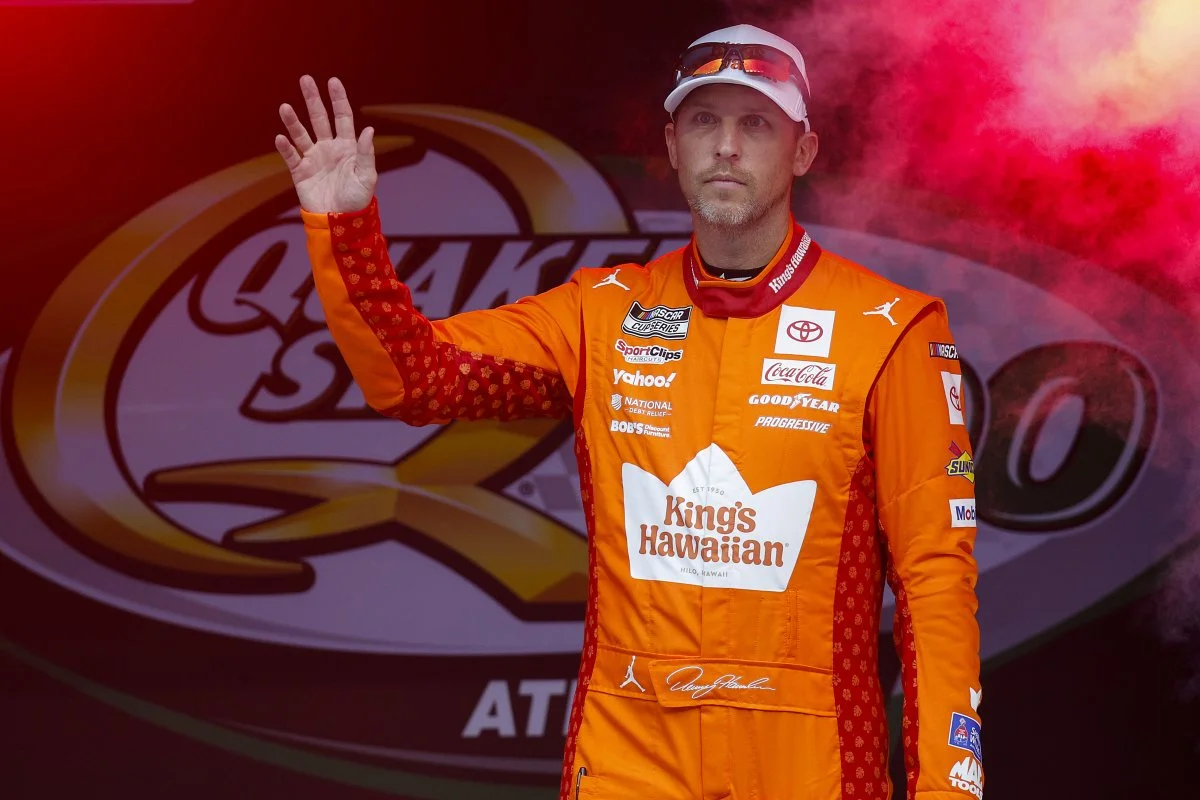
Hamlin’s enthusiasm for street racing is rooted in the vibrant, festival-like environment it creates. Beyond the cars and competition, the event combines the excitement of racing with the urban energy of the city skyline and the casual buzz of local culture. Hamlin acknowledges that this doesn’t diminish the value of classic oval tracks but envisions a different trajectory for the sport’s growth.
Economic Impact and Challenges of the Chicago Street Race
The Chicago Street race’s effect goes beyond fan engagement, with measurable benefits to the local economy. The inaugural 2023 Grant Park event generated an estimated $109 million in economic impact and brought $23.6 million in media exposure. The following year, the event increased its economic contribution to $128 million, alongside $9.6 million in local and state taxes.
Despite these impressive figures, the race has not yet achieved operational profitability. NASCAR officials disclosed that as of December 2024, organizing the event reportedly cost around $50 million. This financial reality poses a challenge for the sustainability of street races in the series, though Hamlin’s confidence suggests he believes long-term benefits outweigh the initial expenses.
Hamlin’s Perspective on NASCAR’s Future and Fan Engagement
Highlighting the distinct advantages of street races, Hamlin pointed out that these events convert curiosity into active attendance in ways traditional venues struggle to match. He stated,
So, I don’t know if anyone shares the same sentiment I do. But I don’t run the series; I don’t make the decisions. It just seems like, from my standpoint, there’s more excitement around the venue itself than with a normal NASCAR race venue.
His remarks demonstrate a sincere viewpoint that embraces evolving audience expectations rather than rejecting NASCAR’s history.
Hamlin’s candidness shows his commitment to growing the sport beyond just competing for wins. He wants NASCAR to capitalize on the momentum created in Chicago, nurturing its community impact and broadening its fanbase. This openness to change may invite criticism from traditionalists, but Hamlin appears willing to challenge the status quo in pursuit of the sport’s future.
Ty Dillon’s Unexpected Triumph and His Rapport with Hamlin
An intriguing subplot from the weekend involved Ty Dillon, who entered the NASCAR in-season tournament seeded 32nd but managed to eliminate Hamlin, the top seed, at EchoPark Speedway. Dillon’s underdog success drew attention when he playfully declared to fans in his post-race interview, I beat your favorite driver, echoing Hamlin’s own trademark banter.
Hamlin embraced this moment on his Actions Detrimental podcast, saying,
I see people giving Ty Dillon a lot of flak. Ty Dillon, give him his moment, people. He beat me. … He was ahead of me the whole f—– race. I was 33rd until we crashed. Just let him have his moment.
This response illustrated Hamlin’s sportsmanship despite the rivalry.
Dillon later revealed that he had texted Hamlin, saying,
Hey, I was just playing around.
Hamlin’s reply was simple: Bro, I loved it. Dillon also credited Hamlin for revitalizing entertainment in NASCAR, stating,
You know, I think a lot of credit goes to Denny as well. He’s leaned into the Denny versus the world thing the last year or so and built up a bit of a villain role—and it’s been fun. And when drivers kind of lean into some kind of entertainment part of our roles, it opens up the door for us other guys to show some of our personality.
The dynamic between Hamlin and Dillon highlights how personalities and rivalries are shaping NASCAR’s evolving fan experience, a trend Hamlin openly supports.
Implications of Hamlin’s Advocacy for NASCAR’s Evolution
Through his vocal support for the Chicago street race and his willingness to engage with fans in new ways, Denny Hamlin is positioning himself as a leading figure pushing NASCAR toward a broader, more urban crowd. The blend of racing tradition and innovative formats like street circuits could prove vital for the sport’s expansion, especially in major metropolitan areas where fan accessibility is key.
As NASCAR considers its calendar and strategies, Hamlin’s perspective underscores an important crossroads: should the series maintain its deep-rooted oval traditions or embrace urban street events that might energize and diversify its audience? The financial realities of street races are complex, but the growing fan enthusiasm and economic contributions bode well for their future.
Looking ahead, the ongoing discussion around the Chicago Street race will likely influence NASCAR’s direction, with more drivers and stakeholders weighing in. Fans and industry watchers will be watching closely to see if the sport fully commits to this urban racing model, which Hamlin has so boldly championed.
Our Reader’s Queries
Q. How did Denny Hamlin get so rich?
A. Denny Hamlin started racing full-time in the Cup Series with Joe Gibbs Racing in 2006. He has achieved a remarkable career since then. Hamlin has won 51 races in the Cup Series. He also triumphed three times in the Daytona 500 in the years 2016, 2019, and 2020, and has earned millions of dollars over his career.
Q. Why did Denny Hamlin sue NASCAR?
A. Late last year, 23XI and Front Row took legal action against NASCAR because they didn’t agree with the new charter renewal deals. They wanted a temporary order to still be seen as chartered teams for this season. However, on Thursday, the Fourth Circuit Court of Appeals in Richmond, Virginia, decided in favor of NASCAR.
Q. How did Denny Hamlin get rich?
A. His career earnings, endorsements, team ownership, and real estate investments have created a huge empire valued at $65 million.
Key Factors in Hamlin’s Wealth: ✔ Significant NASCAR income from race wins and contracts. ✔ Ongoing sponsorship agreements with companies like FedEx, Jordan Brand, and Toyota.
Q. How is Denny Hamlin so rich?
A. Hamlin, originally from Chesterfield, Virginia, has used his racing achievements to build a successful business career. Though race winnings are a part of his wealth, he also earns from sponsorships, a co-ownership in 23XI Racing with Michael Jordan, and various endorsements.
