
As the NASCAR season wrapped up its final race in Mexico City, the atmosphere in the paddock was noticeably subdued, reflecting both physical and emotional strain. Denny Hamlin, one of NASCAR’s most accomplished drivers with a decorated career, witnessed this firsthand. His perspective sheds light on the complex issues underlying NASCAR’s decision to discontinue races in Mexico City, with financial difficulties and logistical hurdles emerging as central factors.
The expansion of NASCAR into Mexico City was initially met with enthusiasm, offering a chance to tap into an international fan base and showcase racing in a new locale. However, as the season proceeded, the strain on teams, including logistical complications and ill health among crew members, became apparent. Hamlin’s insights clarify why the event will not return next year and why NASCAR has opted to revert to more traditional venues.
Denny Hamlin Candidly Explains Why NASCAR Is Exiting Mexico City
Denny Hamlin did not mince words when discussing the reasons behind NASCAR’s retreat from Mexico City. Addressing the common speculation, he emphasized that financial considerations played a decisive role.
Usually, this stuff comes down to money. Let’s all be honest. Maybe someone’s bid wasn’t what it needed to be, or they didn’t sell as many tickets, and so the return from that was not enough. It’s always money,
Hamlin said, dispelling rumors and outlining the core issue driving the decision.
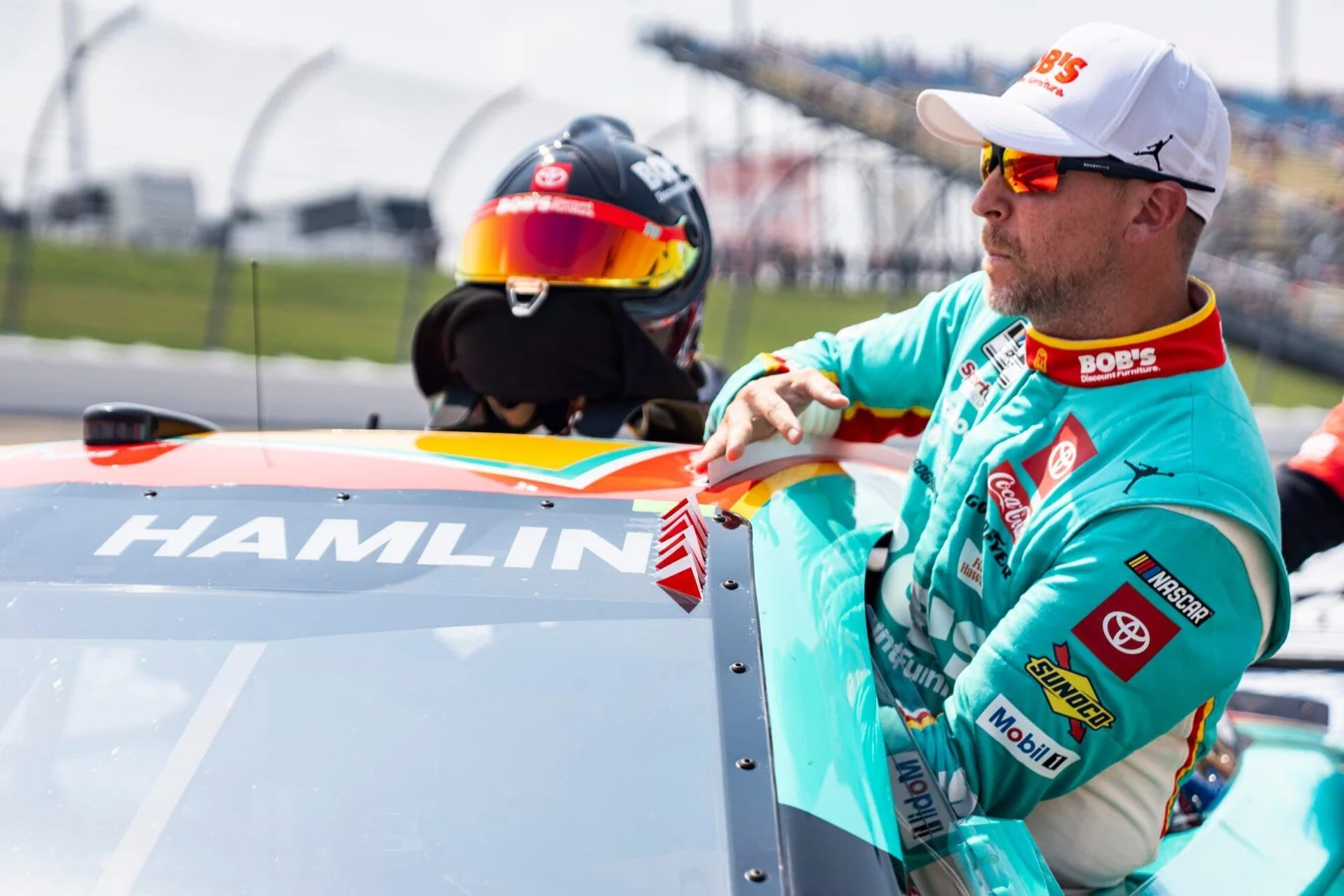
Beyond the financial picture, Hamlin revealed the significant operational difficulties faced by race teams, drawing attention to the strain caused by planning and logistics. During a recent episode of Actions Detrimental, he shared how preparing for the Mexico City race imposed a heavy burden on teams.
I can tell you from the team standpoint, we are like wiping our foreheads. Like Mexico was very, very challenging. Logistically. Uh, very, very tough on our race teams to prepare the cars,
he recounted, highlighting the demanding nature of organizing the event so far in advance. Teams had to relocate cars and equipment
a week, ten days in advance,
which disrupted their usual schedules and routines.
The difficulties extended beyond preparation to the health of those involved. Hamlin confirmed that many drivers and crew members became ill, affecting their ability to perform at peak levels.
Not only the task of that, but the task it had on everyone’s stomach when they got back home. Man they were they were a lot of sick people. Lots. I mean, I know of five to six that were in really really bad shape.
This widespread sickness was a serious concern in a sport where focus and physical condition are paramount.
Hamlin further acknowledged the lingering health impacts that extended well beyond the race weekend.
Some of the drivers still were not feeling well the following seven days. So yeah, I don’t know. You just uh body’s not quite used to that, the types of food or water, I don’t know.
His comments suggest that unfamiliar environmental conditions and local resources may have contributed to these health struggles, underscoring the complexity of staging events abroad.
Hamlin’s willingness to openly discuss these challenges provides an important perspective on why NASCAR is cautious about expanding internationally. His remarks highlight how financial considerations alone do not determine the viability of an event, as operational practicality and participant wellbeing are equally critical factors.
Relief and Opportunity With Chicagoland’s Return to the NASCAR Calendar
Following the news that Mexico City will no longer host a NASCAR race, focus has shifted toward the announcement that Chicagoland Speedway will return to the schedule. Hamlin expressed optimism about this change, noting the familiarity and racing quality the venue offers.
Good. I think that’ll put on a good race. Um, it’s a wide mile and a half. Typically, that’s been the one type of racing that’s been pretty good,
he said, referring to the oval’s characteristics that lend themselves to competitive and exciting events.
The return to Chicagoland represents a shift back to traditional American tracks, reducing logistical challenges and health risks for teams. Predictable infrastructure and fan bases accustomed to NASCAR’s style ensure smoother operations and better overall experiences. The venue’s broad layout encourages passing and close competition, which benefits both drivers and spectators.
Hamlin’s reflections emphasize that while expanding NASCAR’s reach is attractive, there is a delicate balance between growth ambitions and operational feasibility. The Mexico City stint taught valuable lessons about the demands international races place on teams and organizers. This experience is likely to influence NASCAR’s future decisions regarding event locations and scheduling.
Ensuring financial sustainability, prioritizing team health, and delivering quality racing are essential for international events to thrive. Hamlin’s candid insights serve as a reminder that beneath the spectacle lies a complex framework that must support both the pageantry and the practicalities of the sport’s global aspirations.
