
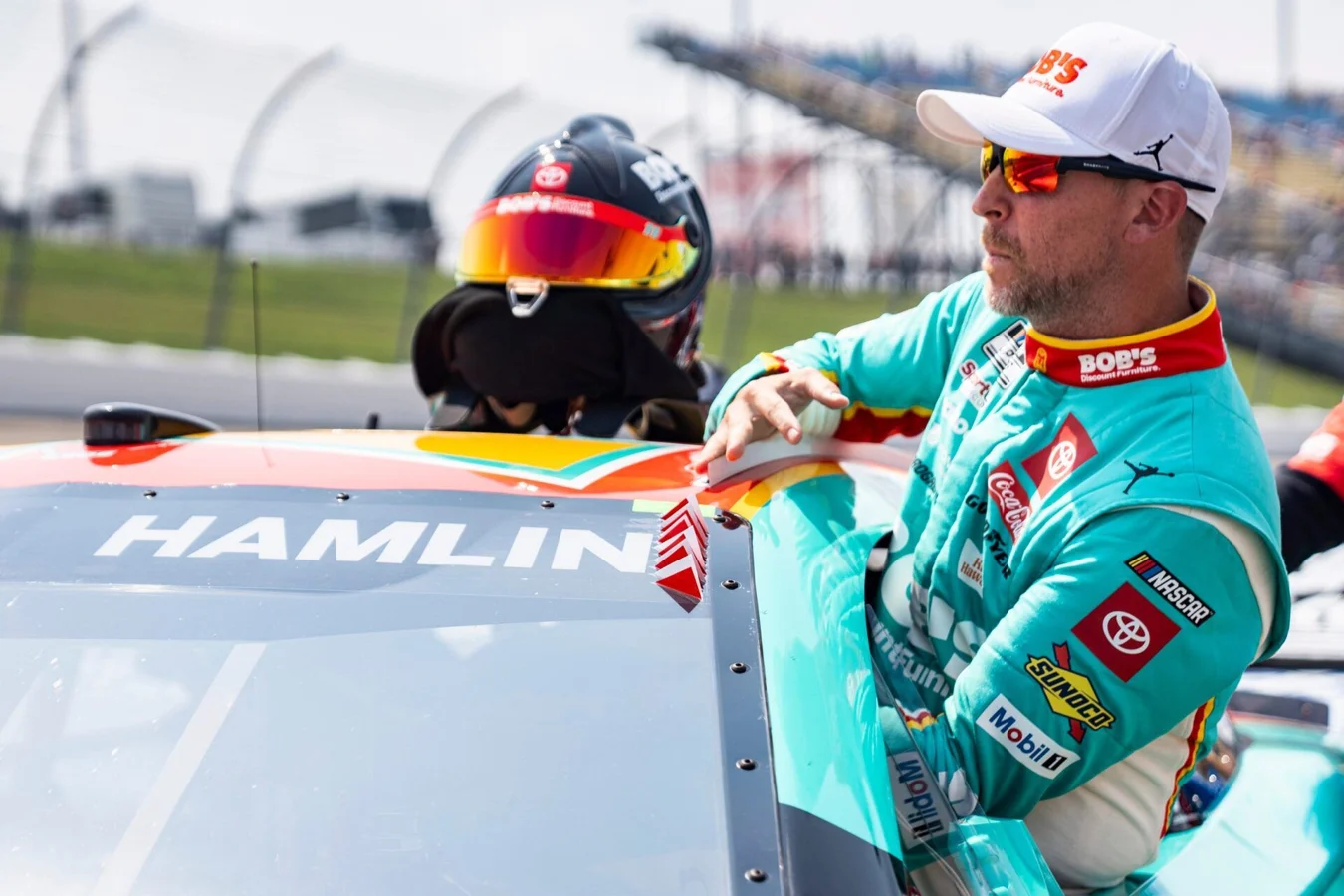
After the Iowa Corn 350, NASCAR officials took an unusual step by seizing four cars for research and development (R&D) inspection, including the No. 11 car driven by Denny Hamlin. This action deviates from the typical practice where usually two cars are taken, sparking interest around the reasons behind the increased scrutiny.
The selected vehicles—driven by Ross Chastain, Denny Hamlin, Ryan Blaney, and Alex Bowman—will undergo a thorough teardown and examination at NASCAR’s R&D Center in Charlotte. These include one Toyota, one Ford, and two Chevrolet cars, representing a fairly balanced mix of manufacturers.
Details of the Cars Selected and Inspection Process
William Byron, the race winner, successfully passed post-race inspection without any issues, while the four cars chosen for R&D face a detailed dismantling process. NASCAR’s teardown aims to verify compliance with technical regulations and examine innovations teams might have employed during the race.
Such inspections are an important part of NASCAR’s enforcement to maintain fairness and preserve competitive balance among teams, ensuring no unfair advantages are gained.
Understanding NASCAR’s Procedure for Choosing Cars for R&D Analysis
Despite perceptions of randomness, NASCAR follows a structured process to select which cars are taken after each race. Mike Forde, managing director for racing communications, explained the selection method during a recent appearance on Hauler Talk.
“How we kinda pick those cars, if you will, you know, fans hear the word ‘random’ and think that we have a pill bucket and we pull it out and whoever finishes, and we pull out 19 and whoever finished 19th knows that they’re coming home with us,”
Forde began.
“That is not how we do it.”
Forde clarified that while the garage teams perceive the selection as random because they cannot anticipate when their cars might be chosen, NASCAR actually uses a careful approach to spread inspections evenly among all teams over the course of the season.
“It’s random in that the garage doesn’t know what’s coming,”
he continued.
“The randomness isn’t a pull it out of the hat, and that’s who is coming home with us. What we try to do is pick a selection, we obviously keep track of all this, we have a grid, and try to pick the, spread it out through all the teams.”
This system aims to keep all teams under scrutiny and discourage any attempts to circumvent the rules, regardless of their manufacturer affiliation or team size.
Ensuring Fairness Among Teams and Manufacturers
Forde further explained that NASCAR makes deliberate efforts to vary the cars selected by manufacturer and team, rarely choosing multiple cars from the same organization or brand in any single week. For example, the recent selection included a Ford and a Toyota, alongside Chevrolet vehicles, reflecting this balanced approach.
“So, by all the teams, not just Hendrick and Roush and Penske and JGR, which is the case, but have all five, all four Hendrick cars come home. Have all three Penske cars come home throughout the season. And have different OEMs as well. So very rarely will you see two Toyotas come back or two Chevys or two Fords. This week we had a Ford and a Toyota on the Cup side come home. So, that’s kind of how we look at it. When we do it is also mildly random.”
This methodical system shows NASCAR’s commitment to equitable treatment of teams, ensuring consistent monitoring across the sport’s top competitors.
Potential Consequences and What Lies Ahead
The teardown inspections of the four seized cars, including that of Denny Hamlin, will determine if any violations occurred during the Iowa Corn 350. Although it is too soon to know if penalties will be issued, these procedures are critical for maintaining competitive integrity in NASCAR.
Teams will await the results carefully, as any infractions could lead to sanctions affecting driver standings, team points, or operational adjustments. Meanwhile, the industry watches closely, understanding the significance of these inspections in reinforcing NASCAR’s regulatory standards.
Going forward, this inspection may set a precedent for more extensive scrutiny in future races, perhaps signaling increased vigilance toward technical compliance across all teams and manufacturers.
