
At Portland International Speedway, Connor Zilisch completed his first full race since recovering from a collarbone injury and secured a commanding win, reinforcing his status as a leading rookie in 2025. However, this victory has ignited debate within the NASCAR community due to a questionable maneuver that played a key role in his success.
During the event, Zilisch demonstrated control from start to finish, posting the fastest practice lap at 73.641 seconds, earning pole position, winning both race stages, and ultimately taking the checkered flag. Despite this impressive performance, the final restart raised questions about the fairness of his winning move.
Examining the Controversy Around the Final Restart
While Austin Hill initially led the field with Zilisch alongside on the outside, Zilisch swiftly regained the lead entering turn one. Observers noted that Zilisch locked his brakes and veered off the track, choosing to navigate a chicane defined by A-frame barriers instead of returning directly to the race line.
This detour allowed Zilisch to avoid the congestion and collisions occurring among other drivers in the turn and emerge several car lengths ahead of competitor William Sawalich. Zilisch won the race by 1.572 seconds, and NASCAR did not issue any penalties, as his actions conformed to the existing rulebook.
Understanding Why the Portland Chicane Rule is Under Scrutiny
The chicane at Portland is intended to slow drivers who leave the track by making them steer through A-frame signs, theoretically acting as a self-enforcing penalty. Yet, the rule’s application has caused frustration due to inconsistencies and perceived loopholes.
Several drivers, including Riley Herbst, Austin Hill, and AJ Allmendinger, bypassed the designated chicane path by running straight through without penalty, undermining the intended deterrent. Rather than a disadvantage, drivers who use the chicane strategically can gain time and positions.
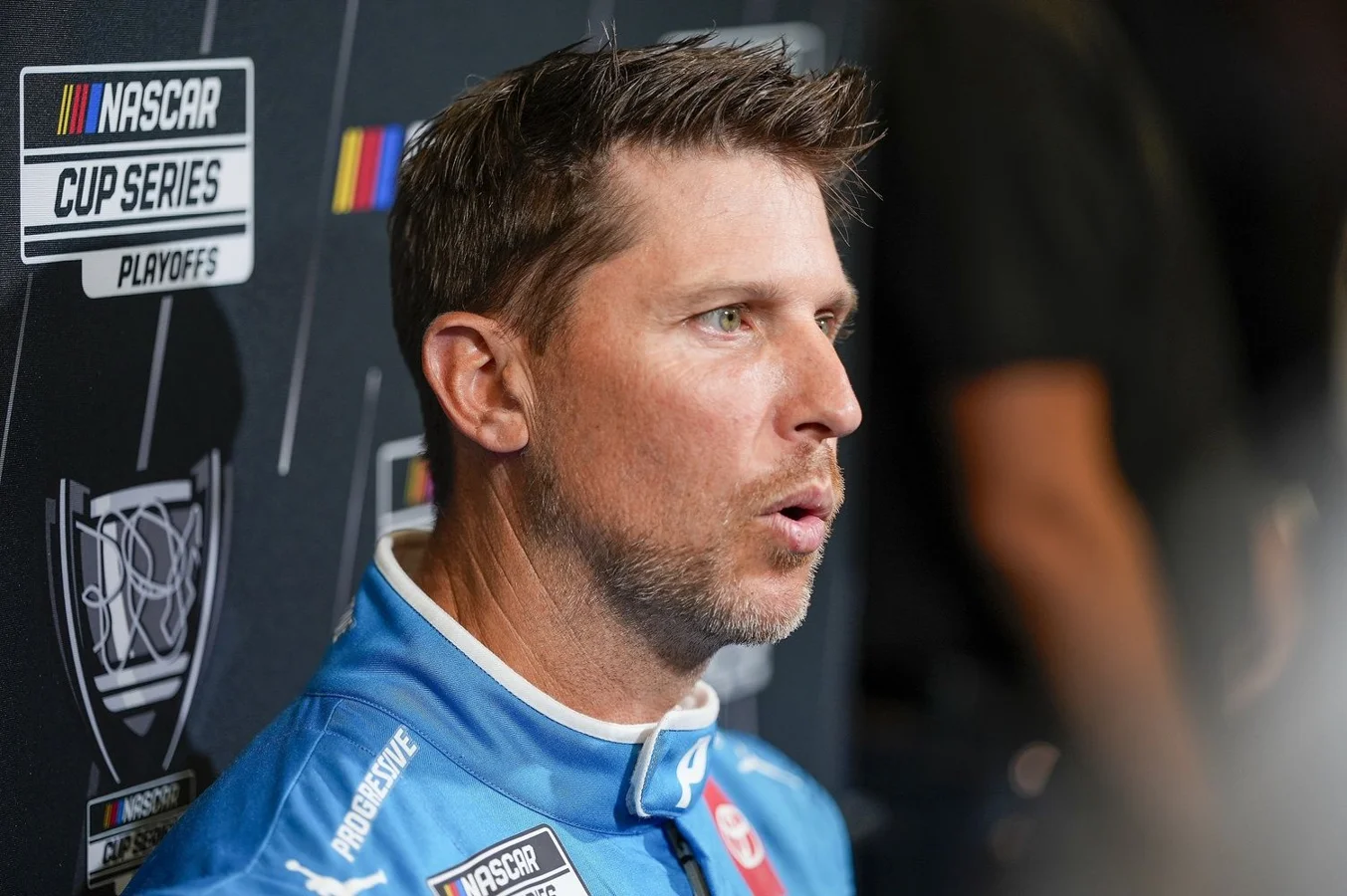
Denny Hamlin, a seasoned Cup Series driver, highlighted the shortcomings of this rule, stating,
“In retrospect, that probably should be the case (a stop-and-start penalty). However, no, it was you just got to weave your way through those white barriers.”
—Denny Hamlin, Cup Series Veteran
The Implications of NASCAR’s Chicane Rule and Calls for Reform
The exploitation of the chicane route has produced tangible advantages in multiple races, enabling drivers like Zilisch and Ty Gibbs to increase their leads instead of losing positions after going off track. Hamlin recounted Gibbs’ experience to emphasize the rule’s flaws:
“I traveled with Ty Gibbs to Darlington this weekend. He’s like, ‘Oh yeah, Portland, that front chicane.’ He says, ‘When it was raining and I ran there, I had it in my mind the whole time that I’m just going dead straight into turn one…And so he said, ‘Yeah, I can see why he did that. I did that years ago and it worked out well.’ So, it’s just poor planning,”
Hamlin added.
This loophole raises concerns about fairness for drivers who follow the intended course of the turn and face traffic or slower speeds as a result. The current situation pressures NASCAR to reconsider or amend the rule, possibly by introducing clear penalties for circumventing the chicane or redesigning the track to eliminate such exploits.
If left unaddressed, this gap in NASCAR regulations could encourage drivers to consistently exploit the chicane for a competitive edge, impacting race integrity and driver safety at future events.
