
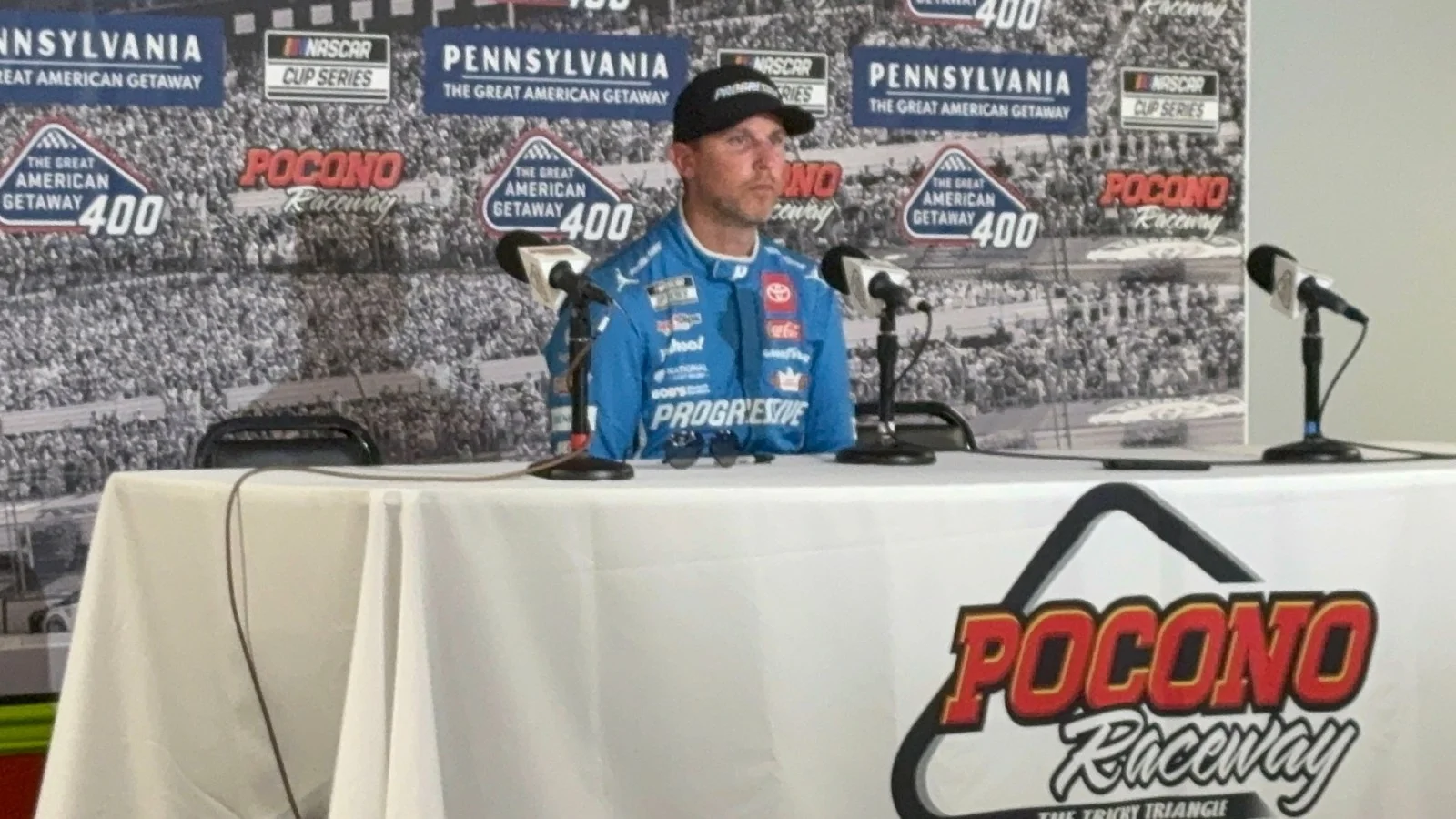
NASCAR broadcasting has long faced criticism for missing critical moments during races, often due to camera changes or commercial interruptions that disrupt the flow for fans. However, the recent coverage by Amazon Prime has won acclaim for reshaping the viewing experience through its fan-focused and data-driven approach. Denny Hamlin praised Amazon Prime’s NASCAR broadcasts for offering a more immersive and informed experience that resonates well with viewers.
Hamlin pointed to the knowledgeable talent on-air, saying the broadcast team includes racers and insiders who understand the sport deeply, which helps maintain engagement throughout the race. He mentioned,
“I think they have racers in the booth. If you look at the people that they have, they know the sport in and out. Dale Jr. hosts a podcast that talks about the sport each week. Steve Letarte is one of the best, if not the best, at just keeping you constantly engaged.”
He added that the familiar dynamic among the commentators enhances the broadcast quality.
“I just think it’s the rapport they have with each other that is so good. And then, they are not bound by network and having to hit commercials.”
Hamlin explained that Amazon Prime’s flexibility around commercial breaks helps avoid frustrating interruptions during key moments in the race.
“I think they talked about it on (Dale) Junior’s podcast this week about being flexible when they take their breaks. I think that’s certainly important because a lot of the gripe you hear is maybe nine laps to go, and it’s necessary for network to go to commercial, and it’s just not the right time. Unfortunately, that’s just how network TV works.”
Jeff Gordon Appreciates Amazon’s Advanced Data and Analytical Coverage
Echoing Hamlin’s praise, NASCAR veteran Jeff Gordon also expressed strong support for the five-race schedule covered by Amazon Prime. Gordon noted that both the on-screen presentation and behind-the-scenes technological enhancements have improved how fans follow races. He emphasized how the broadcast effectively highlights the complexities of pit strategy, fuel management, and race pacing — elements often difficult for audiences to understand live.
Gordon remarked that by clarifying these aspects through data, viewers are given a far better grasp of race developments rather than relying on guesswork. Amazon Prime’s real-time telemetry and analytics illustrate how drivers manage fuel consumption, estimate their remaining laps, and decide whether to take risks or play it safe during the race.
The platform’s approach, which originated in NFL broadcasts, now brings a data-centric style to NASCAR that appeals especially to a younger demographic. Gordon said,
“They’re really about analytics and bringing that to the fan,”
adding,
“They also know they’re catering to a younger fan base, and so that’s sort of what they demand. One thing that I love that I saw (at Michigan) was the race off pit road.”
While traditional broadcasters like Fox and NBC have provided solid pit road coverage, Amazon Prime introduced a new level of detail by clearly showing which drivers pitted, their positions, tire choices, and how they re-entered the race order. This depth of information has addressed long-standing fan requests for more transparent and comprehensive race insights.
Impact on NASCAR Viewing and What Lies Ahead
By integrating expert commentary with advanced analytics and flexible broadcast timing, Amazon Prime offers NASCAR fans a more engaging and educational viewing experience. Figures like Denny Hamlin and Jeff Gordon recognize the platform’s ability to connect with a modern audience that values insight and uninterrupted coverage.
This innovative broadcast style could influence future NASCAR coverage standards across all networks, pushing traditional outlets to incorporate more real-time data and listener-friendly pacing. As fans continue to seek ways to better understand race strategy and driver decisions, Amazon Prime’s approach sets a promising precedent for enhanced sports broadcasting.
