
Denny Hamlin on NASCAR playoffs has been a focal point following NASCAR’s decision to revert to a Chase-format postseason beginning in 2026. The announcement arrived this week, following an extended period of industry consultation, signaling a major shift in how the Cup Series champion will be determined.
NASCAR’s New Approach to Determining a Champion
The upcoming postseason overhaul will see the sport abandon its current elimination-style playoffs and move toward a system that emphasizes full-season consistency. NASCAR officials have stated that, beginning in 2026, a traditional points-based structure spanning the final 10 races of the season will replace the single-race, winner-take-all event that previously defined the championship showdown. The move comes after deliberations involving drivers, teams, broadcast partners, and sanctioning body officials to address longstanding criticism of the existing playoff format.
Steve Lauletta, president of 23XI Racing—which Hamlin co-owns—was swift in offering public support for the new format. On social media, he acknowledged the collaborative effort behind the change:
“Nice work by all involved to provide a system that will reward the best of the best. #LetsGo to work @23XIRacing”
—Steve Lauletta, 23XI Racing President
The revision was greeted with affirmation from multiple NASCAR figures who have, like Hamlin, expressed frustration with the past system for not reflecting overall season performance in the crowning of a champion.
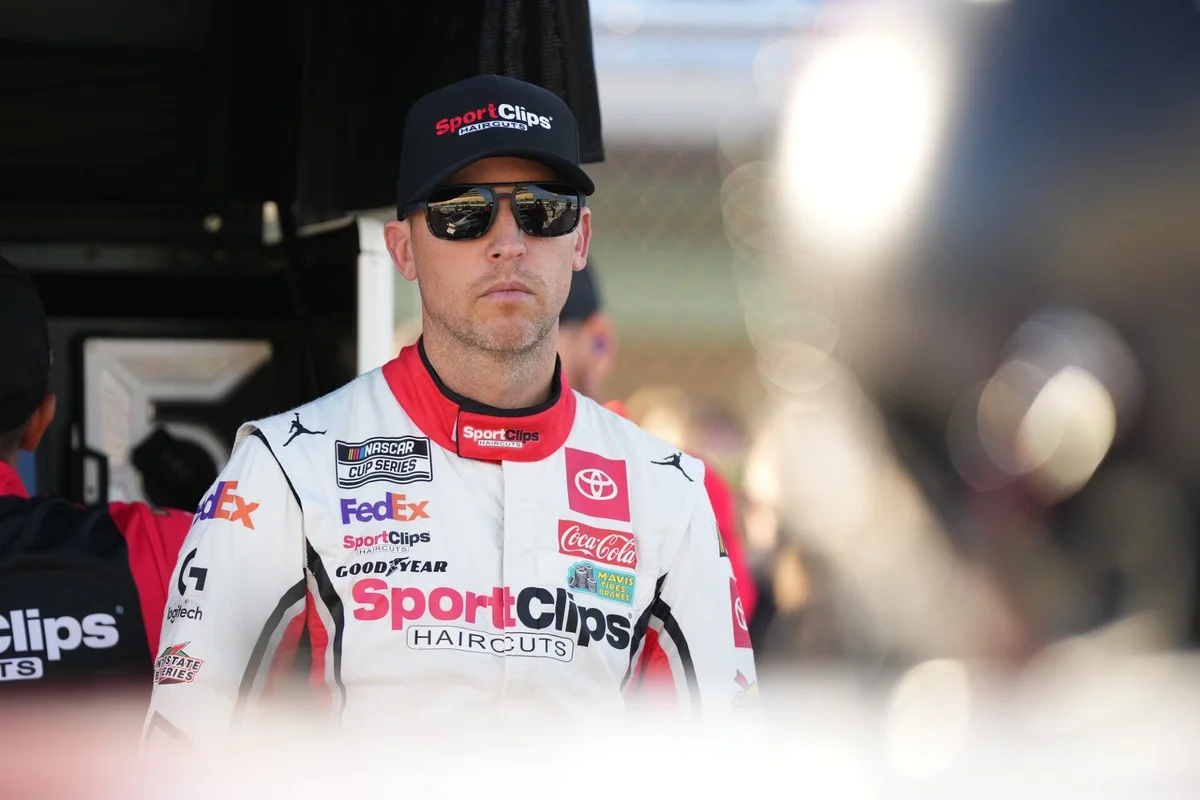
Denny Hamlin’s Ongoing Objection to the Previous Playoff System
For years, Denny Hamlin has voiced his discontent with the elimination format, which he felt exposed dominant drivers to the risk of losing the championship due to one bad race or random reset. As a driver for Joe Gibbs Racing and co-owner at 23XI, Hamlin championed the idea that success over a larger sample size should be rewarded rather than a model that resets points throughout the year.
Last season, Hamlin spoke on his Actions Detrimental podcast, highlighting the disconnect he and fellow competitors felt with the format:
“For people like myself, William Byron, Kyle Larson, Ryan Blaney, Tyler Reddick… I think we’re all for bigger sample sizes. If I didn’t list your name, of course you love a one-race format. It rewards mediocrity for a bulk of the season… You don’t know what it’s like to dominate a season and then all of a sudden the format keeps resetting the score on you and then finally you end up losing in overtime.”
—Denny Hamlin, Driver/Co-Owner
This dissatisfaction set the stage for the recent overhaul, which seeks to balance the integrity of the championship with a playoff system that rewards all-around season excellence.
Major Changes in the 2026 Chase Format Explained
The modified Chase will echo the system that was in place from 2004 to 2013, with several critical updates. Sixteen drivers will advance into the postseason based on regular-season points—without the previous “win-and-in” guarantee. Each race win will provide 55 points, and points will reset a single time after the regular season, with a clear 25-point gap from first to sixteenth. Over the following 10 races, the driver who amasses the most points will be crowned champion, rather than deciding the title through a one-race, winner-take-all event.
Hamlin, who has amassed more Cup Series wins than any other driver without a championship, started his full-time NASCAR stint under the Chase model in 2006. He came closest to clinching the title in 2010, finishing just behind Jimmie Johnson. His personal near-misses and deep investments in competitive consistency underpin his strong opinions on the postseason structure.
Phoenix Finale Highlights Format Limitations for Hamlin
The limitations of the outgoing system became particularly clear in the 2025 championship race held in Phoenix. Hamlin entered the race as the top-seeded driver after securing six regular season wins and dominated by leading the majority of laps. Yet, a late overtime restart upset the running order, and pit strategies saw Kyle Larson take two tires for better track position, while Hamlin, opting for four, restarted deeper in the field and was unable to recover, allowing Larson to overtake and win the title.
Soon after, Hamlin candidly discussed on his podcast the emotional toll of potentially returning to the sport under the unchanged playoff model:
“Very, very,” Hamlin said. “It doesn’t make me want to race right now in this moment anymore. They could say 36 races, which they’re not. Everyone, just get over it. You’re going to get playoffs. But it’s still so fresh. I want nothing to do with racing right now. I’ve got to get some more time.”
—Denny Hamlin, Driver/Co-Owner
Hamlin also alluded to contemplating retirement had he finally won a championship under the prior rules, though he remains signed with Joe Gibbs Racing through the 2027 season and is preparing to compete with the No. 11 Toyota entry when Cup Series action resumes.
The Broader Impact and What Comes Next
The reintroduction of the Chase format is designed to better reward season-long performance and generate a more balanced playoff environment. Drivers such as William Byron, Kyle Larson, Tyler Reddick, and Ryan Blaney—whose names emerged during Hamlin’s commentary—will now compete under a system intended to reduce the influence of random resets or one-off losses, addressing calls from both competitors and teams for a fairer measure of championship merit.
As NASCAR approaches the implementation of the new structure in 2026, attention will shift toward its impact on driver strategy, team decisions, and championship narratives. The move has already prompted deep introspection within the driving community, as seen in Hamlin’s conflicted but candid responses, and may influence how future seasons and rivalries unfold in America’s premier stock car series.
Nice work by all involved to provide a system that will reward the best of the best #LetsGo to work @23XIRacing https://t.co/WMTbrWfO9H
— Steve Lauletta (@slauletta) January 13, 2026
