
At Richmond Raceway, a venue where Denny Hamlin and the No. 11 team have historically performed well, Saturday’s NASCAR Cup Series Cook Out 400 took a disappointing turn. Despite having a car capable of winning, Hamlin faced critical pit road mistakes and a speeding penalty that dashed his hopes for victory. These issues ultimately relegated him to a 10th-place finish.
In his Actions Detrimental podcast, Hamlin candidly analyzed the problems that unfolded during pit stops at Richmond, focusing on errors made both by himself and his usually dependable pit crew.
Technical Issues Behind the Pit Speed Penalty
Hamlin explained how he miscalculated the pit road approach, affecting his ability to stay within the speed limit. He admitted,
“Pit road was terrible and I’m including myself on that. … I was too low. I cut the radius too short.”
This misjudgment came during the pre-race calibration lap where drivers run pit road to confirm that their speed monitoring lights are accurate. Normally, Hamlin positions himself near the far right end of the pit wall to measure speed correctly.
He further detailed the impact of deviating from this path:
“What happened more than likely is I left my pit stall and didn’t go all the way out to the right. When you cut the inside of the track a little shorter, your distance is shorter. Even if you run the same amount of lights and RPMs, your speed will show faster. So, 45 mph on the very outside versus 45 mph on the very inside — you’re still under the speed limit — [but] it changes the time and will register a faster mph the lower you are.”
Hamlin expressed his frustration, knowing his car had the potential to win, which was confirmed early in the race when he quickly assessed the car’s performance within just a few laps.
Additional Challenges After a Multi-Car Wreck
Beyond the pit lane troubles, Hamlin became entangled in a 12-car accident on Lap 198. The damage from the wreck sapped the car’s earlier speed advantage, making him less competitive for the remainder of the race. Richmond slipped away from his grasp, leading to mounting frustration.
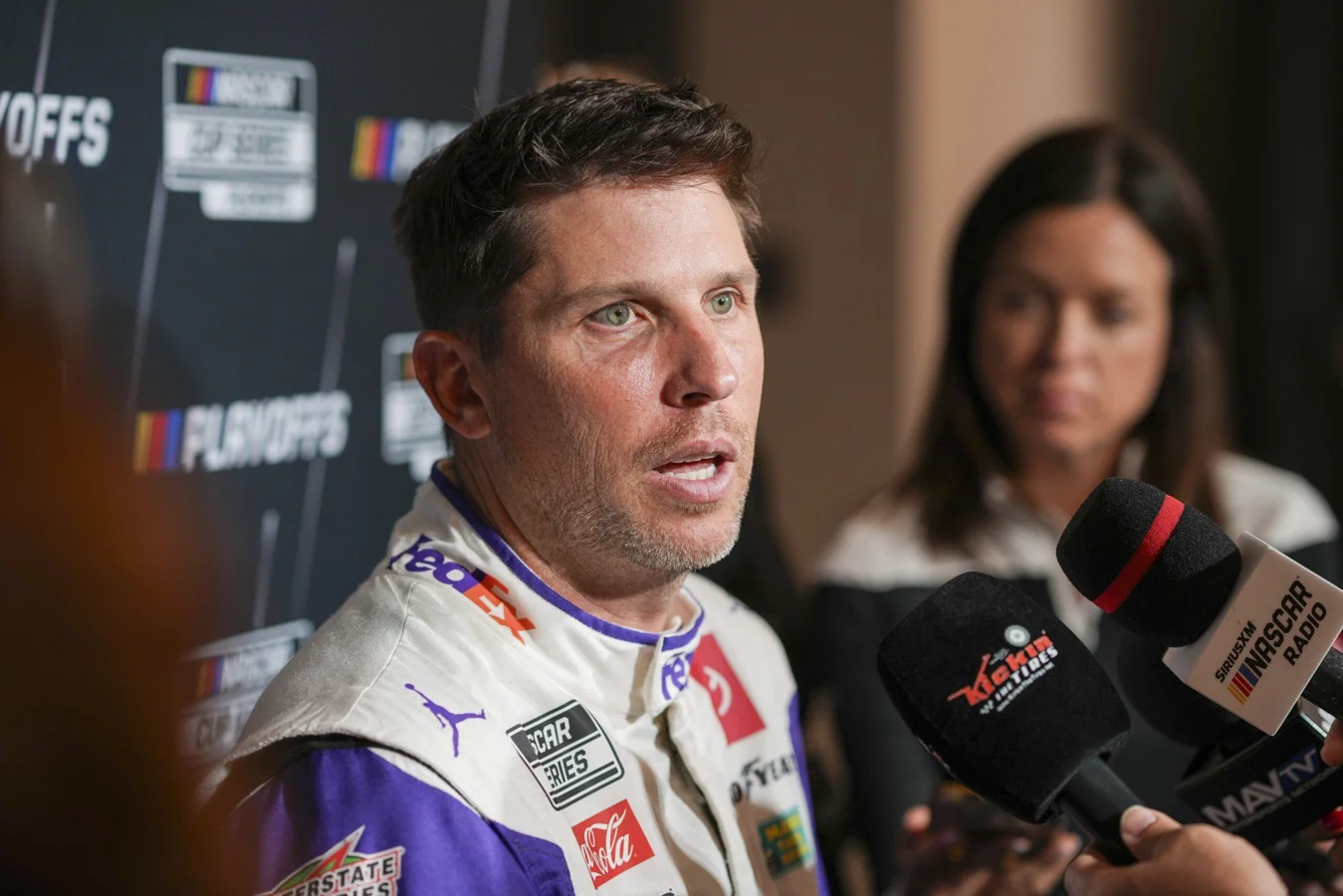
“It still had decent capability, but we had lost our edge. We became pedestrian at that point. We were just another car,”
Hamlin stated. Despite his skill in navigating the track, he acknowledged the car was limited to a mid-pack pace, which ultimately put him in 10th place.
He added,
“We had a rough day on pit road, no doubt about it. Each stop was something different every time. You’ll have that, but this is one where I thought if we could control the race, we would freaking lead. My car had everything it needed to dominate the race.”
Hamlin’s Determination Despite Setbacks
Hamlin shared the emotional toll of early mistakes, recognizing how one error can prematurely end a strong run.
“One mistake at the very beginning and you’re just never to be seen again. I was actually happy about how I was able to move forward. Again, testament to the tires, drop off and all that stuff. I was like, ‘Damn, this isn’t over.’ I got to 12th, 13th pretty quickly, and then I got in the wreck and was like, ‘F*ck.’ Darn it, man. I hate letting these weekends get away. There’s not so many left.”
This reflection underscores the high stakes and pressure Hamlin faces as he aims to convert opportunities into wins at Richmond and beyond.
The Impact on Hamlin’s Season and Future Outlook
Denny Hamlin’s struggles during the Cook Out 400 at Richmond highlight how critical pit road precision is in NASCAR racing. The combination of a speeding penalty and a significant wreck shaped a challenging day despite the strength of his car. As one of the sport’s seasoned competitors, the experience serves as a reminder of how quickly a promising race can be derailed by small errors.
Going forward, Hamlin and his team will likely focus on pit road execution and avoiding costly mistakes to leverage their car’s capabilities. Richmond Raceway remains a key venue for Hamlin, and refining these aspects could be crucial for his pursuit of future victories and championship contention.
