
NASCAR took swift and firm action after the Pennzoil 250 race at Indianapolis Motor Speedway, responding to a dangerous incident involving Austin Hill and Aric Almirola. Denny Hamlin, a seasoned driver, openly supported the sanctioning body’s decision to penalize Hill, who was suspended and had his No. 21 car parked for intentionally causing a collision. This penalty reflected NASCAR’s strict stance against reckless driving on the track.
During the final laps of the race, tension escalated between Hill, driving for Richard Childress Racing, and Almirola of Joe Gibbs Racing as they fought for fourth place. After minor contact between their cars, Hill retaliated by forcing Almirola into the outside wall in a severe crash that left a lasting impact on the race and the drivers involved.
Details of the Incident and Reaction from Drivers
With six laps remaining, the competitive battle between Hill and Almirola grew heated. Following a brief collision, Hill deliberately cut across the track and hit Almirola, resulting in a harsh impact against the outside wall. Almirola described the crash as
one of the biggest hits in his NASCAR career,
comparing its severity to his 2017 crash in Kansas that caused a broken back.
NASCAR wasted no time in taking disciplinary measures. Hill was immediately black-flagged and penalized by being parked for the rest of the race, followed by a one-race suspension. Ahead of his upcoming Cup Series event at Iowa, Denny Hamlin expressed his full support for these sanctions, emphasizing their importance to maintaining order and safety.
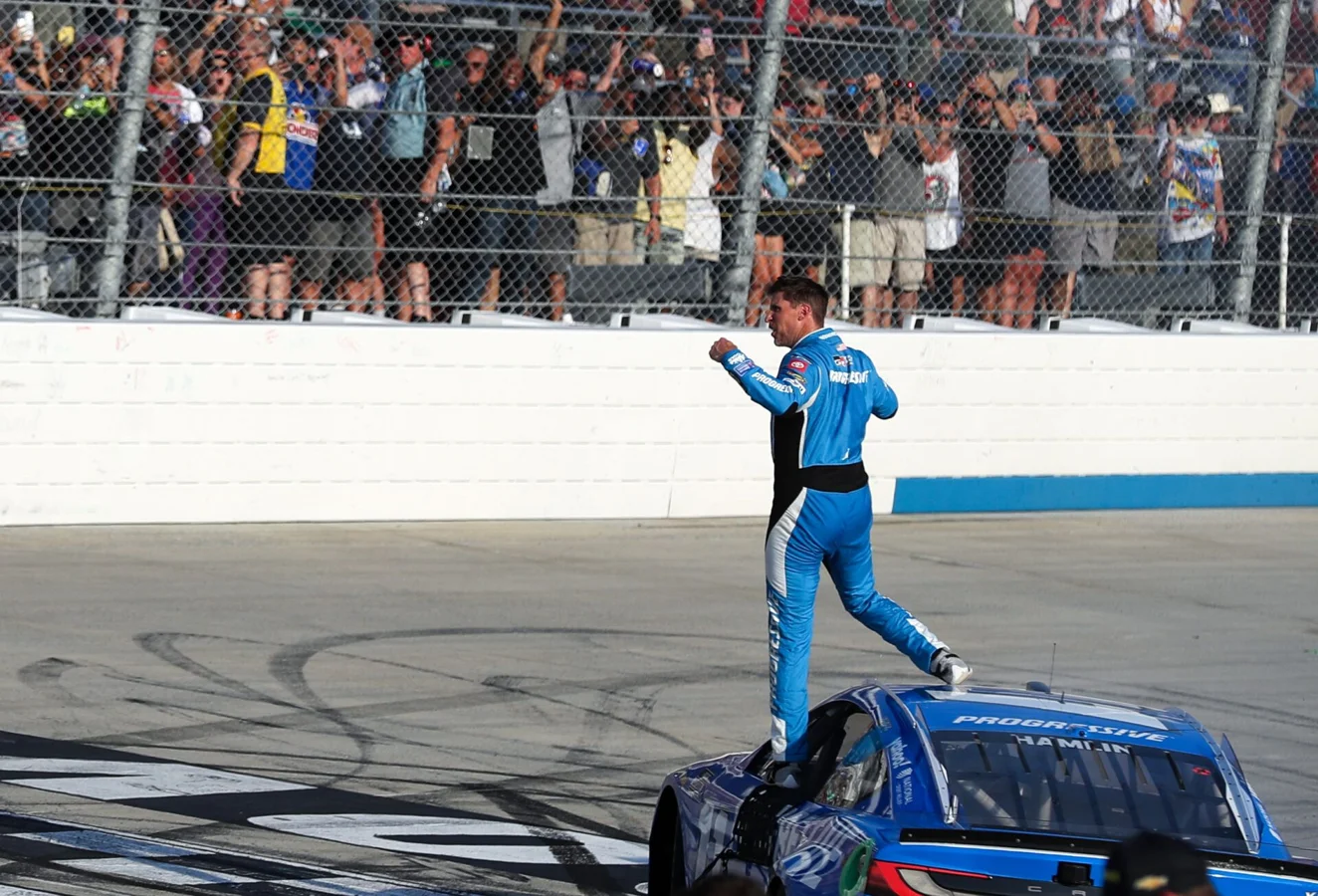
It always hurts when you’re the first. And you know the idea behind the penalty is to deter others from doing something similar to that in the same scenario,
Hamlin said in response to the ruling.
He further explained the role such penalties play in the sport’s larger context.
Usually, this is how it works: It just takes one rough driving penalty to get the field’s attention, and certainly nobody wants to have the penalty that No. 21 had.
Hamlin’s Perspective on Continued Penalties for Repeated Misconduct
When asked whether NASCAR should intensify consequences for drivers who repeatedly engage in reckless behavior, Hamlin likened the situation to disciplinary actions in football, where emotional reactions often result in immediate penalties but rarely eliminate the behavior entirely. He views such moments as natural in competitive sports but believes the current level of punishment is sufficient.
I don’t think you ever stop people’s immediate emotions or reactions. I think that’s all part of it,
Hamlin explained.
We see football players make game decisions, roughing the passer calls all the time like, it just happens in the moment so, I think the penalty I definitely enough.
Implications for Richard Childress Racing and the Upcoming Races
The suspension carries wider repercussions for Richard Childress Racing beyond the immediate penalty. With Austin Hill missing the upcoming Iowa race, the team must submit a waiver request to keep him eligible for the playoffs under NASCAR’s updated rules. Despite the setback, the team promptly announced they will not appeal the penalty.
In an official statement, Richard Childress Racing declared their position clearly:
Richard Childress Racing will not appeal the penalty NASCAR issued to the No. 21 team following the NASCAR Xfinity Series race at Indianapolis Motor Speedway. We remain focused on winning a championship with Austin Hill in 2025.
Austin Dillon will replace Hill during his suspension, taking over the No. 21 Chevrolet as the team works through this difficult phase. The organization’s willingness to accept NASCAR’s decision and look ahead to future success indicates a commitment to address the situation while maintaining championship aspirations.
