
On August 22, at Daytona International Speedway, NASCAR fans experienced an unexpected moment of celebration when Parker Kligerman appeared to claim his first NASCAR Xfinity Series win, stepping in as a relief driver for the injured Connor Zilisch. Despite crossing the finish line first, Kligerman did not officially earn the victory due to NASCAR‘s rule that credits the race starter with the official finish, a regulation initially meant to protect injured drivers in the points standings. This recent event has reignited discussions around driver swaps, a controversial topic within the sport’s fanbase.
The Background of Parker Kligerman’s Career and His Impact on Fans
At 35 years old, Parker Kligerman is known more as a journeyman driver than a consistent series leader. He launched his Xfinity Series career in 2009, capturing a pole position at Kansas Speedway at just 19 years old, but struggled to secure full-time rides throughout his career. Balancing his racing with work as a television pit reporter, Kligerman has earned a loyal following thanks to his authenticity and deep knowledge of NASCAR.
On that northern summer night, Kligerman’s effort to replace Zilisch, who was sidelined with a broken clavicle, fulfilled a childhood dream while driving for Dale Earnhardt Jr.’s JR Motorsports team. The victory celebration in victory lane included Zilisch himself, who congratulated Kligerman after watching from the pits. Fans admired both the experienced driver and the young talent, resulting in broad support for the relief driver scenario.
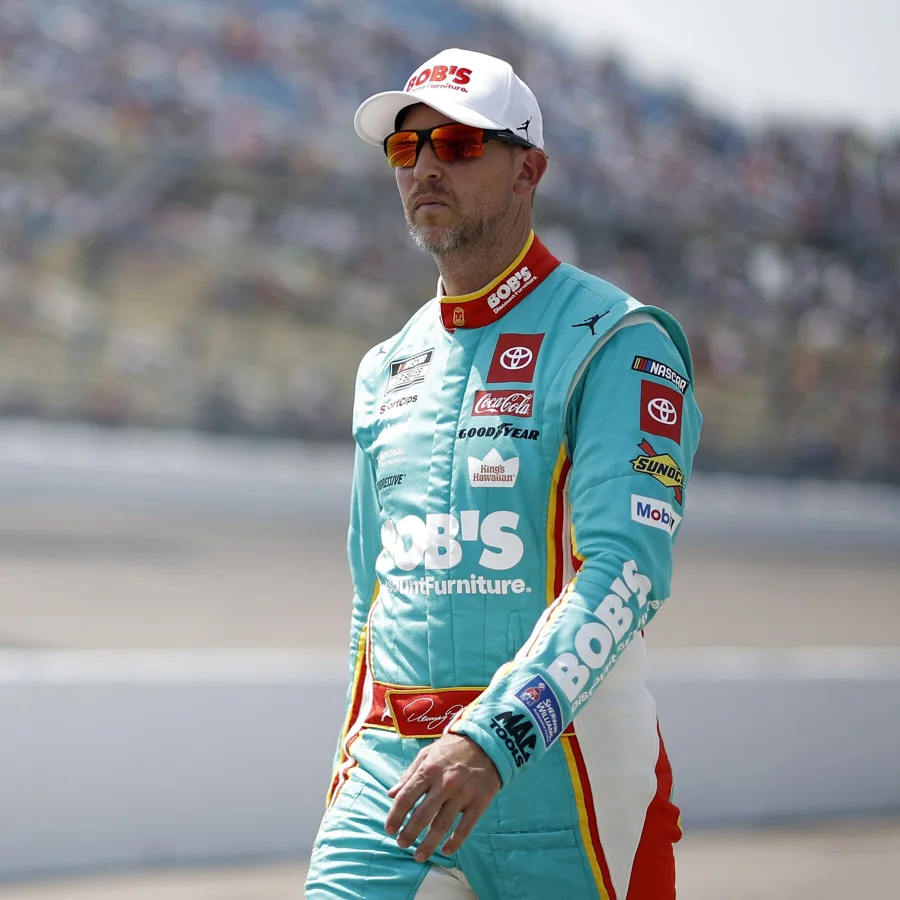
Fan Reactions Showcase Mixed Feelings on Relief Drivers and Race Credit
The crowd’s positive reception of Kligerman’s unrecognized victory contrasts sharply with historical resentment surrounding similar driver swaps in NASCAR’s past. While many rooted for Kligerman as an underdog and fan favorite, the rulebook did not recognize his achievement officially, leaving a bittersweet feeling about the impact of these driver changes.
Reflecting on a 2007 Milwaukee Incident: The Origins of Fan Backlash
This division of opinion can be traced back to a nearly identical driver substitution nearly two decades ago at the Milwaukee Mile, where the atmosphere was much more hostile. At that time, Joe Gibbs Racing’s Cup driver Denny Hamlin was slated to compete in both the Xfinity and Cup Series races during a weekend when the locations differed. Aric Almirola, a part-time JGR Xfinity driver, qualified the No. 20 car on pole but had to start the race because Hamlin was delayed and arrived late due to logistical challenges involving a helicopter landing.
When NASCAR required a driver to start the race, Almirola took the green flag in front, much to the delight of fans present, including employees of the race’s sponsor, Rockwell Automation, based in Milwaukee. However, after several laps and a caution, Hamlin entered the car on pit road, taking over the race from Almirola, who had dominated early but was forced out to accommodate the Cup series competitor.
The Controversy Around Hamlin’s Late Entry and Its Impact on Fans
Hamlin’s comeback drive was impressive, leading multiple laps and ultimately crossing the finish line first. Nevertheless, it was Almirola who received official recognition for the win because he started the race. This crew decision triggered widespread dissatisfaction among fans, who believed Almirola deserved the chance to finish after his strong performance. The backlash was fueled by Hamlin’s status as a prominent Cup driver and the perception that such “buschwhacker” interventions undermined the development and recognition of emerging drivers in the Xfinity Series.
The Broader Issue of Cup Drivers Dominating Lower Series Races
At that time, NASCAR did not restrict Cup drivers competing across multiple national series, allowing them to compete—and often dominate—in Xfinity and Truck Series races. In 2007, drivers like Kevin Harvick, Matt Kenseth, Carl Edwards, and Hamlin, among others, won almost every race in the series, overshadowing regular Xfinity competitors. This dominance frustrated fans and contributed to the “buschwhacker” label for Cup drivers who “cherry-picked” lower series wins, undermining opportunities for less-established drivers.
Hamlin himself was second in Cup points entering the Milwaukee weekend, emphasizing the stark gap between his top-level experience and the part-time Xfinity drivers. Ultimately, Cup regulars took 30 of the 35 Xfinity races that year, illustrating the scale of their dominance and deepening fans’ frustration.
How NASCAR’s Policies Have Evolved to Address Driver Participation Limits
Fan discontent over Cup driver participation led NASCAR to institute limits on points-earning in only one national series and caps on the number of races Cup regulars can enter in lower series. These rule changes emerged gradually in the years following the 2007 season, aiming to preserve opportunities for developing drivers and maintain competitive balance. However, the rule that credits the race starter with the official finish has remained consistent, continuing to cause debates like the one surrounding Kligerman’s recent performance.
Comparing Two Driver Swap Stories: Different Eras, Different Reactions
Though Parker Kligerman’s and Denny Hamlin’s driver swaps resulted in similar rulebook outcomes—where the substitute driver performed and won on-track but didn’t get official credit—the emotional responses from fans diverged vastly. Kligerman’s moment was embraced as a heartwarming underdog story, while Hamlin’s takeover ignited resentment tied to broader frustrations with Cup driver dominance in the Xfinity Series. The unchanged NASCAR rule highlights how the dynamics between drivers, fans, and teams shape the narratives surrounding these events.
Examining the Enduring Debate Over Driver Swaps and Series Integrity
These contrasting reactions underscore the ongoing tension within NASCAR around driver swaps and the identity of the Xfinity Series. Fans often view relief driver wins differently depending on the individuals involved, the timing, and the context of the sport’s evolving rules. While some see the rule as protecting developing drivers‘ points and careers, others view such swaps as compromising the competitive fairness and integrity of the series.
Ultimately, as NASCAR continues to evolve its regulations, the stories of Denny Hamlin and Parker Kligerman serve as emblematic case studies of the complex intersections between rules, sportsmanship, and fan expectations that define the sport today.
