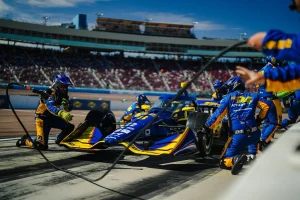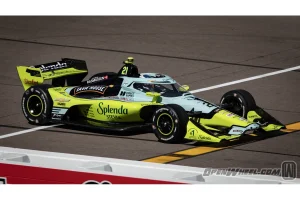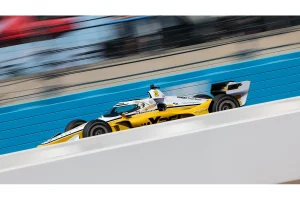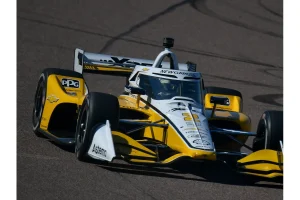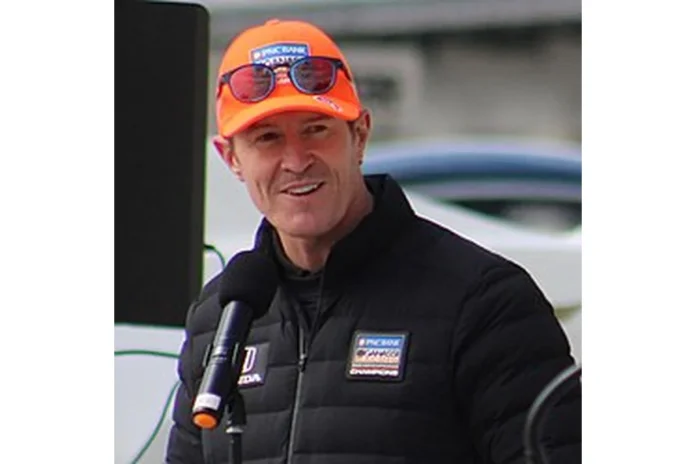
Scott Dixon Bio
Scott Ronald Dixon (born 22 July 1980) is a New Zealand racing driver who races the No. 9 Chip Ganassi Racing (CGR) Dallara DW12-Honda car in the IndyCar Series. He is a six-time drivers’ champion of the IndyCar Series, having claimed the title in 2003, 2008, 2013, 2015, 2018 and 2020, and he won the 2008 Indianapolis 500 with CGR. Dixon has three 24 Hours of Daytona victories and two Petit Le Mans wins, and is widely regarded as one of the most accomplished drivers in open-wheel racing history.
Dixon’s legacy in motorsports extends well beyond IndyCar, with a career spanning open-wheel racing, endurance sports car competition, and appearances in NASCAR’s international series and V8 Supercars. His consistency and race craft over more than two decades have earned him induction into both the Motorsports Hall of Fame of America in 2024 and the Long Beach Motorsports Walk of Fame in 2025.
Early Life and Background
Scott Ronald Dixon was born on 22 July 1980 in Brisbane, Queensland, Australia, and was raised in New Zealand. He began karting at the age of seven and quickly emerged as a prodigious talent, winning thirty major karting titles in his age group across Australia and New Zealand. The family’s modest financial circumstances meant that every race carried genuine stakes, shaping a mindset of precision and discipline that would define his entire career.
At age thirteen, Dixon made the transition from karting to car racing, a move that accelerated his development against more experienced competitors. He captured the 1994 New Zealand Formula Vee Championship, and continued climbing the formula ladder with the 1996 New Zealand Formula Ford Class II Championship and the 1998 Australian Drivers’ Championship. He completed the most significant milestone of his junior career by winning the 2000 Indy Lights championship in his debut North American season, a result that opened the door to top-tier open-wheel competition.
Path to NASCAR
Following his Indy Lights title, Dixon moved up to Championship Auto Racing Teams (CART) for the 2001 season with the PacWest Racing team. He scored his first major open-wheel victory in just his third series start, announcing himself as a driver of genuine potential on the international stage. However, PacWest folded at season’s end due to financial difficulties, and Dixon joined Chip Ganassi Racing (CGR) in 2002 as the team prepared a move that would shape the rest of his career.
CGR transitioned from CART into the newly unified IndyCar Series ahead of the 2003 season, and Dixon accompanied the team into the new era. Though he was initially hesitant about the all-oval nature of IndyCar given his road course background, he adapted quickly and immediately challenged for championships, establishing himself as a force across every type of circuit.
Scott Dixon Career
Early Career (2001–2002)
Dixon debuted in CART in 2001 with PacWest Racing and delivered an immediate impact with a win in his third career start, validating his Indy Lights championship pedigree at the highest level. After PacWest folded, he secured a drive with CGR for 2002, joining an organization that would become the defining team of his professional life.
IndyCar Series Breakthrough (2003–2007)
Dixon and CGR switched from CART to the IndyCar Series before the 2003 season, partly motivated by financial incentives and the opportunity to compete in the Indianapolis 500. He adapted to the oval-heavy schedule despite being a road course specialist by nature, winning his debut race at the Toyota Indy 300 at Homestead-Miami Speedway after leading the final 53 laps. Sustained injuries in a Motegi accident with Tony Kanaan two races later tested his resilience, but he recovered to score consecutive victories at Pikes Peak International Raceway and Richmond International Raceway. He entered the season-ending Chevy 500 at Texas Motor Speedway as one of five title contenders, tied on points with Hélio Castroneves, and finished second ahead of all other contenders to clinch his first IndyCar championship with 507 points at 23 years old.
After a winless 2004 season limited by underpowered Toyota engines, Dixon rebounded with a victory at Watkins Glen in 2005, ending a forty-race winless drought and finishing thirteenth in the championship. In 2006, CGR’s switch to Honda engines coincided with improved results, and Dixon scored two victories at Watkins Glen and Nashville while finishing fourth overall with 460 points. He came agonizingly close to a second championship in 2007, leading the standings late in the season before running out of fuel on the final lap at Chicago to finish runner-up to teammate Dario Franchitti by just three points, having won four races that season.
Chip Ganassi Racing Era (2008–Present)
The 2008 season produced one of the most dominant championship campaigns in IndyCar history. Dixon won the season-opening Gainsco Auto Insurance Indy 300 at Homestead from pole position and added further victories at Texas and Nashville before his defining moment of the season: starting from pole at the Indianapolis 500, he led 115 laps to claim his first and only Indianapolis 500 victory. Consecutive wins at Edmonton and Kentucky followed before he entered the season finale at Chicago with a 30-point lead. A finish of 0.0033 seconds behind race winner Castroneves in the second-closest finish in series history secured his second championship.
In 2009, Dixon matched Sam Hornish Jr.’s all-time series wins record of 19 before breaking it with his 20th victory at Mid-Ohio, a season that produced five wins and ended with a second-place championship finish to Franchitti. He claimed his third championship in 2013 with four victories, overcoming a Honda power deficit to edge past his competitors at the season finale at Auto Club Speedway. The 2015 season was decided on a tiebreaker: Dixon and Juan Pablo Montoya finished the season with equal points, but Dixon was awarded his fourth championship due to having three victories to Montoya’s two, highlighted by a win at Long Beach and a second triumph at Texas. He extended his record for consecutive winning seasons in 2016, becoming the first driver to win races in twelve straight seasons with a victory at Phoenix, though he finished sixth in points after reliability issues. A Road America victory in 2017 helped secure a third-place championship finish, and in 2018 he won his fifth title with three victories including a dominant 119-lap lead at Texas. Dixon signed a multi-year contract extension with CGR through 2023 and in 2019 scored two wins at Detroit and Mid-Ohio, his sixth career victory at the Ohio road course, finishing fourth in the championship. The pandemic-shortened 2020 season proved historic, as Dixon won four races including a record-extending 50th career victory at Gateway, clinched his sixth championship by 16 points over Josef Newgarden, and matched A.J. Foyt’s record of winning races in 18 consecutive seasons.
Driving Style and Strengths
Dixon has built his reputation on exceptional race-day performance rather than qualifying pace, consistently maximizing car performance over the course of a full race or season. He is known for a patient, efficient driving style that emphasizes fuel conservation without sacrificing speed, a skill developed during his early career when limited resources demanded perfection. His preference for a car with oversteer and his ability to make hundreds of micro-corrections per lap reflect a reactive, instinctive approach that allows him to extract more from equipment than rivals can manage, particularly during championship battles where maintaining momentum across a season is paramount.
Notable Races and Milestones
Dixon’s most celebrated individual performance remains the 2008 Indianapolis 500, where he started from pole and led 115 of 200 laps to claim his sole Indy 500 crown. The 2018 season finale at Sonoma, where a second-place finish clinched his fifth championship, and the 2020 Gateway victory, which marked his 50th career win and secured his sixth title, stand among his most significant career moments. His 2003 season-clinching second place at Texas at 23 years old announced him as a generational talent, while his 2024 record-breaking 142nd career podium at Milwaukee allowed him to surpass Mario Andretti for the most podiums in IndyCar history.
Scott Dixon Career Wins
Scott Dixon has won 59 races in American open-wheel car racing and has finished on the podium 143 times across the IndyCar Series, making him one of the most decorated drivers in the history of the championship. His victories span every type of circuit, from high-speed superspeedways and short ovals to challenging road courses and temporary street circuits, demonstrating the breadth of his skill set. Dixon’s wins have come across six different championship seasons, underscoring his remarkable ability to sustain excellence over more than two decades at the sport’s highest level.
IndyCar Series Highlights
Dixon’s 59 IndyCar Series victories include his landmark 2008 Indianapolis 500 triumph, where he led 115 laps from pole position. His first career victory came at the 2003 Toyota Indy 300 at Homestead-Miami Speedway in his IndyCar debut, and his most recent win came at the 2025 Honda Indy 200 at Mid-Ohio, marking his 20th consecutive season with at least one victory. In 2009, he broke Sam Hornish Jr.’s all-time series wins record, a milestone he has continued to extend, and his 2015 title-clinching victory at Sonoma came in a championship tiebreaker scenario decided by wins.
Other Wins and Performances
Beyond IndyCar, Dixon has three victories in the 24 Hours of Daytona endurance race, winning with Chip Ganassi Racing in 2006 and 2015 and with Wayne Taylor Racing in 2020, the latter in a record-breaking 833-lap performance. He has also won the Petit Le Mans twice and competed in the 24 Hours of Le Mans, the 12 Hours of Sebring, and the Rolex Sports Car Series, establishing himself as one of the most versatile drivers in international motorsports.
Scott Dixon Family
Family Background and Racing Lineage
Scott Dixon was raised in New Zealand after being born in Brisbane, Australia, in a family environment that supported his early racing ambitions despite limited financial resources. His karting career from age seven through his early teens was built on a foundation of personal sacrifice from his family, and the responsibility of racing without a financial safety net shaped the disciplined approach he has carried throughout his professional career.
Personal Life
Dixon is married to Emma Davies-Dixon. The couple have maintained a private family life throughout his motorsport career. Dixon was appointed a Member of the New Zealand Order of Merit in 2009 and elevated to Companion of the New Zealand Order of Merit in 2019 in recognition of his services to motorsport. He has represented New Zealand on the international motorsport stage for over two decades and remains one of the country’s most celebrated sporting figures.
2025 Season Performance
Dixon opened the 2025 IndyCar Series season with a second-place finish at the Firestone Grand Prix of St. Petersburg after a radio issue forced him to remain on track one lap longer than his CGR crew intended. He compiled five additional top-ten finishes over the next eight races before scoring his first victory of the season at the Honda Indy 200 at Mid-Ohio, capitalizing on a late mistake from teammate Álex Palou to secure his 20th consecutive season with a win, an unprecedented achievement in IndyCar history. He added five more top-ten finishes across the final seven races, including a second-place finish in the second race of the Sukup IndyCar Race Weekend, and ultimately finished third in the drivers’ standings with 452 points.