
Amidst the growing excitement around the 2026 Formula 1 season, George Russell has tempered expectations regarding Mercedes’ assumed advantage over McLaren. While Mercedes’ new powertrain is generating considerable buzz, Russell, the British driver, urges the F1 community to remain cautious about predicting a clear-cut superiority for Mercedes as the sport enters a major regulatory shift.
The 2026 regulations introduce a 50-50 split between combustion and electric power units, drastically altering the performance landscape. Despite Mercedes’ reputation for engineering leading powertrains, Russell highlights that this upcoming transition will test all teams’ competitiveness, including McLaren, which currently dominates this season with its MCL39 car.
Mercedes Engine Strengths and the Challenges Ahead
Mercedes has a decade-long history of crafting some of the best engines in Formula 1, a fact Russell acknowledges openly.
I’m definitely very confident in the power unit side,
Russell said, emphasizing the team’s expertise in engine performance.
Over the last decade or so, it’s hard to recall a time when Mercedes didn’t have the best power unit in F1. Sure, there was 2019, but we all know that had its own controversies!
This pointed remark alludes to previous engine disputes involving rivals like Ferrari, showing Russell’s awareness of the sport’s technical intricacies.
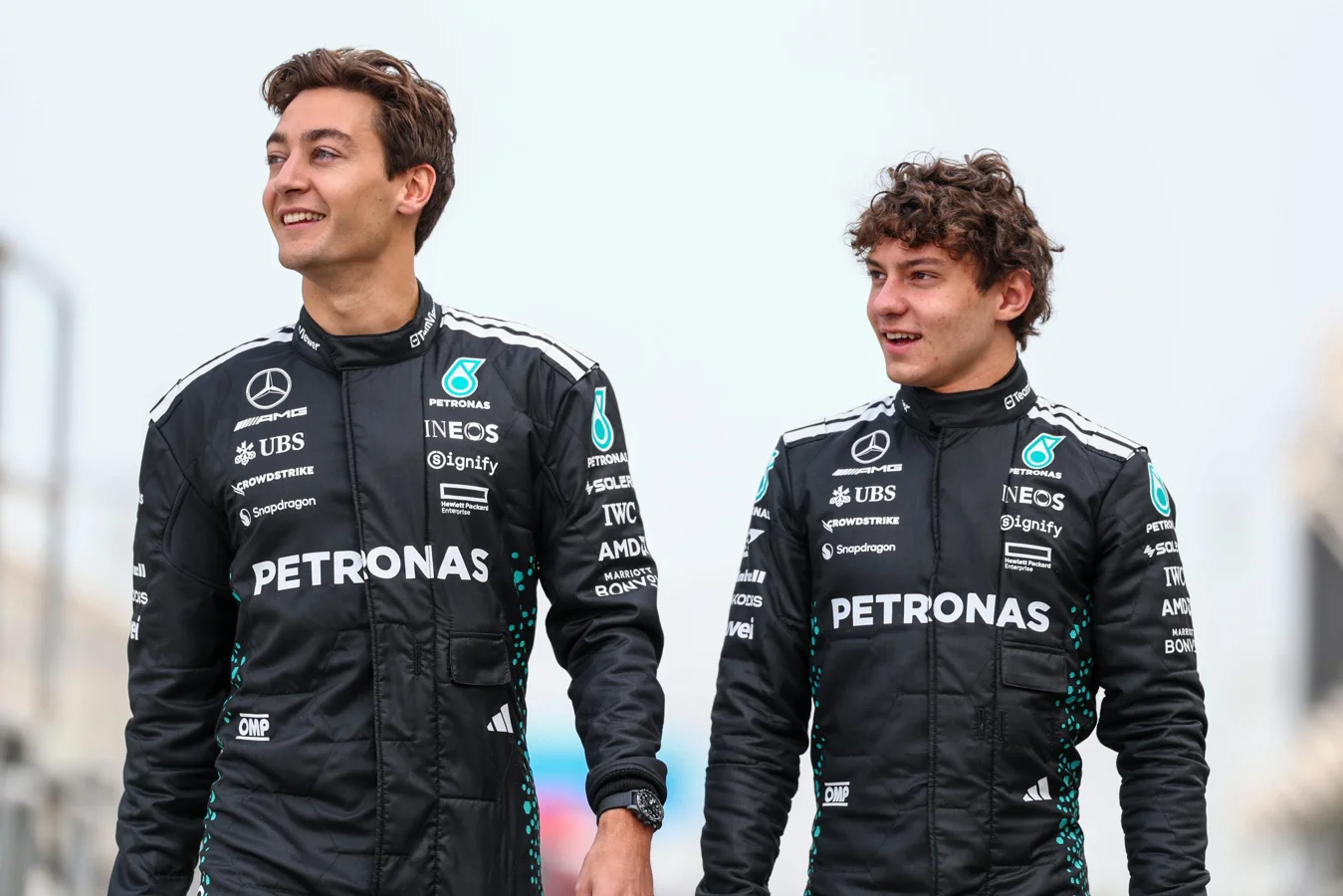
Still, Mercedes faces fierce competition not just from McLaren but also from teams powered by their engines. Customer teams like Williams are experiencing a resurgence thanks to Mercedes units, while Alpine is making a significant change by switching from Renault to Mercedes power units, increasing the depth of the field’s rivalry.
McLaren’s Technical Advancements Challenge Mercedes’ Edge
Russell warns that Mercedes’ confidence in their powertrain and fuel partnership with Petronas should not be mistaken for outright championship favoritism.
Just because we’re confident in our power unit and fuel from Petronas, that doesn’t mean we’re the team to beat,
he cautioned, adding,
We can’t afford to relax; there are others with our engine who are also looking strong.
McLaren’s recent success mostly stems from the design excellence of the MCL39, which excels in aerodynamics and tire management—crucial factors that significantly influence race outcomes. Russell explained,
Sure, the factory team will always enjoy some advantages,
but he stressed,
the gap isn’t as wide as some might think. A considerable amount of performance is derived from aerodynamics and the effective cooling of tires.
What the Future Holds for F1’s Power Dynamics
As Formula 1 prepares for a dramatic technical evolution, the competition between Mercedes and McLaren is expected to intensify. Russell’s candid remarks highlight that success will rely on more than just engine power; teams must optimize multiple aspects of car design to stay ahead. The entry of Alpine with Mercedes engines further spices up the contest, underscoring how crowded the field will become.
With the clock ticking down to the 2026 season, uncertainty reigns supreme. The sport’s shift to new hybrid powertrains and the ongoing development wars mean no team can afford complacency. Russell’s insights invite fans to appreciate the complex interplay of technology, strategy, and driver skill that will shape the upcoming battles.
The unfolding story promises to keep fans on the edge, wondering whether Mercedes will reclaim its former dominance or if McLaren’s ascent signals a new era of contenders. Regardless of the outcome, the 2026 Formula 1 season is gearing up to deliver intense rivalries and thrilling racing excitement.
