
Mercedes driver George Russell received a significantly harsher penalty than usual at the Monaco Grand Prix after overtaking Williams’ Alex Albon off the track, according to the FIA’s official explanation. This incident unfolded late in the race during a critical battle for the final points positions.
Russell had grown frustrated with Albon, who was deliberately slowing the field to allow his teammate Carlos Sainz to pit ahead. On lap 50, seeking to pass the Williams driver at the Nouvelle Chicane, Russell cut the corner, citing on team radio the need to avoid a collision due to what he described as erratic driving by Albon. Instead of immediately relinquishing the position, Russell chose to accept the conventional 10-second time penalty, hoping to maintain track position.
Stewards Reject Russell’s Strategy and Impose Drive-Through Penalty
The race stewards, however, reviewed Russell’s radio communications and judged that his off-track pass was deliberate rather than accidental. The stewards emphasized that race director Rui Marques had warned all teams prior to the race that any intentional overtaking by leaving the track at Turn 10 would be scrutinized closely. This was because track position at Monaco is especially vital, and the standard 10-second penalty often fails to deter drivers from exploiting such tactics.
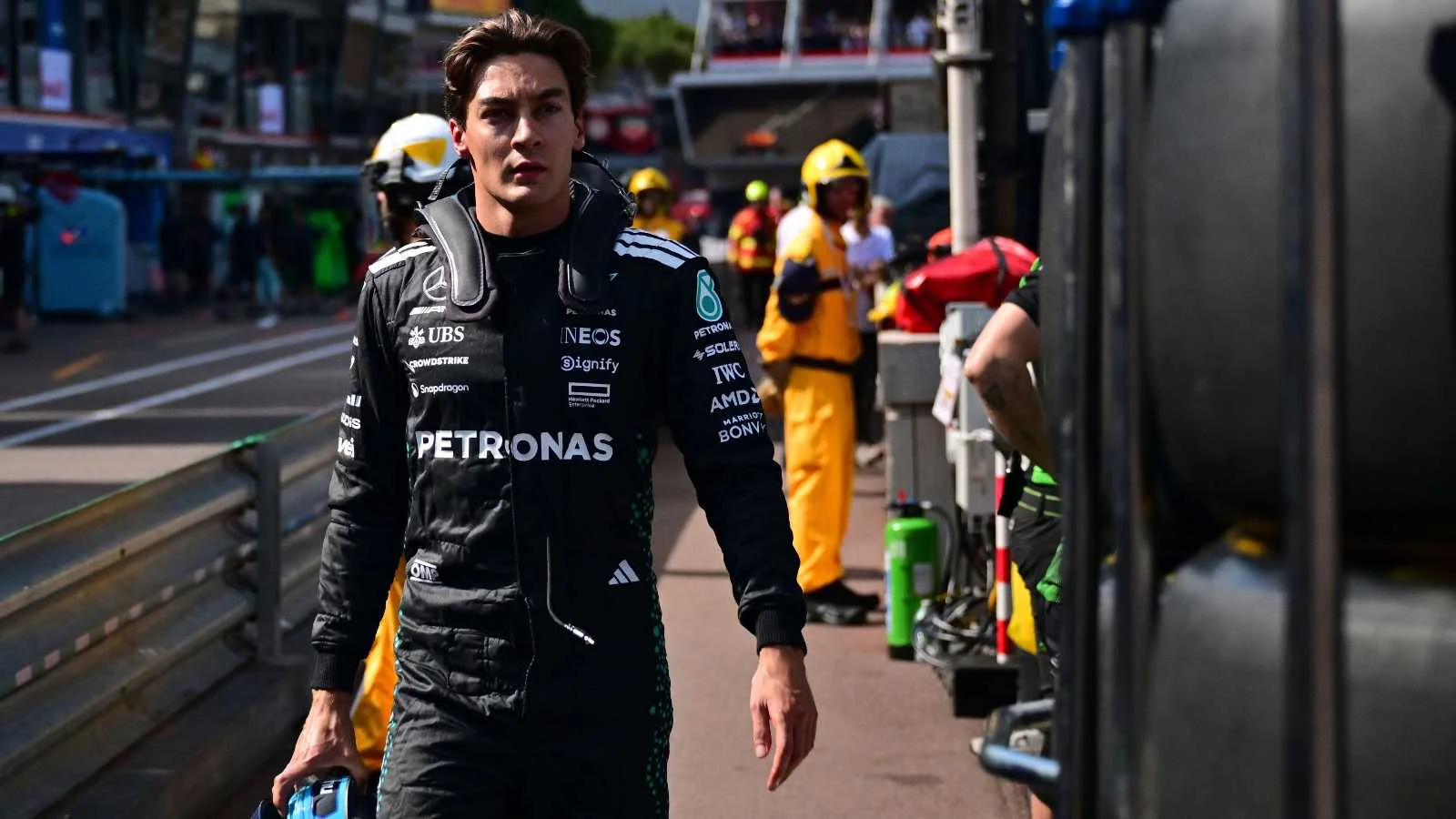
“Car 63 left the track at Turn 10 and overtook Car 23. He did not give that position back and maintained his track position,”
the stewards‘ verdict stated.
“It was clear from the radio message where he said that he would ‘take the penalty’ that the overtake was done deliberately as he felt that he was being held up by Car 23 driving erratically.”
—Alexander Albon, Williams
The stewards made it clear that because of the deliberate nature of the maneuver, a penalty greater than the usual 10 seconds was justified.
“We therefore considered that Car 63’s deliberate infringement warranted a drive through penalty, and we so imposed.”
Similar Moves and Team Orders Affect Later Incidents
Russell’s teammate, Italian rookie Andrea Kimi Antonelli, attempted a comparable off-track overtake on lap 52, again passing Albon. However, unlike Russell, Antonelli was promptly instructed by his race engineer to return the place, following the precedent set by Russell’s penalty. The penalties and team instructions demonstrate the stewards’ firm stand against deliberate off-track passing in Monaco.
Ultimately, Russell finished the race in 11th place, while Antonelli ended down in 18th after making a late second pit stop. Their weekend had already been compromised after qualifying outside the top ten—Antonelli crashing in Q1 and Russell suffering an electrical problem in Q2 that limited both drivers’ starting positions.
Background on Penalty Policy and Its Evolution
The standard 10-second penalty for leaving the track and gaining an advantage has been intensified after incidents in previous races, such as the 2023 Miami Grand Prix. There, Haas driver Kevin Magnussen received three separate 10-second penalties for gaining positions off-track. Though carrying multiple penalties disrupted Magnussen’s race, he notably kept Mercedes driver Lewis Hamilton behind, indirectly benefiting Haas teammate Nico Hulkenberg’s points finish.
Implications for Monaco GP and Future Races
This strict enforcement at Monaco underscores the governances’ awareness of how vital track position is on tight street circuits, where conventional time penalties may not be harsh enough to prevent intentional rule-breaking. By imposing a drive-through penalty on Russell, the stewards conveyed that clever tactics exploiting off-track sections to gain places, especially when admitted openly on radio, will no longer be tolerated.
This decision may influence how drivers approach overtaking in future races at Monaco and similar circuits, pushing them to rely on cleaner track maneuvers rather than calculated risks involving track limits. Mercedes and Williams will have to adjust their strategies accordingly, ensuring their drivers react quickly to such rules to avoid costly penalties that could derail race outcomes.
