
George Russell has provided fresh insight into the George Russell Mercedes contract situation, revealing he never seriously feared losing his seat to Max Verstappen, even as Mercedes pursued the Red Bull champion for 2025. The British driver’s remarks come after contract delays and rumors made headlines throughout the recent Formula 1 season.
Russell’s Contract Delay and Speculation Over Verstappen
As the 2025 season unfolded, Russell’s future with Mercedes appeared uncertain, with his contract set to expire and no extension signed until October. During negotiations, Russell acknowledged that Mercedes—led by Toto Wolff—were openly attempting to attract Verstappen from Red Bull, a move that added tension to his own prospects within the team.
Ultimately, Verstappen opted to remain with Red Bull, where he’s already claimed four world titles. This decision allowed Mercedes to push forward with Russell and rising talent Kimi Antonelli, securing their lineup through at least the 2026 season. The Briton capped off the year with a strong performance, winning two races, earning nine podium finishes, and ending the championship in fourth place. Nevertheless, those close to the situation reported that Russell was seriously worried about what his future might have held had Verstappen chosen to switch to Mercedes.
Why Pairing Top Drivers Doesn’t Work, According to Russell
Russell outperformed rookie teammate Kimi Antonelli in 2025, racking up 319 points to Antonelli’s 150, but Mercedes remains committed to developing Antonelli’s potential. The team’s decision-making process was likely shaped not just by Antonelli’s promise, but by Russell’s turbulent history with Verstappen. Notably, the pair clashed in a high-profile incident at the Qatar Grand Prix in late 2024, extending their track record of rivalry and friction.
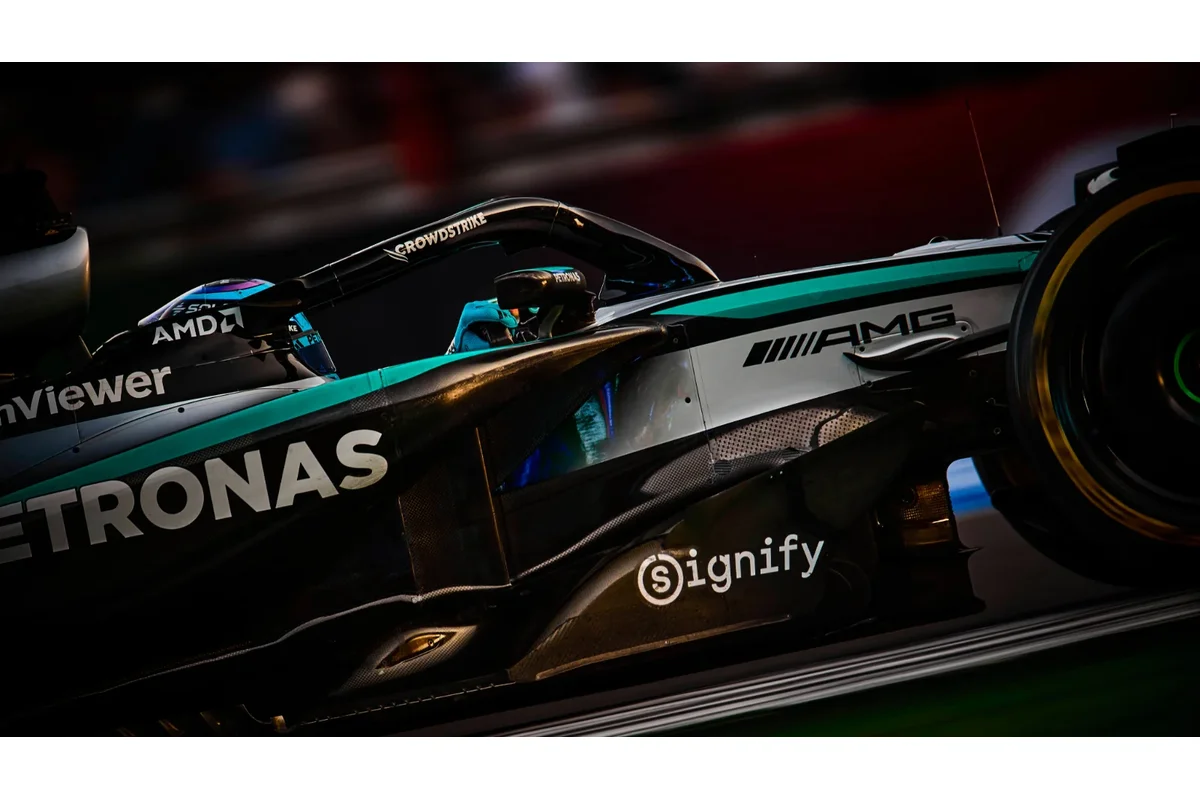
Speaking to Auto Motor und Sport, Russell insisted he was not genuinely threatened by the team’s pursuit of Verstappen, and emphasized that assembling the top two drivers is rarely successful for a Formula 1 squad.
“I was never worried about losing my seat,”
Russell said. In his words, any team aims to sign the most talented drivers available.
“As a team, you want the best possible driver pairing available on the market. Verstappen is currently the best driver on the grid.”
– George Russell, Mercedes F1 Driver
Yet, Russell believes the real issue arises from team dynamics when both seats are filled by a pair of number-one drivers.
“No matter where you put the two best together, a confrontation is inevitable sooner or later,”
he added.
“But a team like Mercedes had with Lewis and Valtteri – that’s perfect.”
– George Russell, Mercedes F1 Driver
He referenced the earlier Mercedes era, when Lewis Hamilton led with Valtteri Bottas as a reliable teammate, as the ideal setup—balancing competitive ambition with cohesive teamwork and limited internal drama.
The Risks and Rewards of a Verstappen Partnership
Looking ahead, Verstappen’s contract with Red Bull runs until 2028 but includes a break clause that allows him to consider other teams if certain performance thresholds are not met, specifically if he does not sit within the top two of the drivers’ standings by a defined point in the season. With Formula 1 regulations changing, Verstappen is expected to reassess his options based on Red Bull’s performance under the new rules.
Russell weighed in on the possibility of a future Verstappen-Mercedes partnership, suggesting it would ultimately work against Verstappen. By Russell’s measure, the expectation would be that Verstappen must win, and any outcome short of that would be deemed unacceptable, subjecting him to extraordinary pressure. Meanwhile, rookie Kimi Antonelli, who has already established a strong rapport with Verstappen through occasional mentorship, could also shape the team’s composition if Toto Wolff must make future decisions.
For now, Mercedes has opted for stability and continuity, steering clear of an all-star rivalry that could destabilize their structure. Russell’s perspective signals an understanding that driver harmony and well-defined roles remain critical to sustained Formula 1 success, especially as the team looks toward the next evolution of its lineup and seeks to challenge for championships in a changing competitive landscape.
