
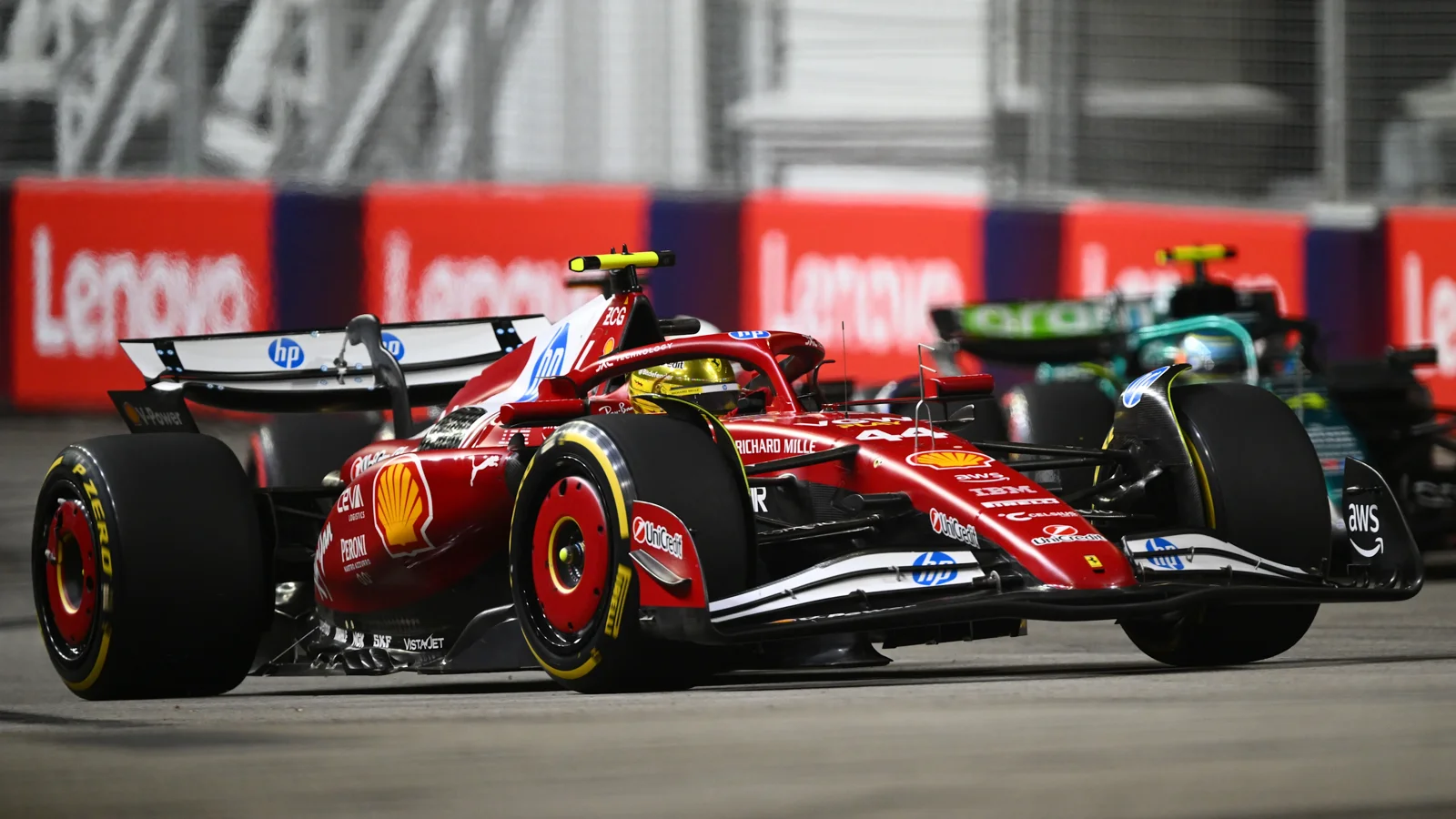
Lewis Hamilton faced a challenging Singapore Grand Prix this past Sunday after suffering significant brake issues from almost the very start of the race at the Marina Bay Street Circuit. Despite the ongoing struggle with his car’s braking system, the seven-time world champion managed to secure the fastest lap of the event, highlighting both his skill and the severity of the problem.
Ferrari team principal Fred Vasseur confirmed that the issues began within the first few laps and forced Hamilton to adopt a conservative approach, frequently lifting off the throttle and coasting to manage the failing brakes. This forced change in strategy compromised Hamilton’s usual aggressive racing style, leading to frustration for both the driver and the team.
Team Principal Details the Impact of Brake Failure on Race Pace
Fred Vasseur described the brake problem as a significant handicap throughout the race.
“It will be difficult to start with the positive,”
he admitted, explaining that the brake issue surfaced as early as laps two or three, necessitating a cautious “lift and coast” technique to preserve the car. He emphasized the difficulty of adapting braking points every lap while continuing to compete at a high level.
“Clearly, when we pushed a couple of laps with Lewis, I think the pace was decent. But you can’t do 95% of the race on the back foot,”
Vasseur added, indicating that the team could not sustain an optimal racing rhythm given the constraints imposed by the brake malfunction.
Unexpected Brake Trouble Linked to Harsh Conditions and Traffic
The brake failure caught the team off guard, with Vasseur citing the intense heat of the Singapore GP as a contributing factor. He pointed out that the challenge was exacerbated by Hamilton being stuck in the dirty air behind other cars, which impacted brake cooling and performance.
“We all know that in Singapore, when you are in the middle of the pack, it’s critical for the brakes … but still it was not expected at this point,”
Vasseur explained. The unpredictable nature of the failure underscored the complexity of managing high-stress components in challenging race conditions.
Safety Concerns Raised Amid Hamilton’s Brake Challenges
Hamilton’s brake problems also led to a five-second penalty for exceeding track limits, as he struggled to keep his car entirely within the white lines due to braking difficulties. Former competitor Fernando Alonso expressed concern about the safety risks posed by Hamilton’s impaired car during the race.
Responding to these concerns, Vasseur sought to reassure observers, stating,
“In terms of safety, yes, because we adapted the pace. It’s not that Lewis was pushing like hell in the last lap, but he was 30 seconds slower. In terms of safety, it was on the safe side, but not the target. The target is to be safe, but the target is not to be safe,”
he chuckled, attempting to balance the seriousness of the situation with a touch of levity.
Fastest Lap Achieved Despite Pit Stop on Soft Tyres
Although Hamilton’s race was marred by brake issues, he secured the fastest lap after pitting for fresh soft tyres towards the end of the race. However, Vasseur warned that this achievement did not accurately reflect the overall race pace or competitiveness.
“No, because we put a set of soft at the end,”
he clarified, calling Hamilton’s fastest lap a “fake fastest lap” due to the difference in tyre condition compared to other competitors. He added,
“It’s also frustrating for us, because we had the feeling that when we did three laps in a row without saving, that the pace was not bad.”
Final Standings and Future Implications of the Singapore GP
After serving the track limits penalty, Hamilton finished eighth in the Singapore Grand Prix, securing four points for his championship campaign. Despite the setback, the event highlighted both the resilience of the British driver and the technical challenges Ferrari must address to improve reliability.
The brake problem in high-temperature conditions serves as a reminder of the fine margins teams face in Formula One, where mechanical failures can instantly alter race strategies and outcomes. With more races ahead, Ferrari and Hamilton will focus on resolving braking concerns to regain competitive form and protect driver safety under extreme conditions.
