
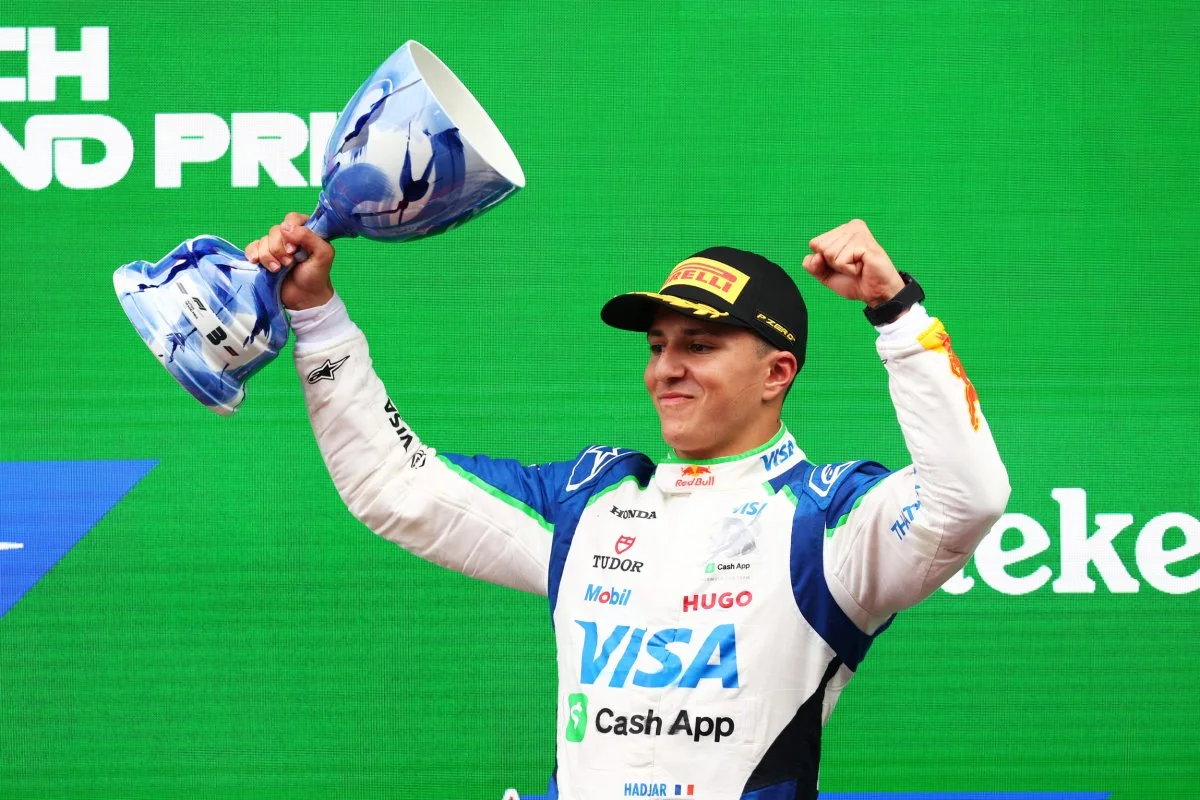
Isack Hadjar has quickly earned a reputation in Formula 1 not just for his driving, but for his unvarnished honesty about his performances. During sessions and races in 2024, he speaks directly to the media without sugarcoating results, even when he feels he has underperformed. This Isack Hadjar Formula 1 attitude is unusual for a rookie who often delivers blunt, self-critical remarks rather than excuses or attempts to spin outcomes positively.
At the Hungarian Grand Prix, after qualifying 10th, Hadjar was reminded by a reporter that he was the only driver to have avoided elimination in Q1 so far this year—a notable achievement for a newcomer. His response was terse: “Yeah,” followed by silence. When told reaching Q3 was impressive, he simply added, “I’m behind my team-mate,” without elaboration, revealing his focus on internal benchmarks rather than external praise.
The Roots of Hadjar’s Harsh Self-Assessment
Hadjar’s candidness has been apparent since his formative years in racing. Jeremy Satis, a former French journalist now with The Grid management agency representing Hadjar, recounted their first encounter in Zandvoort. After a poor performance in French F4, Hadjar’s frustration was tangible as he repeatedly berated himself aloud, openly questioning his own effort and the sacrifices his parents had made for his career.
“And Isack was walking back and forth, shouting at himself: ‘How can I race like this?’ ‘All the sacrifice my parents are making…’ He just kept shouting. And I can tell you – now that I’m on the management side – 90% of kids just say, ‘It’s the car,’ ‘It’s the conditions,’ and so on. But he put everything on himself,”
—Jeremy Satis, Management Agency
This harsh self-discipline sets Hadjar apart from many young drivers who tend to blame external factors. It has shaped his mindset from the very start, instilling a level of accountability uncommon among peers.
Mixed Perceptions and a Challenging Entry to F1
Hadjar’s entry into Formula 1 came somewhat unexpectedly, with an opportunity arising due to Sergio Perez’s difficulties late in the previous season. Despite this break, Red Bull did not appear overly eager to promote him, which may have contributed to his outsider status within the paddock. Opinions on him during his junior career were divided; some labeled him arrogant, while others dismissed him as naïve because he persistently claimed he would reach F1 even when results did not back that vision.
His fiery communication on team radios also drew attention on social media, keeping him in the spotlight for his intense reactions. Despite his young age and raw temperament, Hadjar’s candid nature is part of what makes him a memorable presence on the grid.
The Rookie Amidst Icons and Moments of Isolation
Even after securing an F1 seat, Hadjar often seemed somewhat out of place compared to seasoned drivers. Off the track, dressed casually rather than in team apparel, he could be mistaken for a fan seeking autographs, underscoring his youthful status. His candid admiration for established stars like Lewis Hamilton contrasts with his sharper self-criticism. This feeling of being on the fringes was exacerbated by high-pressure moments such as his challenging debut in Melbourne.
Why Hadjar’s Attitude Matters in the F1 Landscape
Hadjar’s brutally honest approach highlights a rare blend of humility and raw ambition in Formula 1. His self-imposed pressure drives his development but also adds an element of tension and unease to his rookie season. For teams and fans, his attitude offers a glimpse of a driver unwilling to hide behind excuses, potentially fostering rapid progress on the track despite the emotional toll it entails.
As the season advances, observing how Hadjar balances this intense self-criticism with growth and resilience will be key. His presence challenges the typical F1 narrative and could influence how young talents approach the demands of top-level racing in the future.
