
Isack Hadjar’s breakthrough performance during the Zandvoort race weekend has propelled him to the forefront of Red Bull‘s considerations for its 2026 Formula 1 seat alongside Max Verstappen. Starting from fourth on the grid and securing his first career podium, the 20-year-old French driver is now widely viewed as the leading candidate for the vacancy.
Hadjar joined Red Bull’s junior outfit Racing Bulls following Sergio Perez’s departure, with the team briefly trying Liam Lawson and later Yuki Tsunoda as potential successors. Despite being the 2024 F2 runner-up and recognized as a top talent, there remained doubts about Hadjar’s readiness for Formula 1, especially given his limited F1 testing experience. Hadjar himself acknowledged uncertainties, telling Motorsport.com last October that it was impossible to know if he was ready for F1 before his promotion was confirmed.
Rapid Progress and Growing Maturity in Red Bull’s Development Squad
Since joining Racing Bulls, Hadjar has outperformed Liam Lawson and is currently 10th in the drivers‘ championship after the Zandvoort round. Early in his career, Hadjar was known for being a fiery presence on the radio during his F3 and F2 campaigns, but he has remarkably matured in Formula 1. His improvement is highlighted by his ability to recover from a disastrous formation lap in his Melbourne debut to become one of the most consistent and hardworking drivers on the grid, driven by rigorous self-criticism and dedication.
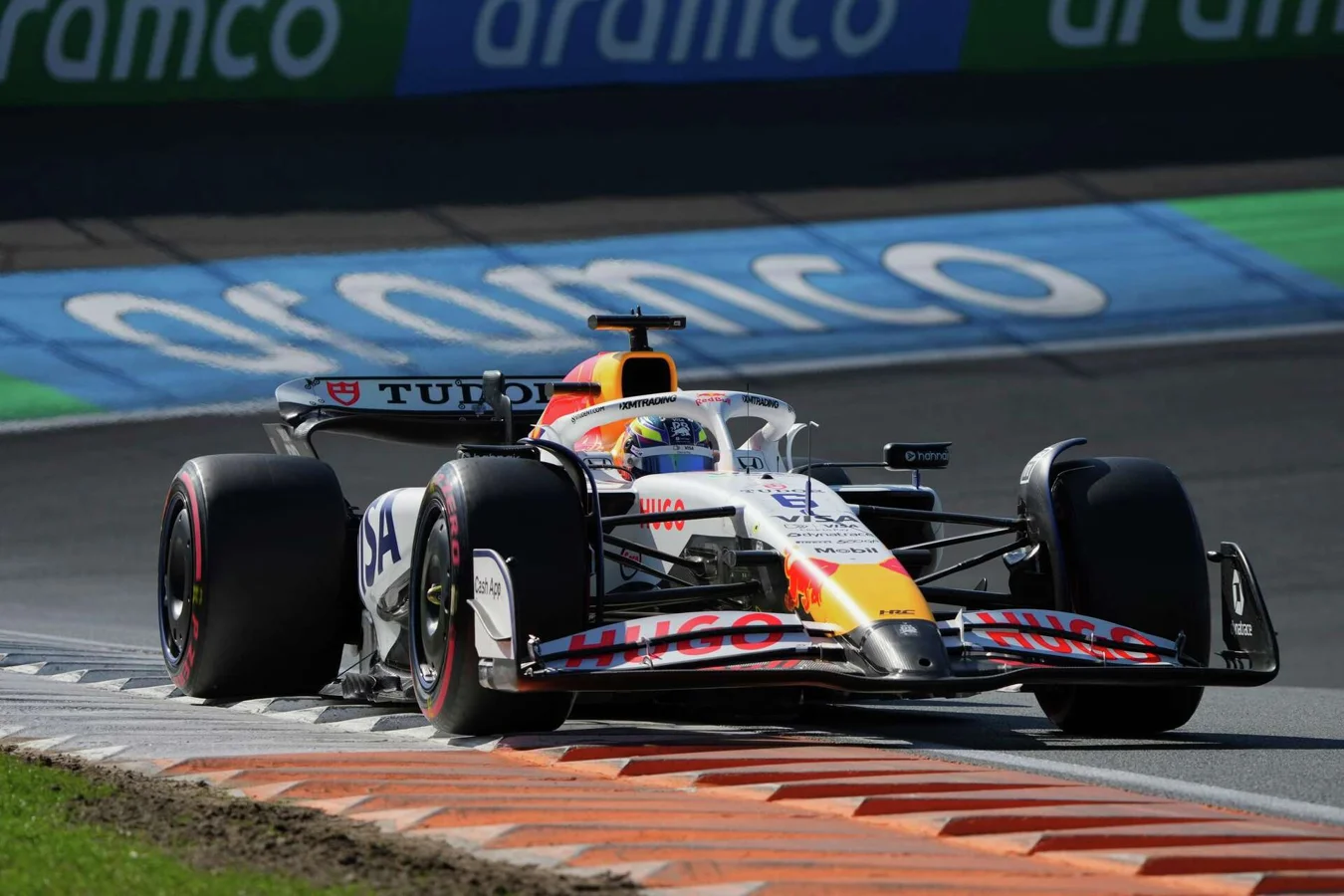
Hadjar’s swift rise is a positive development for Red Bull, which is still seeking a long-term teammate for Max Verstappen. Liam Lawson was surprisingly demoted back to the junior team after two difficult race weekends, and although he has since stabilized his performance at Racing Bulls, a quick second chance at Red Bull’s main team seems unlikely.
Challenges Surrounding Yuki Tsunoda’s Future at Red Bull
Meanwhile, the fate of Yuki Tsunoda, who has held the seat since the Japanese Grand Prix, remains a pivotal question for Red Bull team boss Laurent Mekies and advisor Helmut Marko. Tsunoda’s performance at Racing Bulls has been underwhelming, scoring just 12 points in total and currently ranking 19th in the drivers’ standings—well behind Verstappen, who sits third with 205 points. The team has struggled to assess Tsunoda fairly due to the difficult and unbalanced Red Bull car that only Verstappen seems able to master.
Following a significant qualifying crash in Imola, Tsunoda fell behind on car upgrades but has recently caught up to Verstappen’s pace. Earlier in the season, Tsunoda had received praise for his progress and leadership at Racing Bulls, qualifying fifth at the Australian Grand Prix (while Hadjar was 11th) and finishing sixth in the China sprint race.
Nevertheless, it is unclear whether Tsunoda would have performed better had he stayed in the RB21 car or whether Hadjar would have succeeded more with the same machinery. Complicating the decision further is the fact that the 2026 season will bring new technical regulations aiming to move away from ground-effect aerodynamics, potentially broadening the performance window and making car adaptation easier. Whether this change will favor Tsunoda or Hadjar remains uncertain and will only become clear long after Red Bull makes its decision.
Amid these uncertainties, there is speculation about whether Hadjar himself would want to step into a seat known as the “cursed” second Red Bull driving position given its difficulties, though his ambition and the team’s direction suggest declining is unlikely.
Leadership’s Perspective on Driver Readiness and Development
Helmut Marko has indicated a positive view of Hadjar’s capacity to handle pressure, saying at Zandvoort,
“Isack is different”
—meaning he believes Hadjar is better equipped to thrive in the challenging Red Bull environment. On one side, Hadjar’s youth and relatively limited F1 experience provide a larger development potential compared to Tsunoda, who has been in the sport for five years.
However, Red Bull’s leadership aims to avoid rushing drivers who are not fully ready, with former Racing Bulls boss Franz Tost advocating for a three-year development period for young drivers to mature into well-rounded F1 competitors. With major changes looming in power unit regulations in 2026, Red Bull may prefer stability in its driver lineup for at least another year instead of making hasty adjustments.
Another emerging factor is Red Bull’s fifth driver, Arvid Lindblad, a highly regarded talent who could get an F1 debut if Tsunoda is replaced. Lindblad’s continued role as a reserve driver exerts pressure on incumbents and provides Red Bull with a ready backup option if needed.
Red Bull’s Careful Timing in Finalizing 2026 Driver Lineup
One advantage for Red Bull is that all its drivers remain under contract, allowing it to make strategic decisions without external pressures. The quick Lawson-Tsunoda swap exemplified this flexibility. Marko has hinted that a definitive decision on the 2026 seat may come around the Mexican Grand Prix in October, giving Tsunoda several more races to prove his worth.
While the official cutoff for choosing drivers technically extends to the start of the next season, Laurent Mekies has stated that Red Bull prefers to finalize plans before the end of this year to avoid uncertainty among its drivers. Mekies emphasized that the selection would be based on careful evaluation rather than emotional responses to recent performances.
“As much as we like the emotion of the race-by-race feeling, we have one feeling in Budapest and have another feeling here,”
Mekies explained.
The truth is, if you look at it from a Red Bull perspective, they are our drivers, we have them all under contract. It’s only us making the decisions. Why would you put yourself under pressure based on one result or another?”
“So, the simple truth is that we’ll take our time. There’s nine races to go. I’m not telling you that we’ll wait until the last race, because also there is a dynamic by which you want to let your driver know. But we have time. We’re not in any hurry. We’re lucky to have Yuki in the car, we have Racing Bulls, which is working very well, and we can also evaluate our young drivers.”
Closing the Gap to Verstappen Remains Critical for Tsunoda
As the final decision approaches, the key question is what Tsunoda must do to maintain his seat against Hadjar’s challenge. Mekies acknowledged ongoing efforts to support Tsunoda’s improvement and noted a positive trajectory during recent races.
“You can always do more. Always,”
Mekies remarked.
“We can do more, he can do more. We are trying everything we can to support. I think it’s still a positive trend. Yuki took a real step forward in Spa and also in Budapest in terms of gap with Max. Today, he’s P9 and with a bit more luck with the safety car he could have been P8 or P7.”
“Liam is making a lot of progress at Racing Bulls, Isack has been doing an extraordinary job since the start of the season and continues to surprise us every race. If you look at it from Red Bull’s point of view, it’s hard to see why we would be in a hurry to make this decision.”
Ultimately, Red Bull’s 2026 driver selection will hinge on consistent performance and the ability to match Verstappen’s pace, rather than singular standout results. With time to assess all contenders thoroughly, the team aims to make a measured choice that ensures stability and competitiveness in the evolving Formula 1 landscape.
