
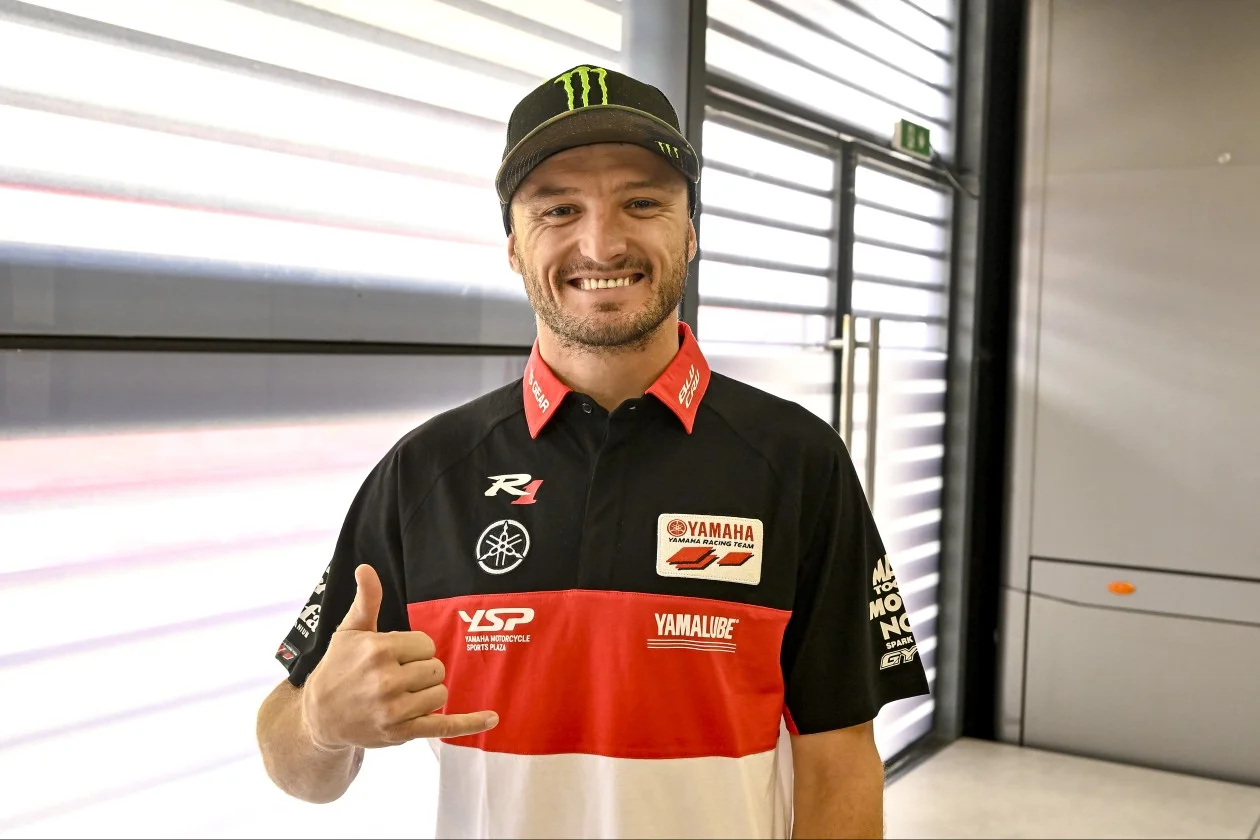
Jack Miller finished the Silverstone race feeling both pleased with his initial performance and frustrated by its chaotic conclusion. The Australian rider showed impressive speed from the start in both race attempts, positioning himself well among the frontrunners early on. His strong opening pace demonstrated competitiveness despite difficult conditions.
Early Momentum and the Impact of a Race Restart
Miller described a solid start, highlighting his clean getaway and solid bike performance. However, the original race was interrupted by a red flag, forcing a restart that required the riders to repeat their efforts. Despite this setback, Miller remained focused, delivering another strong launch and navigating the first corners cleanly to maintain his position.
“So a decent Sunday. First start was good. Got away clean. Bike was working well. And then, yeah, I was kind of sitting pretty there where we were, but, unfortunately, we the old red flag was dropped, and then, we had to do it all again. But, second one was good as well. Got a good jump, got a good clean first couple of corners, and, I was able to go to work,” —Jack Miller, Rider
Challenges with Tire Performance and Race Strategy
Miller noticed a common challenge among Ducati riders related to front tire wear, which affected their pace. Using a soft front tire compound, he initially matched the speed of Fabio Quartararo, a leading rival. However, Miller quickly realized that maintaining that pace was unsustainable over the race distance, prompting him to adjust his riding to manage tire degradation.
“I could tell the, the Ducati boys were struggling to get them during the in the front tire. We were with the soft, so it was, it was working pretty good from the get go. Tried to sort of go similar pace like Fabio Quartararo there at the beginning, but, to be honest, I understood after probably three, four laps that, that wasn’t gonna be feasible for the duration of the race,” —Jack Miller, Rider
To compensate for the tire wear, Miller altered his cornering technique by carrying more speed and forcing the front tire to turn aggressively. He exploited his bike’s handling to cut through wind resistance instead of fighting it, thereby preserving his tires for as long as possible.
“This is why I was having to carry corner speed or turn the way I was having to having to force the front tire to turn the bike through corners, like, five. I was just really using a lot of the edge, and I thought, okay, this ain’t, got long distance written on it. But, I was able to switch my lines up a little bit to kinda just cut through the wind a little bit more rather than getting pushed with the wind and fighting against it with the tire,” —Jack Miller, Rider
Final Laps Marred by Intense On-Track Incidents
During the closing stages of the race, Miller was comfortably positioned just behind Marc Márquez while scanning for opportunities to advance. As Márquez’s pace slowed slightly with four laps remaining, Miller prepared to challenge him. At that critical moment, Franco Morbidelli entered the mix, leading to a collision involving Miller and Álex Márquez that disrupted their momentum and hampered their race finishes.
“Comfy there beyond Marc Márquez. And then, yeah, about four laps to go. I could see Marc’s pace kinda dropped a little bit, and I was, like, just sizing up where I could maybe make a move on him. And right at that moment… Franco Morbidelli come through, and and then all hell broke loose with myself, him, and, and Álex Márquez,” —Jack Miller, Rider
The Broader Implications of Miller’s Silverstone Performance
Jack Miller’s Silverstone race illustrated his ability to adapt under pressure and manage technical challenges such as tire wear effectively. Although the race ended in turmoil, his strong starts and strategic adjustments reflected solid competitiveness. Moving forward, Miller and the Ducati team will aim to improve tire durability and avoid late-race incidents to maximize points in upcoming events.
