
Jimmie Johnson, the owner and driver of Legacy Motor Club and a seven-time NASCAR Cup Series champion, recently acknowledged that he fell short in developing his personal brand during his peak racing years. Despite sharing a championship record with legends like Dale Earnhardt and Richard Petty, Johnson admits his fame and cultural impact did not reach their level, even though he raced in an era abundant with branding opportunities. This candid admission came during a recent episode of Kevin Harvick’s Happy Hour podcast.
Johnson revealed he had a prime chance to learn from his teammate, Dale Earnhardt Jr., who is widely regarded as a master of brand building. However, Johnson confessed he did not fully capitalize on this, focusing predominantly on racing performance rather than cultivating his off-track image. He described how, although he had all the necessary infrastructure and resources, he only put in the bare minimum effort related to brand growth while prioritizing his time in the car.
Junior, sure, the last name, but the more I spend time around him and watched what he and Kelly are doing, they’re smart. They are very intentional. They are working their asses off too in this process.
—Jimmie Johnson, via Happy Hour podcast
Johnson openly accepts that this approach was a mistake. By concentrating almost exclusively on racing, he limited the potential growth and value of what could have been a powerful personal brand.
And when I reflect on myself, I had infrastructure, but all my infrastructure focused on was doing the bare minimum outside of the car, so I could do the maximum inside the car. And now, as I own a race team and realize the worth of the JJ brand, I haven’t done a good job.
—Jimmie Johnson
The former HMS driver went further, stressing that he should have aggressively developed his brand while he was at the pinnacle of his racing career. Johnson, who has won 83 Cup races, admitted that he did not put enough effort into building a long-lasting identity and now realizes the extent of what he missed.
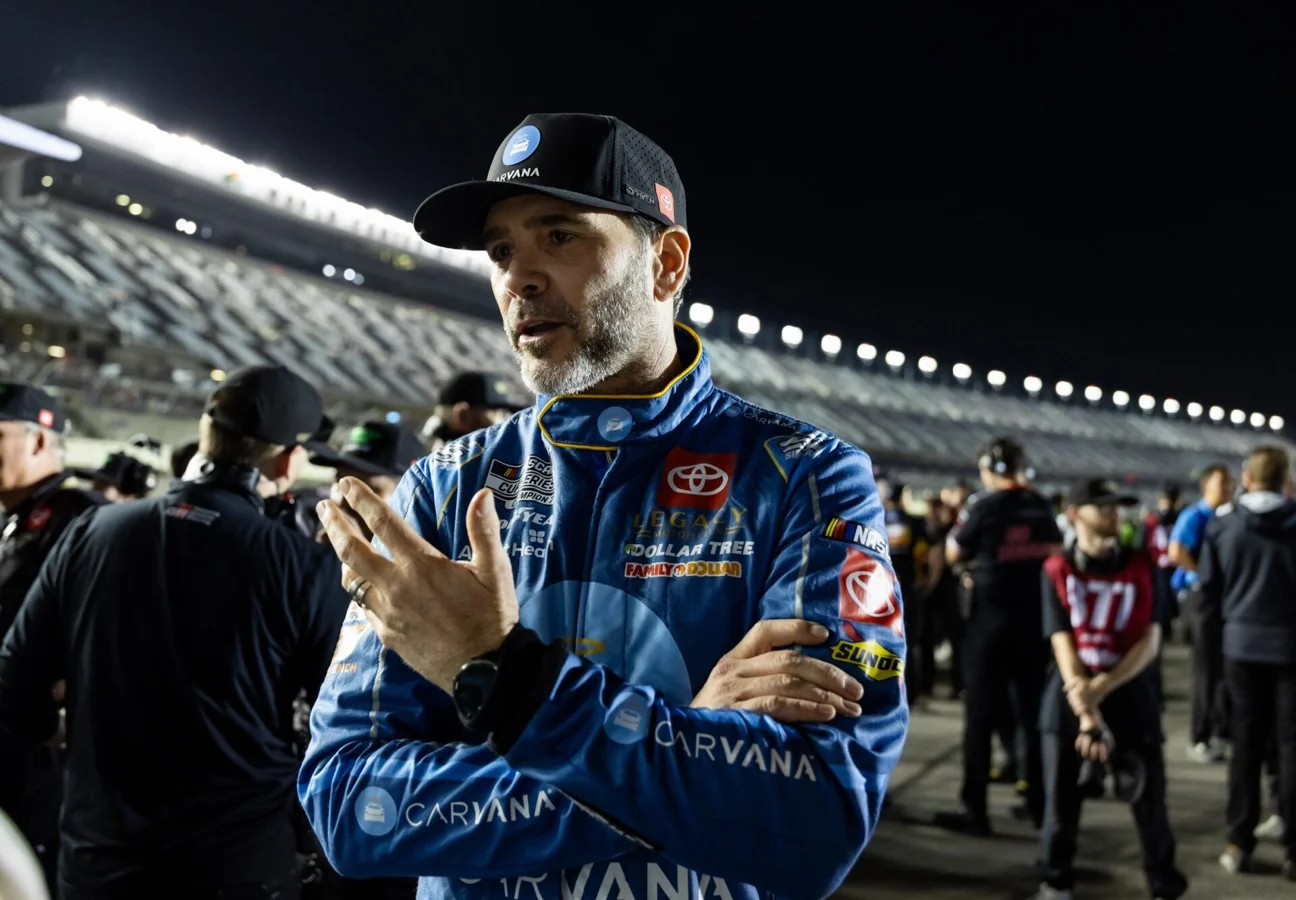
Like really blowing that up and leaning into it. Done a job. It’s there but it could be far greater. It’s my fault. Like, I just haven’t been working. I’ve been working on other things.
—Jimmie Johnson
Johnson’s Vision for Building Legacy Motor Club as a Lifestyle Brand
Alongside his reflections on personal brand development, Johnson discussed his ambitions for Legacy Motor Club, where he is the majority owner. He envisions transforming Legacy beyond a typical racing team into a broader motorsports lifestyle brand. Johnson believes that treating racing as a lifestyle could unlock significant revenue opportunities if executed effectively.
I want to build a motorsports property with Legacy Motor Club. I feel like there is a way to not be exactly like a stick and ball franchise, but there are many aspects that can be. And motorsports, it’s a lifestyle and there is a lifestyle branding opportunity that’s here for Legacy.
—Jimmie Johnson
While the goal is clear, this transformation will be challenging. Legacy Motor Club, which carries forward the heritage of the former Richard Petty Motorsports, is still a relatively young organization in the competitive NASCAR landscape. The team contends with powerhouse outfits such as Hendrick Motorsports, Joe Gibbs Racing, and Team Penske Racing, which have long-established histories and strong brand recognition.
Additionally, emerging teams like Trackhouse Racing, Spire Motorsports, and Michael Jordan’s 23XI Racing add to the growing competition for market share and fan engagement in the sport’s evolving environment. To gain traction with fans and sponsors alike, Legacy Motor Club will first need to secure on-track success, including Cup Series race wins.
The Challenge of Catching Up Among NASCAR’s Elite Teams
Johnson’s brand-building struggles offer a reflective lesson in a sport where visibility and cultural presence significantly influence career longevity and post-racing opportunities. Despite his undeniable track record, Johnson’s experience highlights how essential it is for athletes to balance competitive excellence with intentional brand cultivation.
As the principal owner of Legacy Motor Club, Johnson now appears committed to applying the lessons he has learned the hard way, focusing on creating value not only through race results but also through lifestyle branding that resonates with fans and sponsors. If successful, this dual approach could position Legacy Motor Club as a unique and influential entity within motorsports.
Johnson’s journey from driver to owner, combined with his openness about past mistakes, underlines the evolving nature of sports marketing and athlete branding. The NASCAR community and the broader motorsports world will be watching closely to see how Johnson and Legacy Motor Club grow in the coming years, as they try to carve out a distinct identity in a competitive market.
