
NASCAR icon Jimmie Johnson recently experienced a milestone moment by piloting a historic hydroplane once driven by racing legend Bill Muncey. The event took place at Seafair in Seattle on Lake Washington, where Johnson’s hydroplane ride celebrated Muncey’s enduring impact on the sport and fulfilled a lifelong aspiration for the seven-time Cup Series champion.
Johnson’s hydroplane ride was arranged through a collaboration involving Carvana Racing, Legacy Motor Club, and the Motorsports Hall of Fame of America. He was behind the wheel of the 1977 Atlas Van Lines hydroplane, known as the “Blue Blaster,” a vehicle closely tied to Muncey’s remarkable career. This moment linked Johnson’s racing heritage with one of hydroplane racing’s greatest figures.
Jimmie Johnson Reflects on the Unique Challenges of His Hydroplane Experience
Jimmie Johnson described his time in Muncey’s hydroplane as both exhilarating and humbling. He recounted,
“I was hoping to get the boat started quickly and drive off like a professional. And I didn’t quite have that part under control. I was really surprised how physical it is inside the boat. The way the boat digs in and starts hopping and bouncing. The sensation of speed on water is way greater than on asphalt. Plus, the vulnerability of being in a boat, especially one that doesn’t have a seat belt. I couldn’t see it from the cockpit, but I can’t wait to watch some video to see how big the roostertail was and to see the spray was in the corner.”
His comments underline the demanding nature of hydroplane racing compared to stock-car racing on asphalt tracks.
The ride lasted nearly six laps as Johnson adapted to a vastly different type of racing machine. Though he encountered a few initial challenges, he quickly gained confidence behind the wheel. Reports indicate that Johnson reached speeds close to 140 miles per hour during the experience, feeling the intense velocity despite this being slower than top NASCAR speeds.
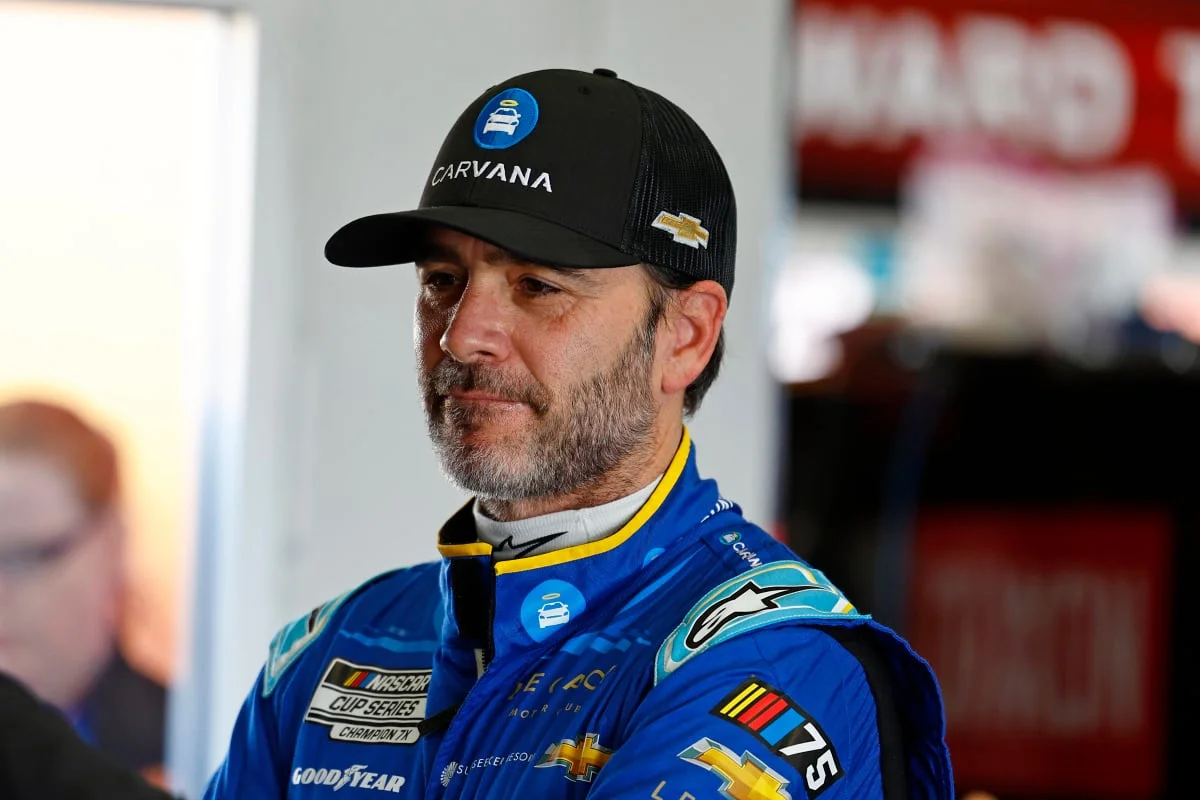
This event also held deep personal significance for Johnson. He has long admired Bill Muncey, whose career served as an inspiration since Johnson was a child. Johnson’s first memory of Muncey dates back to when he was four years old, witnessing the legend race and having his picture taken while sitting on Muncey’s hydroplane. Returning to pilot the same boat nearly 45 years later marked a full-circle moment in Johnson’s life.
The Legacy of Bill Muncey: Hydroplane Racing’s Greatest
Bill Muncey’s status as a motorsports legend is firmly established, recognized by his induction into the International Motorsports Hall of Fame. Muncey’s hydroplane racing career spanned more than 30 years, during which he achieved unparalleled success. His accolades include eight Gold Cups, seven United States National Championships, and four World Championships.
Muncey was notable not only as a driver but also as a team owner alongside his wife Fran. Their organization, Bill Muncey Racing, won six High Points Championships, maintaining a strong competitive presence in the sport. Tragically, Muncey died in a blowover accident in Mexico in 1981, but his widow continued to manage the team and maintain the iconic “Blue Blaster” hydroplane through 1984.
After Fran’s management tenure, Miller Brewing Company took over sponsorship, renaming the team Miller American. The brand transitioned through several identities, including Miller High Life, which had connections to NASCAR through a collaboration involving driver Bobby Allison and artist Sam Bass. Eventually, in 1988, the team changed owners to Circus Circus, marking the end of an era for the Muncey organization.
Why Johnson’s Ride Matters for Hydroplane and Motorsports Fans
Jimmie Johnson’s hydroplane ride does more than spark nostalgia; it serves as a bridge connecting generations of American motorsports. By stepping into the cockpit of a machine driven by a true legend, Johnson honors the history of hydroplane racing while bringing renewed attention to the sport. His experience highlights the physical demands and specialized skills involved in hydroplane racing, distinguishing it from traditional auto racing disciplines.
For Johnson, the ride was also a personal tribute to his childhood hero and a recognition of hydroplane racing’s storied past. It provides fans of motorsports a tangible link between the achievements of Bill Muncey and contemporary racing icons. The event at Seafair on Lake Washington celebrated this legacy in a meaningful setting where Muncey himself once competed.
Looking forward, moments like Johnson’s hydroplane ride may inspire renewed interest in hydroplane racing’s rich history and its influential champions. They remind racing enthusiasts of the diverse forms of motorsports that have shaped American racing culture. Johnson’s participation brings this historic sport into the current spotlight, reinforcing its significance within the broader racing community.
