
In a groundbreaking appearance at the 2023 24 Hours of Le Mans, NASCAR legend Jimmie Johnson competed with a uniquely engineered Garage 56 Chevrolet Camaro, demonstrating NASCAR’s growing influence on the international racing stage. The event, held at the iconic Circuit de la Sarthe in France, showcased this special car designed by Hendrick Motorsports and collaborators, blending NASCAR heritage with endurance racing demands.
Johnson’s involvement followed an extensive career with Hendrick Motorsports, where he earned seven NASCAR Cup Series titles and developed a reputation for precision and adaptability. After stepping back from full-time NASCAR in 2020, Johnson expanded his racing portfolio into IndyCar and sports car competitions, culminating in this landmark Le Mans entry representing NASCAR’s innovation and competitive spirit.
Engineering the Camaro for Endurance: Hendrick Motorsports’ Bold Innovation
The story centers on Hendrick Motorsports’ bold transformation of a Next Gen Chevrolet Camaro ZL1. What appeared as a typical NASCAR stock car was reimagined into a contender fit for the grueling 24-hour endurance race, catching the attention of European teams accustomed to high-tech prototypes. The team faced significant challenges, including fuel capacity and vehicle weight, demanding inventive engineering solutions.
Johnson remarked on one of the initial hurdles:
“Watching Chad and Hendrick Motorsports adapt the car for the environment, you need a much bigger fuel cell. Where do you put that? That’s a traditional NASCAR vehicle.”
—Jimmie Johnson, NASCAR Driver
The team installed a 32-gallon fuel cell, considerably larger than standard NASCAR specifications, repositioning it centrally to optimize balance and weight distribution required for the endurance format. Additionally, they reduced roughly 525 pounds from the Camaro’s mass, using carbon-fiber panels, lightweight wheels, and chassis refinements to approach the weight standards of GTE-class vehicles, a significant departure from NASCAR’s typical heavier stock cars.
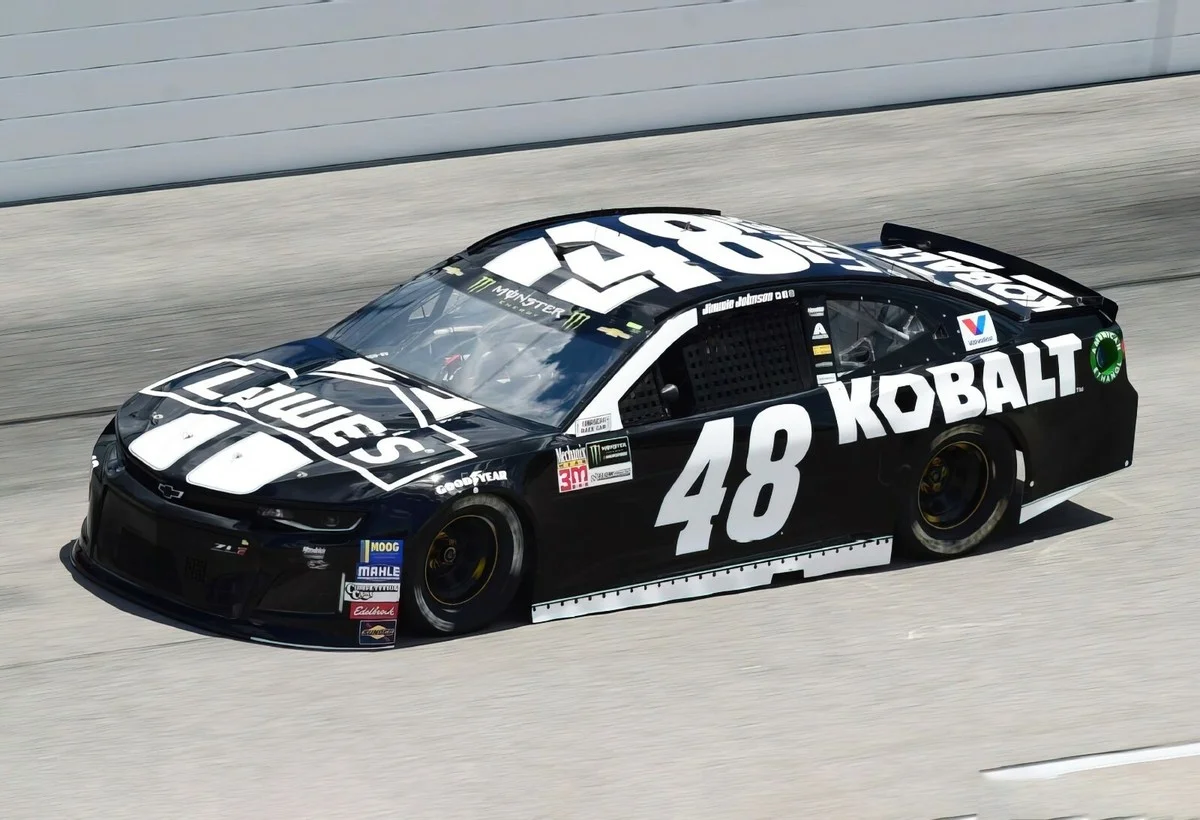
Extensive modifications extended beyond weight and fuel. The Camaro was equipped with endurance-grade brakes, headlights, taillights, and aerodynamic adjustments such as dive planes, balancing NASCAR durability with the agility necessary on the road course. Johnson noted his surprise at the car’s performance in practice sessions, describing it as
“really surprised me in what it could do.”
—Jimmie Johnson, NASCAR Driver
On-Track Performance and Cultural Impact at Le Mans
The Camaro’s competitive pace caught many off guard, as it matched sector times against seasoned GTE rivals. Although a driveline failure ultimately ended their race, the entry demonstrated that a NASCAR-based car could effectively compete in one of the world’s toughest motorsport events. Johnson pointed out the respect the team earned from competitors, highlighting the cultural significance.
He recalled the reception vividly:
“The interest that other competitors had in this car was something that I’ll never forget. We certainly had a chip on our shoulders because, internationally, you know, NASCAR guys don’t feel like we’re as respected as we probably should be. To not only outrun the GT cars but to annoy all the LMPT cars as we did, people just couldn’t believe it.”
—Jimmie Johnson, NASCAR Driver
This milestone coincided with NASCAR’s 75th anniversary, reinforcing the sport’s engineering prowess and adaptability beyond traditional oval racing. It marked a milestone proving stock car technology’s readiness for road courses and endurance challenges, broadening NASCAR’s global presence and breaking preconceived limitations.
Collaboration and Leadership Behind the Scenes
Behind the Camaro’s transformation was Chad Knaus, Hendrick Motorsports’ longtime technical mastermind, whose expertise guided much of the adaptation process. The project was a team effort involving NASCAR, IMSA, Goodyear, Chevrolet, and others, demonstrating a combined industry effort to bridge American stock car racing and European endurance traditions.
The Garage 56 entry at Le Mans is designed for experimental vehicles that push boundaries, making Johnson’s drive a landmark collaboration that will likely influence future cross-disciplinary motorsport ventures. This effort showcased how innovation and teamwork can challenge established norms on the world stage.
Documenting the Journey: Prime Video’s Unique Coverage of NASCAR at Le Mans
Prime Video has taken a significant role in chronicling this historic initiative through the documentary series American Thunder: NASCAR to Le Mans, giving fans unprecedented insight into the collaboration and challenges faced by Johnson and the Hendrick team. This content elevates the narrative beyond live broadcasts, focusing heavily on storytelling within the racing community.
Johnson commented on the atmosphere during filming:
“Ordinarily, when there’s a documentary crew, it can be kind of an irritation because you’re trying to work. You’re trying to win a race. And there was a different agenda with this project. I think it might be the most relaxed docu-style or honestly documentary series. The camera crews were there as we were trying to invite them in to show how unique this experience was, and all the work, effort and energy that went into it.”
—Jimmie Johnson, NASCAR Driver
Prime Video’s commitment aims to deepen fan engagement by capturing the human element in motorsports, helping to build a stronger connection between NASCAR and a global audience. This series is now available for viewing, expanding the reach of Johnson’s Le Mans journey.
What Jimmie Johnson’s Le Mans Run Means for NASCAR’s Future
Johnson’s groundbreaking participation in the Le Mans 24 Hours redefines NASCAR’s potential beyond traditional venues, signaling a future where stock car racing can evolve into international endurance formats. The Camaro proved that with engineering innovation and determination, NASCAR technology can rise to challenges firmly rooted in European racing culture.
As teams and fans reflect on this milestone, the global motorsport landscape could see expanding alliances and crossovers, opening doors for more American stock car involvement in prestigious international events. For NASCAR, Johnson’s Le Mans appearance is not merely a bold experiment but a hopeful beacon of the sport’s ongoing evolution and global aspirations.
