
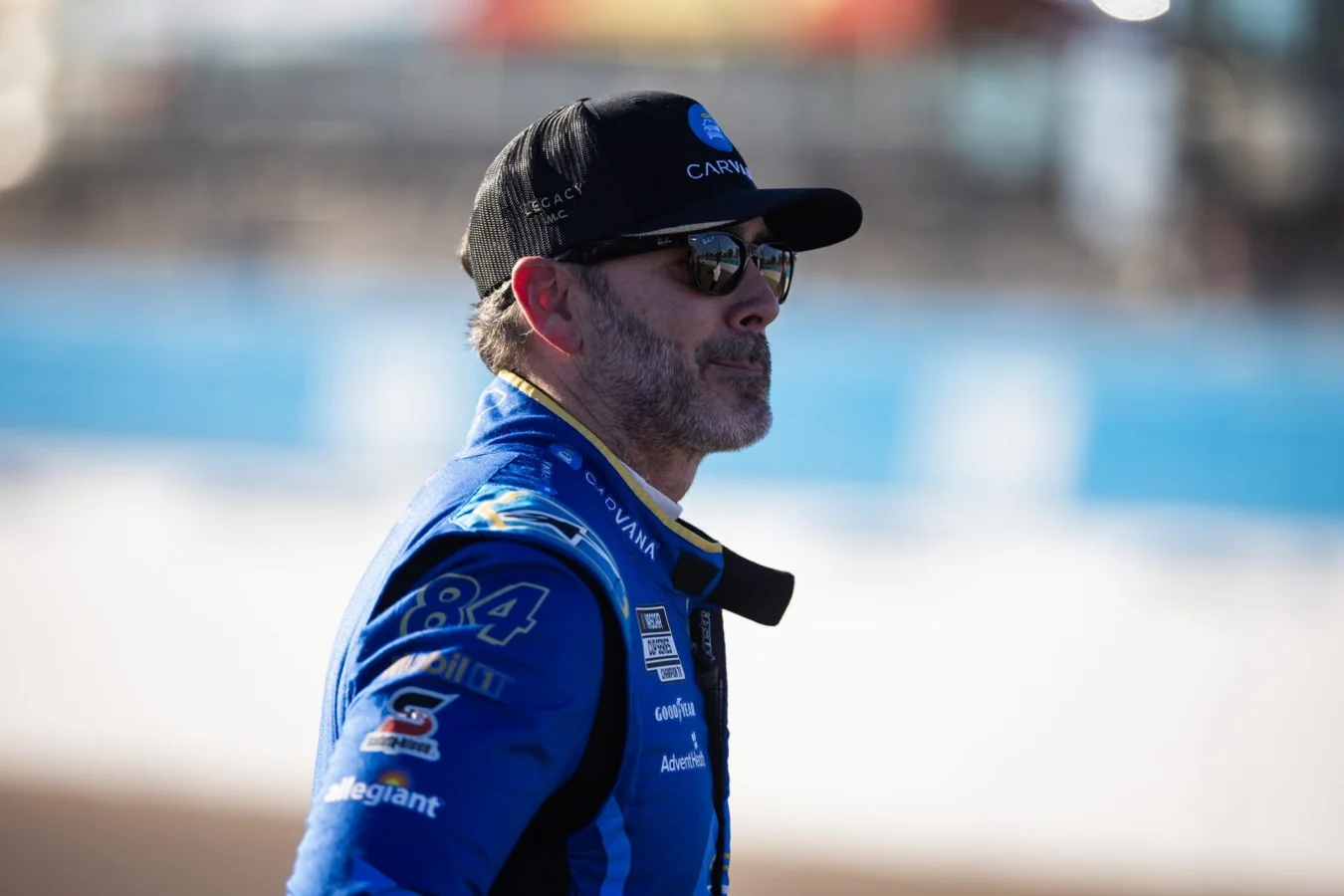
The 2026 San Diego NASCAR street race at Naval Base Coronado offers a thrilling moment for fans, combining high-speed racing with the striking presence of Navy fighter jets and aircraft carriers. However, seven-time Cup Series champion Jimmie Johnson sees the event as both an exciting opportunity and a potential logistical challenge, especially concerning the pit road setup.
Addressing the Critical Issue of Pit Road Space
Johnson’s primary worry extends beyond the track design or competition—it centers on where to accommodate 40 race cars during pit stops. As a co-owner of Legacy Motor Club, he has voiced concerns that cramped pit conditions could transform routine service stops into hazardous situations. Without ample space, the risk of accidents or traffic congestion during crucial moments becomes a serious threat to driver safety and competition integrity.
With so many cars… pit road’s going to be a major priority to have enough space and pit all the cars,
Johnson explained during a media session. His caution stems from experiences at other temporary racing venues where limited pit areas have caused operational confusion and safety risks.
Such cramped conditions can force hurried releases from pit crews, increasing the chances of collisions on track or in the pit lane itself. NASCAR must find a solution that avoids these pitfalls in San Diego, where the unique environment adds complexity to the setup.
Johnson points to IndyCar’s Detroit Grand Prix as a possible reference, where a split lane pit road allows half the field to pit on one side and the other half on the opposite side, divided by a central corridor. This design innovation may help NASCAR overcome space shortages and ensure safer, more efficient pit stops during the San Diego race.
The Deep Personal Drive Behind Johnson’s Commitment
Despite the logistical hurdles, Johnson’s enthusiasm for the San Diego event remains strong, fueled by his connection to the area. Growing up in El Cajon, near San Diego, racing there holds significant emotional meaning. He has expressed a strong desire to participate in the race.
The desire to race in my hometown is off the charts. I will aggressively work on being in the event,
Johnson declared, while acknowledging the need for greater resources within Legacy Motor Club to secure his spot.
This race represents more than just another competition for Johnson; it is an opportunity to compete on streets where he first learned to drive, adding a deeply personal layer to an already impressive racing career. The significance extends beyond trophies, offering a chance to reconnect with his roots on his own terms.
He also remains confident about the race circuit itself. NASCAR has experience with street courses, notably the Chicago event, which Johnson pointed to as evidence that a successful and competitive street race is achievable. The roughly three-mile course has been refined using advanced simulations and laser scans, aiming to produce compelling racing once all details are finalized.
I feel we’re going to be in a good place… solid circuit to compete on,
Johnson said, expressing optimism about the track’s potential.
What Distinguishes the San Diego Race from Other NASCAR Events?
Scheduled over Father’s Day weekend from June 19 to 21, 2026, this NASCAR race holds unique significance. It coincides with the 250th anniversary of the U.S. Navy, giving patriotic resonance to the competition. All three major NASCAR series will compete: the Cup Series broadcast on Prime Video, the Xfinity Series airing on The CW, and the Truck Series featured on FOX Sports.
The Naval Base Coronado venue offers an unmatched backdrop, with aircraft carriers and F-18 jets framing the event, creating dramatic visuals that will appeal to fans both at the track and watching on television. The iconic San Diego skyline enhances the spectacle, potentially establishing a new and memorable landmark in NASCAR’s racing calendar.
NASCAR’s venue and innovation teams are continuing to work on finalizing the course layout, incorporating input from drivers and using technological tools to optimize the design. Their biggest focus remains ensuring that critical elements such as pit road can support the scale and safety demands necessary for smooth race operations.
This combination of historic location, commemorative timing, and the complexity of a street race at a naval base positions the San Diego event as a landmark moment for NASCAR, one that could set new standards if the logistical challenges are effectively managed.
