
Denny Hamlin is rapidly advancing toward a major career milestone in NASCAR, edging closer to his 60th Cup Series victory. At the 2025 Enjoy Illinois 300 held at World Wide Technology Raceway, Hamlin captured his 59th win, which secured his place in the Round of 12 playoff stage and tied him with Kevin Harvick for 10th on the all-time NASCAR wins list. With a contract extension through 2027, Hamlin’s goal remains focused on surpassing this benchmark and challenging records previously set by NASCAR legend Jimmie Johnson.
Jimmie Johnson reached the 60-win mark in 2012 during a dominating season, securing his milestone at Texas Motor Speedway while showcasing an impressive performance throughout the year. Now a majority owner of Legacy Motor Club, Johnson remains actively involved in the sport, working to develop emerging talent and help steer his team toward success. Despite the constraints of modern racing, Johnson believes the record for 60 wins might still be within reach for current and future drivers.
Jimmie Johnson Reflects on NASCAR’s Past and the Potential for Future Champions
In a candid discussion on the Never Settle podcast with Marty Smith, Johnson addressed the difficulty of reaching 60 career wins, expressing cautious realism yet underlying hope for the future. When asked about the likelihood of current drivers achieving the feat, Johnson replied,
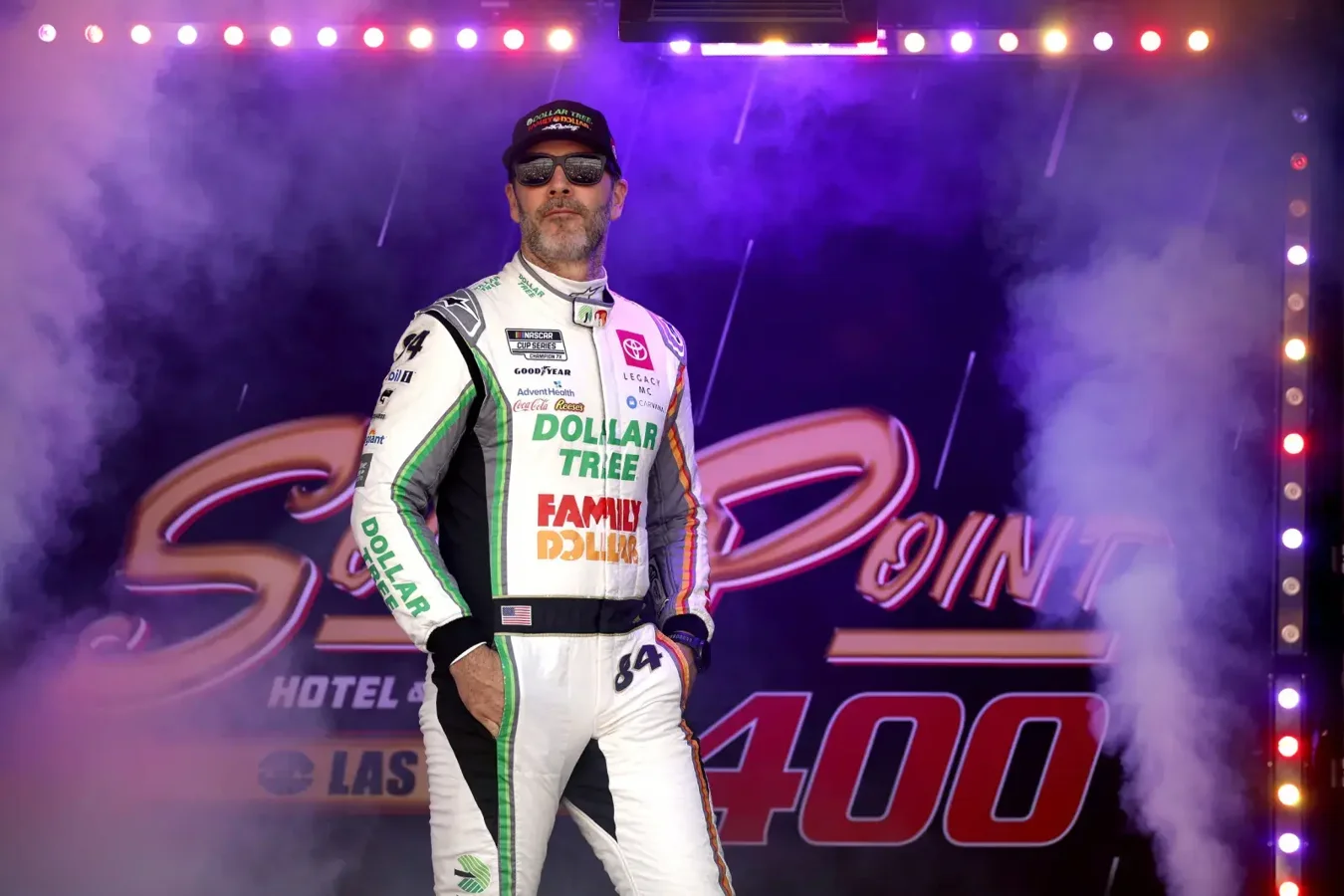
“I would say that odds are against someone getting to 60. But I came through a generation where no one thought that somebody would win seven championships, and I was able to do that.”
This insight highlights how unforeseen achievements remain possible despite prevailing doubts.
Johnson also recalled a significant moment from 2016 when he won his seventh NASCAR Cup Series championship, tying legendary figures Richard Petty and Dale Earnhardt Sr. He shared a memorable interaction with Petty:
“Richard Petty, the night I won my seven, stuck his head in the window and said, ‘Records are made to be broken. Go get it done.’ And I don’t know, with hearing that and experiencing what I personally have, you can’t say it’ll never happen.”
This encounter symbolizes the passing of the torch between racing generations and emphasizes the persistent evolution of the sport.
Johnson also described meeting Cale Yarborough, a three-time consecutive champion from the 1970s, upon tying his record, stating,
“I met Cale Yarborough before I went off the stage after tying him in three championships. And he’s like, ‘Son, I never thought anybody would ever get here. Congratulations.’ So I just don’t want to fall into that trap.”
The exchange illuminates the deep respect among NASCAR legends and the rigorous commitment required to reach the summit in racing.
Recognizing NASCAR’s ongoing changes, Johnson remains optimistic about how advances in technology, team strategy, and driver training might create new opportunities for success. Reflecting on the future of racing, he said,
“And as time goes on and sport goes on, who knows what we’re going to be racing 10, 15 years from now, 50 years from now. It’s hard to say.”
This perspective underscores the unpredictable nature of motorsport and the potential for upcoming drivers to redefine records once thought untouchable.
Concerns Raised Over NASCAR’s Decision to Host the 2026 All-Star Race at Dover
The NASCAR All-Star Race has historically been famed for intense competition, high risk, and unpredictable moments that thrill fans. It began in 1985 at Charlotte Motor Speedway and has since rotated through venues such as Atlanta, Texas, Bristol, and North Wilkesboro—all known for fostering chaotic racing events. However, the choice to stage the 2026 All-Star Race at Dover Motor Speedway has drawn criticism from some, including Jimmie Johnson.
<pJohnson, who has an extensive history of success at Dover with 11 wins, openly questioned the decision:
“I’m scratching my head on that one.”
He added,
“It’s not the type of venue the All-Star Race will shine at.”
Johnson elaborated that Dover’s characteristics—a tight layout combined with very high speeds—discourage aggressive driving due to the danger of collisions, which runs counter to the All-Star Race’s traditional emphasis on bold maneuvers and fan-pleasing mayhem. By contrast, venues like North Wilkesboro recently revived the race’s spirit, delivering short-track excitement and a charged atmosphere.
Johnson also took issue with the current stakes of the race, particularly the prize money, suggesting it should be higher to truly incentivize fearless competition. He stated,
“I mean there’s a million on the line. Should be five.”
He fears that without sufficient rewards and the chaotic style that defined the event, Dover may fail to capture the excitement that once made the All-Star Race unique.
Balancing Respect for NASCAR’s History with Optimism for Upcoming Talents
Jimmie Johnson’s reflections highlight the tension between honoring NASCAR’s rich legacy and encouraging future generations of drivers to leave their own mark. From the achievements of figures like Richard Petty, Dale Earnhardt Sr., and Cale Yarborough to Hamlin’s current pursuit of milestones, the sport continues to evolve.
Johnson’s role as a team owner places him in a position to nurture fresh talent, aligning with his belief that no record is impossible to surpass. His acknowledgment that
“records are made to be broken”
serves as a rallying cry to fans and drivers alike, promoting a hopeful outlook on what lies ahead for NASCAR’s future stars.
As NASCAR advances technologically and strategically, it is likely that new avenues will emerge for drivers to achieve historic feats once thought unreachable. The journey to 60 wins, while daunting, remains a symbol of perseverance and excellence within the sport.
Looking forward, the choices of race venues and event structures will play a crucial role in maintaining NASCAR’s excitement and fan engagement. The debate over the All-Star Race location exemplifies the ongoing challenge of balancing tradition with innovation as the sport adapts for the modern era.
