
Seven-time Cup champion Jimmie Johnson faced a challenging moment during his 700th career start at Charlotte Motor Speedway, as his early-race error triggered a multi-car wreck involving newcomer Conor Zilisch and 2023 Xfinity Series champion Cole Custer. The incident, occurring on the track’s turn 4 during the Coca-Cola 600, significantly altered the race outcomes for all three drivers and cast a spotlight on Johnson’s adjustment struggles with the Next-Gen car.
Collision Causes Chaotic Turn 4 Incident
Johnson, driving the Legacy Motor Club No. 84 Toyota Camry, lost control as he made contact with the wall exiting turn 4. This contact propelled his car sideways, resulting in a collision that also involved Conor Zilisch and Cole Custer. Zilisch, making his Cup oval race debut at just 18 years old with Trackhouse Racing and holding the distinction as the youngest driver in NASCAR history to start a 600-mile race, was caught up in the crash alongside Custer. Fortunately, neither driver suffered significant vehicle damage, though their momentum was disrupted enough to leave them finishing in 23rd and 21st positions respectively.
For Johnson, however, the wreck was far more damaging. The impact forced his No. 84 car out of competition, ending his race prematurely with a disappointing 40th-place finish. Johnson openly acknowledged the error as a “rookie mistake” linked to his unfamiliarity with the new car’s handling characteristics.
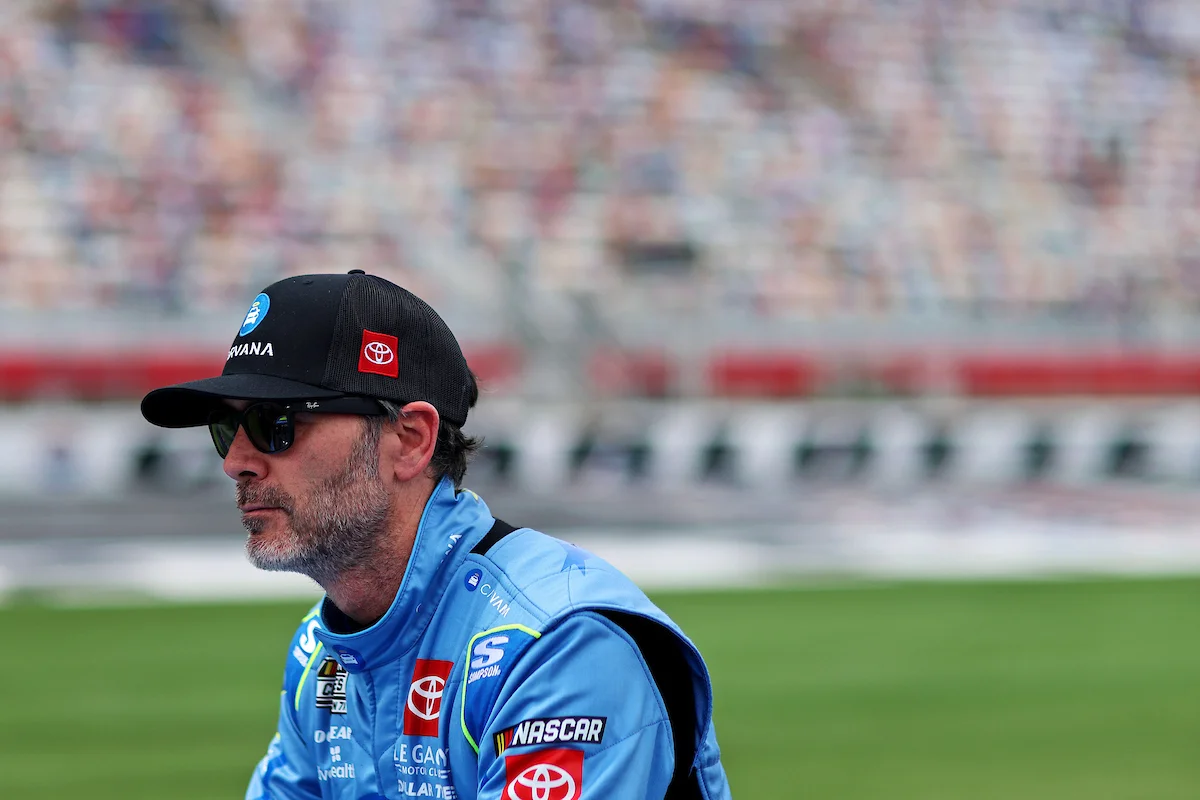
“I think I just made kind of a rookie mistake in one of these cars, the way I let out of the throttle going into the turn. I knew right when I let off the throttle, I came off a bit abruptly and the car was a little sideways.” —Jimmie Johnson, Driver
Challenges Adapting to the Next-Generation Car
Johnson elaborated on the difficulties he encountered with the Next-Gen car, emphasizing how its handling in traffic contrasts sharply with the previous generation vehicles he mastered during his days with Hendrick Motorsports (HMS). He explained that his instincts led to a misjudgment in a critical moment, and by the time he recognized the mistake, it was too late to recover.
“The traffic situations, they’re just different with this car, and my instincts, I just kind of reacted in a way that I shouldn’t have, and once I realized, it was too late.” —Jimmie Johnson, Driver
This adaptation challenge highlights the steep learning curve even for seasoned veterans like Johnson as NASCAR continues to evolve with the 7th-generation race vehicles. Despite his wealth of experience, Johnson admitted that more seat time is essential for him to regain the level of competitiveness he once had during his HMS tenure.
Concerns Over Limited Practice Time and Its Impact
Ahead of the Charlotte race weekend, Johnson raised concerns about the drastically reduced practice time drivers now face in NASCAR’s current format. Between having only 25 minutes of track practice before qualifying, followed immediately by the race itself, drivers receive very little opportunity to adjust and hone their skills in real race conditions. Johnson pointed out that this limits driver development, especially when alternatives to gain experience in similar cars are scarce.
“You get 25 minutes of practice at the track and then you qualify and then you race. How do you get better? How do you hone your craft? Now it’s shifted to where, wow, you don’t get much seat time. You need seat time…Some would argue that you need to drive a vehicle that’s like a Cup car. It’s hard to find one, there’s really not many out there.” —Jimmie Johnson, Driver
Johnson’s comments highlight a broader issue among drivers regarding the lack of sufficient seat time, which many argue hampers their ability to perform at their best. This limitation also explains why some current drivers are seeking experience in other racing series to supplement their track time. Johnson’s perspective suggests that revisiting practice session policies could benefit the sport by improving driver readiness and the overall racing spectacle.
Race Outcomes and Future Implications at Charlotte
The wreck and subsequent race performances underscored the challenges faced by both seasoned and rookie drivers during the Coca-Cola 600. Conor Zilisch’s debut, while marred by the incident, remains historic due to his age and entry into NASCAR’s longest race. Cole Custer, coming off his Xfinity Series championship, also experienced a setback despite avoiding serious damage.
Johnson’s mishap serves as a reminder of the adjustments veterans must make in the evolving NASCAR landscape—and how limited practice time can compound these challenges. As the racing season continues, observers will be watching closely to see if Johnson and others can improve their adaptation to the Next-Gen car, and whether NASCAR will respond to calls for more extensive practice sessions.
The Legacy Motor Club driver’s frustration and openness about his rookie-style error reflect the tension many experienced racers feel in this transitional phase. The incident also raises questions about how swiftly drivers can adjust while maintaining competitive performances and avoiding costly mistakes.
