
Joey Logano, a three-time NASCAR Cup Series champion and a key driver for Team Penske Racing, has earned a reputation for his aggressive racing style that divides opinion in the stock car racing world. Ahead of the upcoming Pocono race, Logano openly addressed criticisms about his on-track demeanor, explaining why his intensity during races should not be mistaken for poor character.
Known for his fierce competitiveness while racing and his softer personality off the track, Logano’s dual nature has often been misunderstood by fans and fellow racers alike. His explanation sheds light on the necessity of this mindset in such a highly competitive environment, clarifying the balance between aggression and personal conduct.
Understanding the Dual Nature of Racing Competitors
Joey Logano compared his racing attitude with that of fellow racer Carl Edwards, who was similarly misjudged despite being a friendly individual off the circuit. Logano emphasized that many drivers and fans struggle to comprehend the mindset shift required to be aggressive on the track while maintaining basic decency in everyday life.
“I feel like we can relate a lot to that. Because I feel like when you were racing, everyone looked at Carl as fake…It makes sense to be that way, it’s just hard for people to understand that, I think, right? Not just fans to understand, I think it’s hard for competitors to understand, there can be a switch that you turn on and off.” —Joey Logano, via Amazon Prime
The driver of the No. 22 Ford Mustang went on to explain that this mental switch is essential in preventing drivers from being labeled negatively outside the race track. Holding onto their on-track aggression in everyday life would make them “real jerks,” he said.
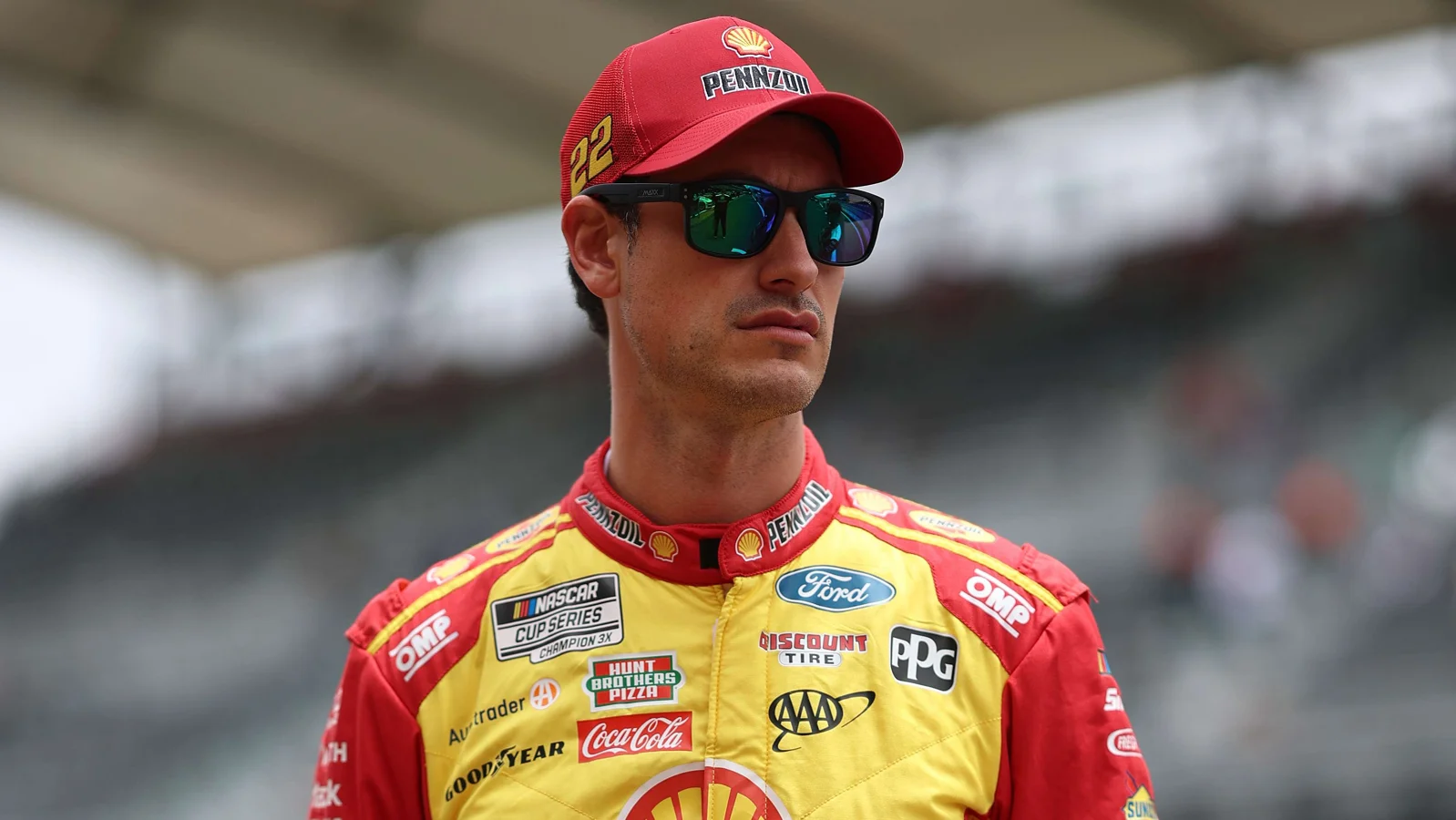
“And it’s really healthy to have that because if not, if you were the type of person you were on track, off the track, you’d be a real jerk. You know what I mean? It’s not good. So, you’ve gotta find that balance, that balance is really important for me to be able to do that.” —Joey Logano
Logano’s comments underline the importance of separating professional intensity from personal identity, emphasizing that fierce competition does not equate to a poor character in daily life.
The Necessity of Aggression for Victory in NASCAR
The aggressive nature of drivers like Logano stems from the fundamental goal shared by every competitor: to win. The environment in the garage and on the racetrack is one of extreme competition, with every driver prepared to be assertive and tactical to gain an edge.
“Yeah, the expectation is always to go out there and win, right? Your competitors are very competitive people within this garage area, it’s what you want to do.” —Joey Logano
This fierce desire to win drives the high-risk, assertive behavior seen during races. Logano’s perspective reveals that aggressive tactics are a natural and necessary aspect of competing at the highest level, rather than an indication of disrespect or poor sportsmanship.
How Carl Edwards’ Experience Illustrates the Misunderstanding
Logano reflected on Carl Edwards’ career to further illustrate his point about being misunderstood. Edwards was well-known for his friendliness off the track but raced with fierce determination that made him intimidating during competitions. Logano humorously shared that seeing Edwards in his rearview mirror signaled a tough challenge.
“‘He’s not authentic, he’s not real,’ right? You went through the same thing. Because you were really nice off the race track, and then you were a pretty fierce competitor. You didn’t want to see Carl in your mirror, you’re like, ‘Oh, here we go.’ Like, it wasn’t an easy car to pass and not supposed to be, right? I thought we were racing.” —Joey Logano
This anecdote highlights how fans and competitors often mistake competitive fierceness for a lack of authenticity, not recognizing the mental switch drivers enact between their professional and personal lives.
The Broader Impact Within the NASCAR Community
Joey Logano’s insights come at a time when his aggressive style continues to spark debate among peers and followers of the sport. Figures such as Kyle Busch have openly criticized this approach, reflecting deeper divisions over what constitutes fair competition in NASCAR. However, Logano’s views remind the community why drivers with such determination are vital for the sport’s intensity and appeal.
By defending his and Edwards’ racing mindset, Logano ensures that fans and critics understand the complexity behind the persona of aggressive racers, who must balance driving hard with maintaining respect off the track. This explanation may encourage a more nuanced appreciation of what it means to compete in NASCAR’s intense environment.
Ultimately, Logano’s willingness to discuss his aggressive racing mindset explained publicly could bridge gaps in understanding fans and fellow drivers alike hold. As the next races unfold, observers will watch to see if this candid approach translates into greater respect for Logano’s personality as well as his performance on the circuit.
